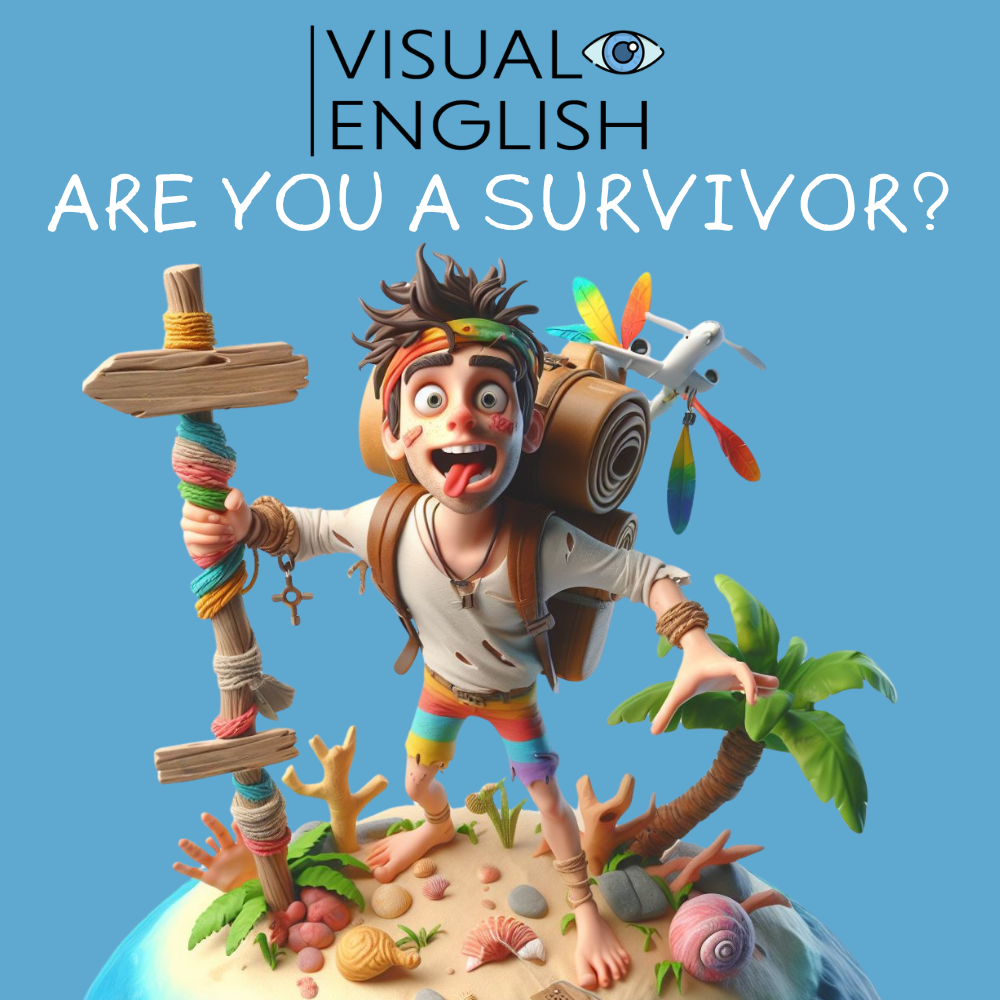
Are You A Survivor?
This survival ESL lesson teaches emergency equipment, natural disasters and advice with need, should and must. Students match kit items to uses, solve What if...? scenarios and rank essential objects for being stranded. They write a storm survival story and roleplay communication between a survivor and rescue team.
7-day trial · Card required · €0 today · Cancel before renewal
Lesson format
2 × 45 minutes
Level
Pre-Intermediate
Age group
Ages 10–13
Main focus
Speaking first
What students will learn
Lesson flow
Students race to name three useful items for an emergency, learn survival-kit vocabulary matching item to use, and drill 'You need a rope to climb' / 'You should stay calm.' The second lesson answers 'What if...?' scenario cards, learns natural-disaster vocabulary describing effects, ranks five items to take if stranded, writes a survival story about escaping a storm, and roleplays a rescue-team simulation as survivor and rescuer.
Target language
- • Modal verbs: can / need / should
- • 'What would you do if...?'
- • Survival and disaster vocabulary
- • Conditional-style reasoning (if there's..., I'll...)
Key vocabulary
- survival
- fire
- flood
- desert
- forest
- shelter
- water
- signal
- rescue
- danger
Speaking questions students answer
- • What would you do if you were lost in the forest?
- • What do you need in an emergency kit?
- • What should you do in an earthquake?
- • Have you ever been camping?
- • What's the most useful survival item?
Recommended teaching contexts
Why this lesson works
The lesson follows a clear progression: Race to name survival items in a Survival Grab! warm-up, use can/need/should for emergency decisions, write a survival story and roleplay a rescue-team simulation. Teachers can open the materials and start immediately, while students move from supported vocabulary practice to purposeful spoken English.