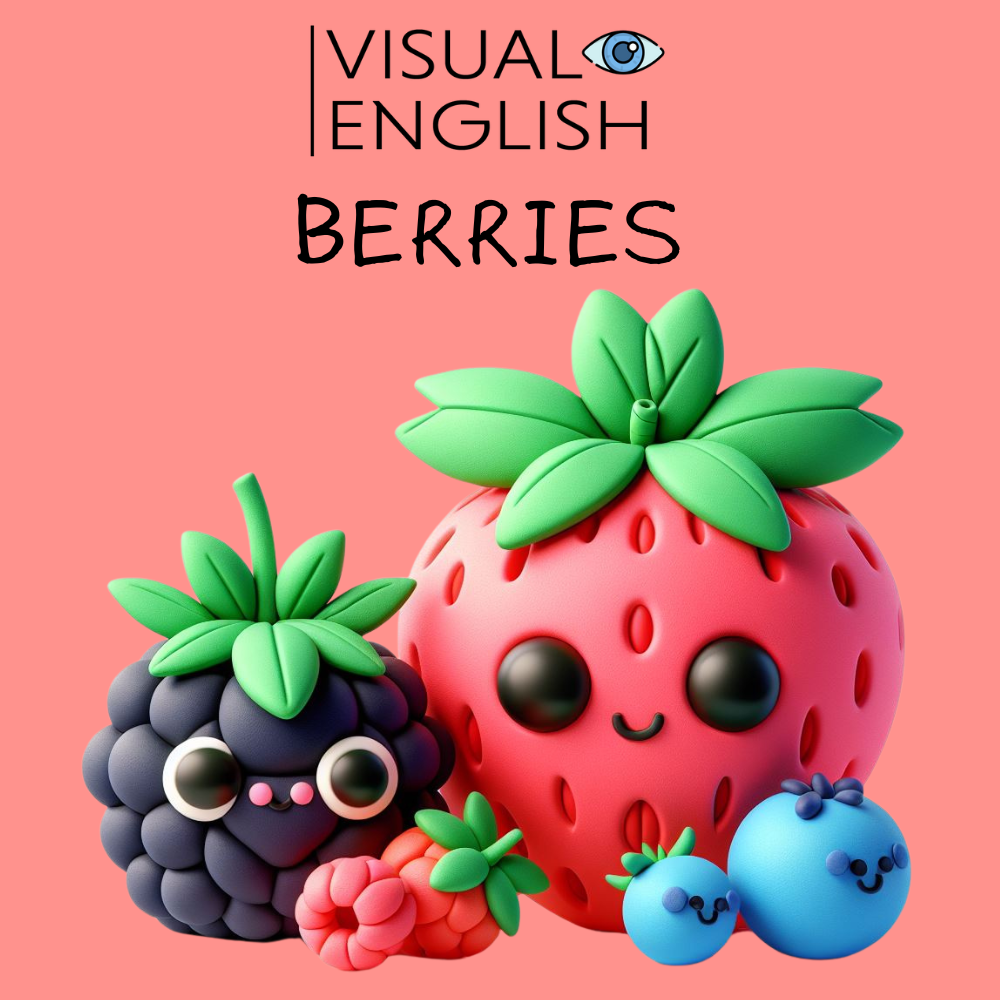
Yummy Berries
This berries ESL lesson teaches strawberry, blueberry, raspberry and other fruit words with colours and numbers. Children sing, mime tasting, colour pictures and express preferences using 'I like...' They count berries in an interactive game and name a favourite during the closing circle.
7-day trial · Card required · €0 today · Cancel before renewal
Lesson format
2 × 45 minutes
Level
Starter
Age group
Ages 4–6
Main focus
Speaking first
What students will learn
Lesson flow
Children name berry flashcards and sing along to a berries song, acting out eating each one and giving a thumbs up or down. They complete a colouring worksheet practising 'I like blueberries!'. The second lesson reviews berries through a colouring and counting worksheet, finishing with an interactive counting game and a circle goodbye where each child names their favourite berry.
Target language
- • 'Do you like...?'
- • 'I like...'
- • Counting
- • Colour + berry vocabulary
Key vocabulary
- strawberry
- raspberry
- blueberry
- blackberry
- cherry
- berry
- red
- sweet
- fruit
Speaking questions students answer
- • Do you like strawberries?
- • What color is a raspberry?
- • How many blueberries do you see?
- • What's your favourite berry?
- • Do you like blackberries?
Recommended teaching contexts
Why this lesson works
The lesson follows a clear progression: Name berries and express likes/dislikes, colour and count berries on a worksheet, vote for a favourite berry. Teachers can open the materials and start immediately, while students move from supported vocabulary practice to purposeful spoken English.