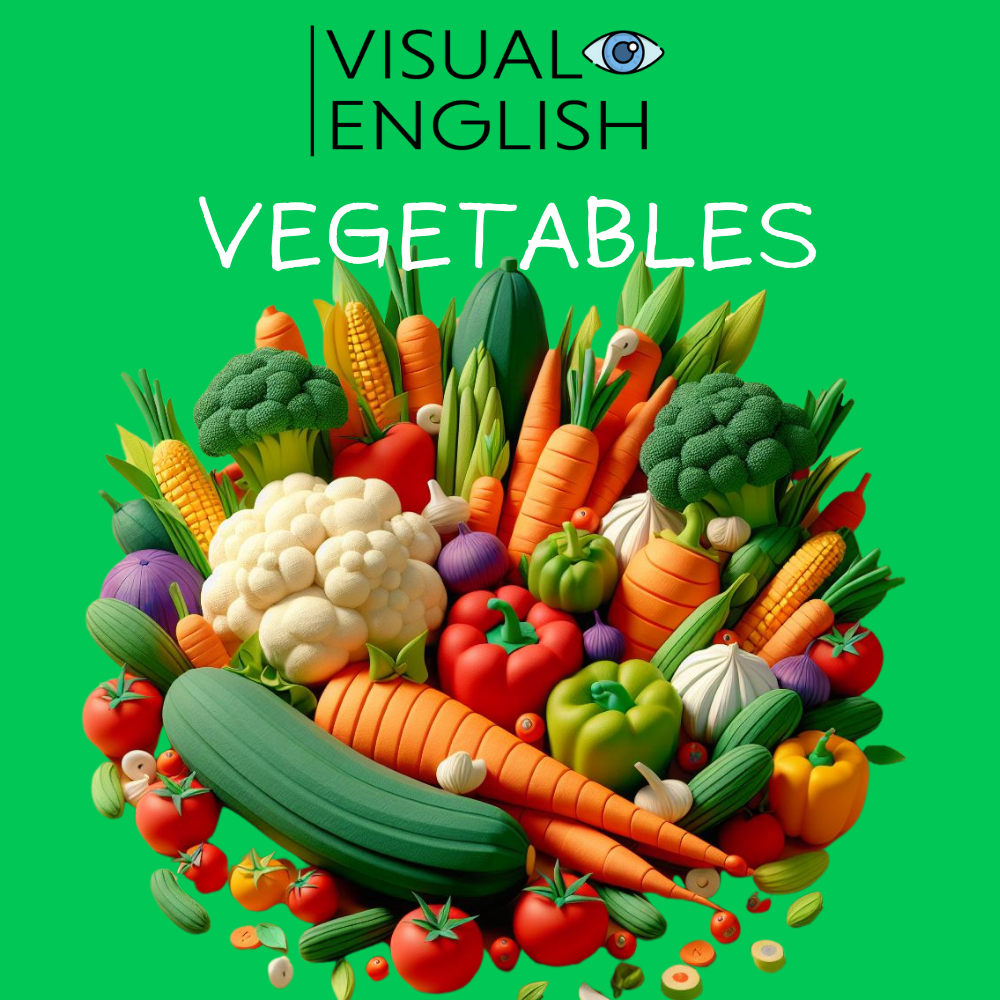
Vegetables
This vegetables ESL lesson helps young learners name familiar vegetables and discuss food preferences. Students use movement, songs, flashcards and class interviews to practise 'Do you like...?' They make a labelled vegetable soup bowl and perform a mini kitchen roleplay using cooking actions.
7-day trial · Card required · €0 today · Cancel before renewal
Lesson format
2 × 45 minutes
Level
Beginner
Age group
Ages 6–9
Main focus
Speaking first
What students will learn
Lesson flow
Children freeze into vegetable shapes in a warm-up game, sing vegetable songs miming chopping and cooking, and drill flashcards or real vegetables. The second lesson interviews classmates asking 'Do you like corn?', makes a vegetable soup bowl craft labelling favourites, and roleplays a kitchen scene ('I chop the carrot! I put the tomato in the pot!').
Target language
- • 'What's this?'
- • 'Do you like ___?'
- • 'I like / I don't like...'
- • Vegetable vocabulary
Key vocabulary
- carrot
- potato
- tomato
- onion
- cucumber
- broccoli
- lettuce
- peas
- corn
- pepper
Speaking questions students answer
- • What's this?
- • Do you like broccoli?
- • Do you like onions?
- • Do you like peas?
- • What vegetable is this?
Recommended teaching contexts
Why this lesson works
The lesson follows a clear progression: Freeze into veggie shapes in a warm-up game, interview classmates about vegetable preferences, make a vegetable soup bowl and roleplay cooking. Teachers can open the materials and start immediately, while students move from supported vocabulary practice to purposeful spoken English.