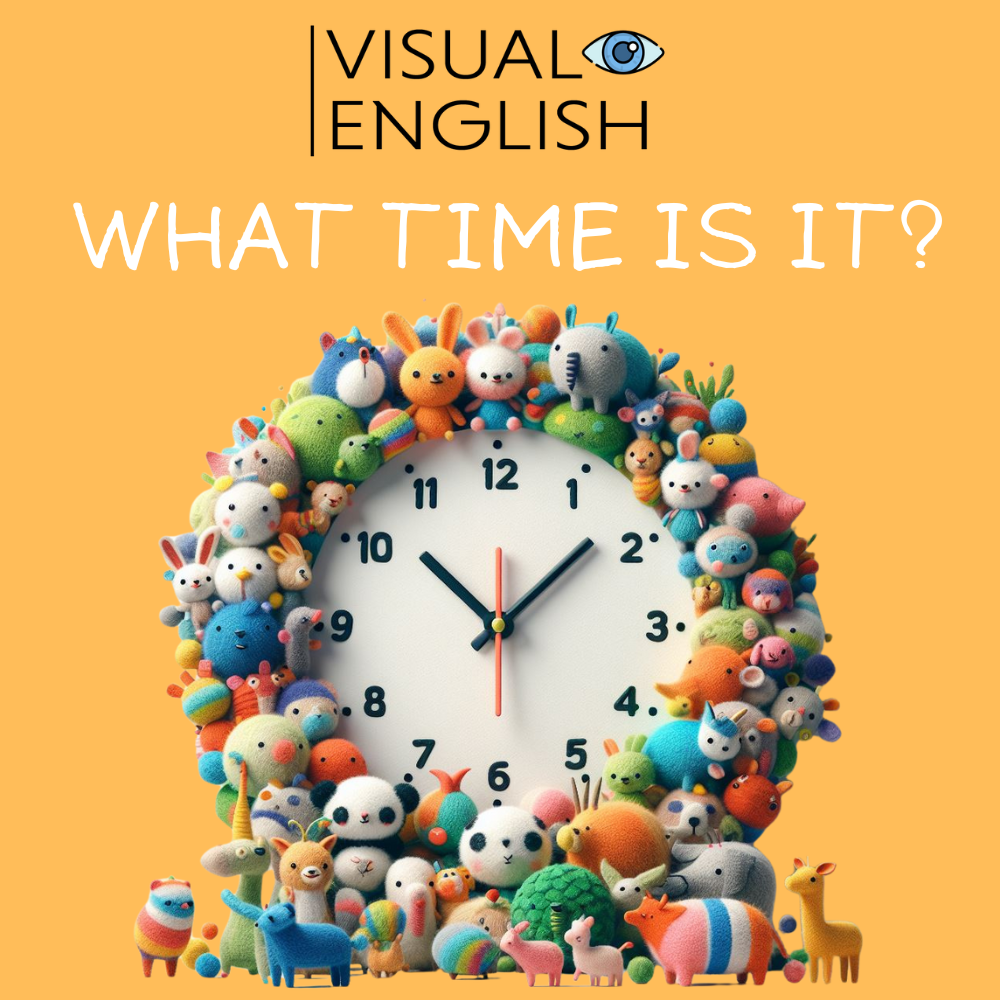
What Time Is It?
This telling the time ESL lesson introduces clock numbers, hands and simple o'clock expressions. Children count to 12, sing Hickory Dickory Dock, trace numbers and move the hands on a toy clock. They play What's the Time Mr Wolf and match familiar animals and routines to clock times.
7-day trial · Card required · €0 today · Cancel before renewal
Lesson format
2 × 45 minutes
Level
Starter
Age group
Ages 4–6
Main focus
Speaking first
What students will learn
Lesson flow
Children count to 12 using a wall clock, learn 'big hand/little hand' through Hickory Dickory Dock, then trace clock numbers and take turns being the mouse on the clock saying 'It's ___ o'clock!'. The second lesson plays What's the Time Mr Wolf, matches animals to clock times, and moves a toy clock's hands to different times, finishing with a Hickory Dickory Dock matching review.
Target language
- • 'What time is it?'
- • 'It's ___ o'clock'
- • Numbers 1-12
- • Daily routine vocabulary
Key vocabulary
- clock
- hour
- minute
- morning
- afternoon
- evening
- time
- o'clock
- watch
- half past
Speaking questions students answer
- • What time is it?
- • What do you do at 7 o’clock?
- • What time did she leave?
- • Can you move the hands to 3 o’clock?
- • What time is it, Mr Wolf?
Recommended teaching contexts
Why this lesson works
The lesson follows a clear progression: Recognise numbers on a clock, play What's the Time Mr Wolf, match routines to clock times. Teachers can open the materials and start immediately, while students move from supported vocabulary practice to purposeful spoken English.