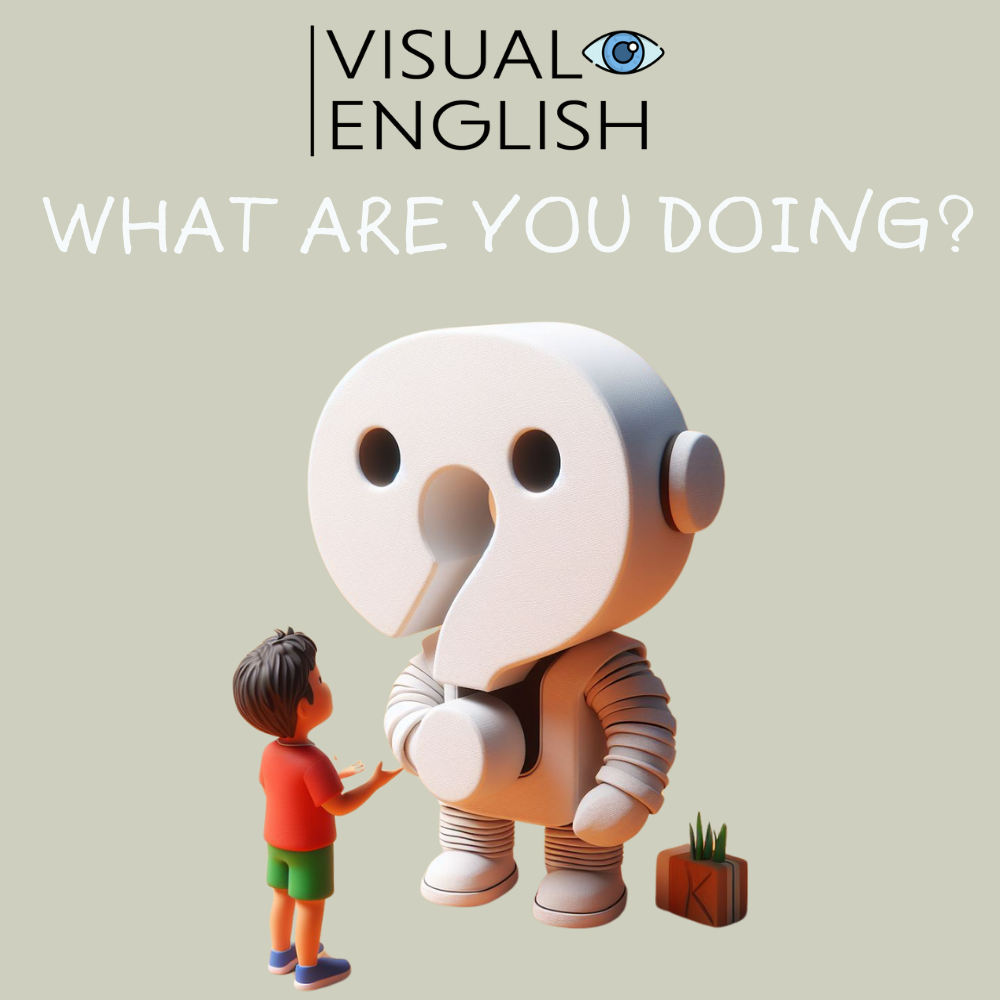
What Are You Doing?
This present continuous ESL lesson gets students asking and answering about actions happening now. Learners use charades, video prompts and classroom interviews to practise 'What are you doing?' They create an Action Mini Book and perform a short action-theatre roleplay.
7-day trial · Card required · €0 today · Cancel before renewal
Lesson format
2 × 45 minutes
Level
Beginner
Age group
Ages 6–9
Main focus
Speaking first
What students will learn
Lesson flow
Children mime actions for classmates to guess, watch a present-continuous video pausing to answer 'What is he doing?', and drill verb flashcards with props. The second lesson walks around asking 'What are you doing?', watches a silent clip answering 'Is he running?', makes an Action Mini Book drawing and labelling actions, and performs a short action-theatre roleplay in pairs.
Target language
- • 'What are you doing?'
- • 'I'm ___ing'
- • 'Is she ___ing?' Yes/No
- • 'I'm not ___. I'm ___!'
Key vocabulary
- reading
- writing
- drawing
- eating
- playing
- sleeping
- running
- watching
- cooking
- jumping
Speaking questions students answer
- • What are you doing?
- • Is she reading?
- • What is he doing?
- • Are they jumping?
- • What are they doing?
Recommended teaching contexts
Why this lesson works
The lesson follows a clear progression: Guess actions in a charades game, ask 'What are you doing?' while walking around, make an Action Mini Book and perform a roleplay. Teachers can open the materials and start immediately, while students move from supported vocabulary practice to purposeful spoken English.