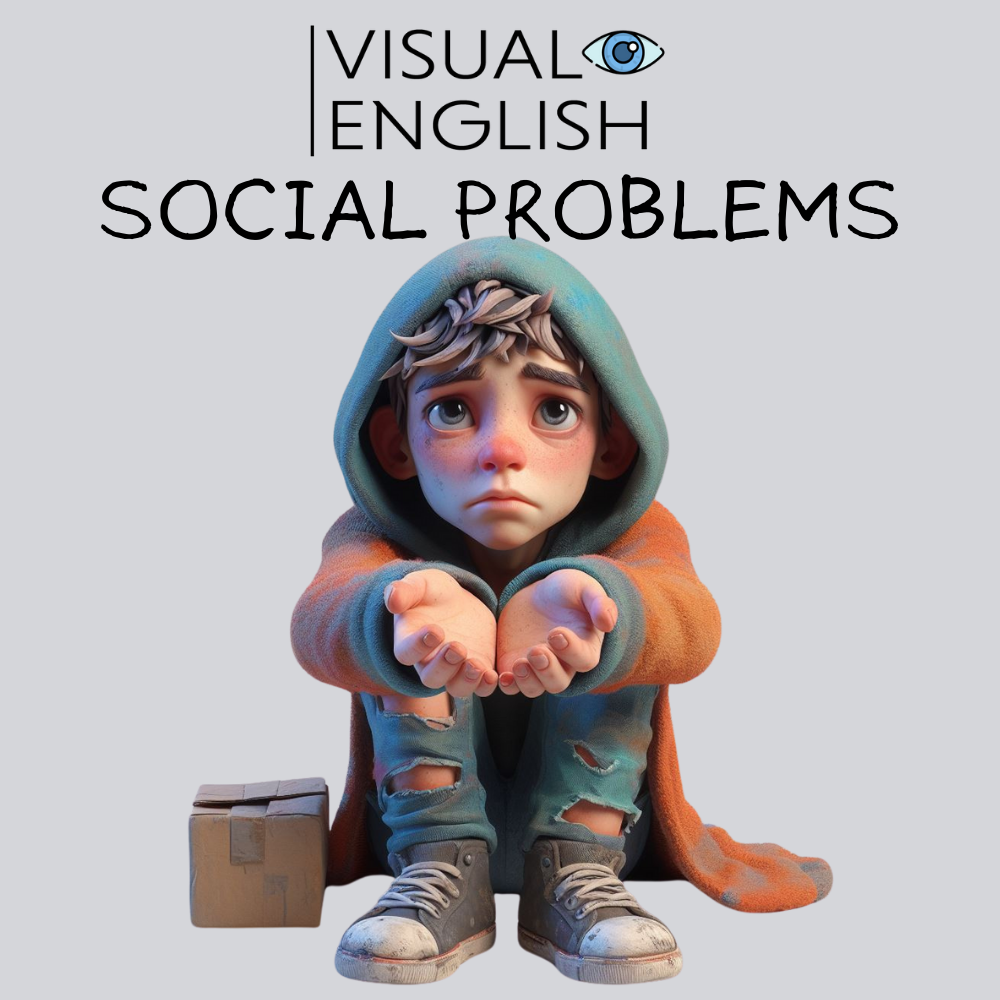
Social Problems
This social problems ESL lesson introduces age-appropriate language for homelessness, poverty and unemployment. Students describe difficult situations, discuss feelings and use should to suggest compassionate action. They write a supportive message, create a fact-and-action poster and roleplay a respectful conversation between someone struggling and someone helping.
7-day trial · Card required · €0 today · Cancel before renewal
Lesson format
2 × 45 minutes
Level
Intermediate
Age group
Ages 12–14
Main focus
Speaking first
What students will learn
Lesson flow
Students identify social problems from real-life visuals ('He is homeless'), learn vocabulary for homelessness, poverty and unemployment, and drill 'They don't have a house' with should for advice. The second lesson describes feelings in difficult situations, writes a kind message offering support, creates a poster for change with a fact, message and suggested action, and roleplays a street conversation between someone struggling and someone helping.
Target language
- • Have / don't have
- • Should for advice and compassion
- • 'Is homeless' / 'doesn't have a home'
- • Social issues vocabulary
Key vocabulary
- drugs
- addiction
- caffeine
- coffee
- dependency
- should
- shouldn't
- advice
- health
- habit
Speaking questions students answer
- • Should we help homeless people?
- • What can schools do to help?
- • Is it fair that some people don't have homes?
- • What would you say to someone struggling?
- • What's the biggest problem in your community?
Recommended teaching contexts
Why this lesson works
The lesson follows a clear progression: Identify social issues in a What's the Problem? warm-up, discuss fairness using have/don't have and should, write a kind message and create a poster for change. Teachers can open the materials and start immediately, while students move from supported vocabulary practice to purposeful spoken English.