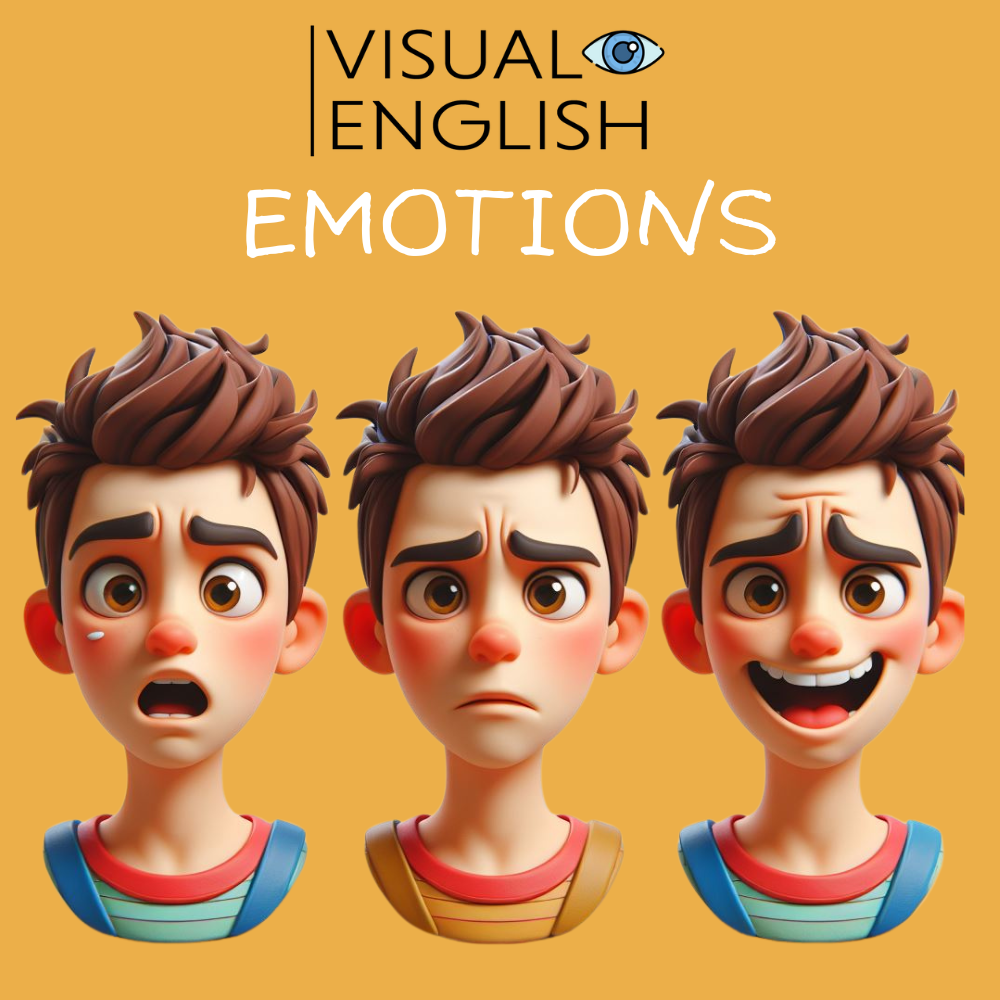
Emotions
This emotions ESL lesson expands feeling vocabulary and practises 'How do you feel?' with reasons. Students interpret emoji faces, freeze in emotion poses and discuss how characters feel in a video. They write about their mood and perform a Feeling Switch roleplay in which emotions change during the scene.
7-day trial · Card required · €0 today · Cancel before renewal
Lesson format
2 × 45 minutes
Level
Pre-Intermediate
Age group
Ages 10–13
Main focus
Speaking first
What students will learn
Lesson flow
Students guess emotions from emoji faces and freeze in emotion poses, learn feeling vocabulary with 'I feel happy today,' and watch a video asking 'How does the girl feel?'. The second lesson interviews a partner asking 'How do you feel? Why?', writes about their feelings today, and performs a Feeling Switch roleplay where a mood changes mid-scene.
Target language
- • 'How do you feel?'
- • 'I feel ___'
- • Subject-verb agreement (I feel / she feels)
- • Emotion vocabulary
Key vocabulary
- excited
- nervous
- embarrassed
- confused
- proud
- jealous
- relieved
- bored
- stressed
- emotion
Speaking questions students answer
- • How do you feel today?
- • How does the girl feel?
- • Is he sad?
- • Why do you feel that way?
- • How do you feel at school?
Recommended teaching contexts
Why this lesson works
The lesson follows a clear progression: Guess emotions from emojis, interview a partner about how they feel, write about their feelings and roleplay a Feeling Switch scene. Teachers can open the materials and start immediately, while students move from supported vocabulary practice to purposeful spoken English.