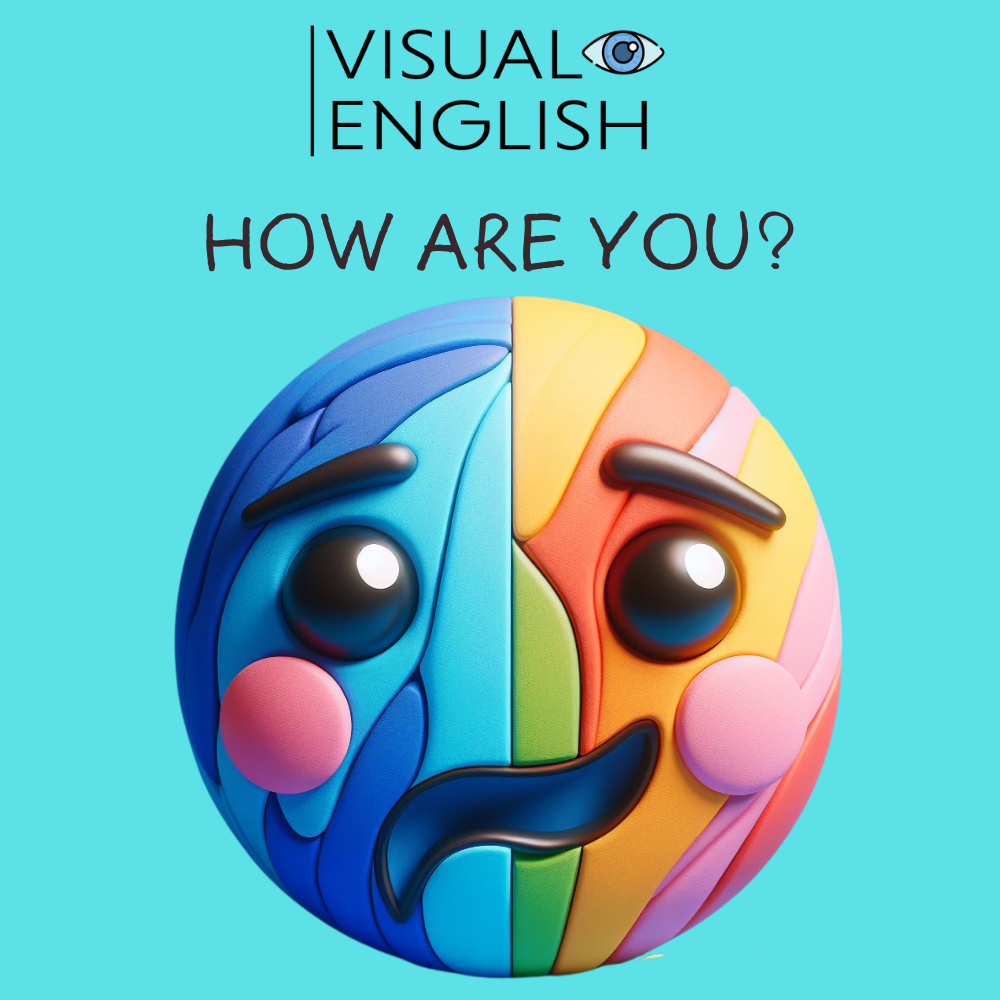
How Are You?
This feelings ESL lesson teaches happy, sad, angry, sleepy and hungry with the question 'How are you?' Children sing, make emotion masks and copy facial expressions in a Mirror Me game. They build a feelings spinner, respond in pairs and describe their current mood using a full sentence.
7-day trial · Card required · €0 today · Cancel before renewal
Lesson format
2 × 45 minutes
Level
Starter
Age group
Ages 4–6
Main focus
Speaking first
What students will learn
Lesson flow
Children sing a feelings song, make two feelings masks (happy/sad), and play a Mirror Me guessing game acting out different emotions. The second lesson builds a feelings spinner wheel, plays a pair game spinning and saying 'I'm ___ today!', and listens to a short story guessing how a character feels, finishing with each child sharing how they feel now.
Target language
- • 'How are you?'
- • 'I'm ___'
- • Emotion vocabulary
- • 'How is she/he feeling?'
Key vocabulary
- fine
- great
- tired
- sad
- happy
- okay
- well
- feeling
- excited
- bored
Speaking questions students answer
- • How are you today?
- • How do you feel after the game?
- • How is Teddy feeling?
- • Are you happy or sad?
- • What makes you feel tired?
Recommended teaching contexts
Why this lesson works
The lesson follows a clear progression: Answer 'How are you?' with feeling words, make and act out feelings masks, spin a feelings wheel and describe how they feel. Teachers can open the materials and start immediately, while students move from supported vocabulary practice to purposeful spoken English.