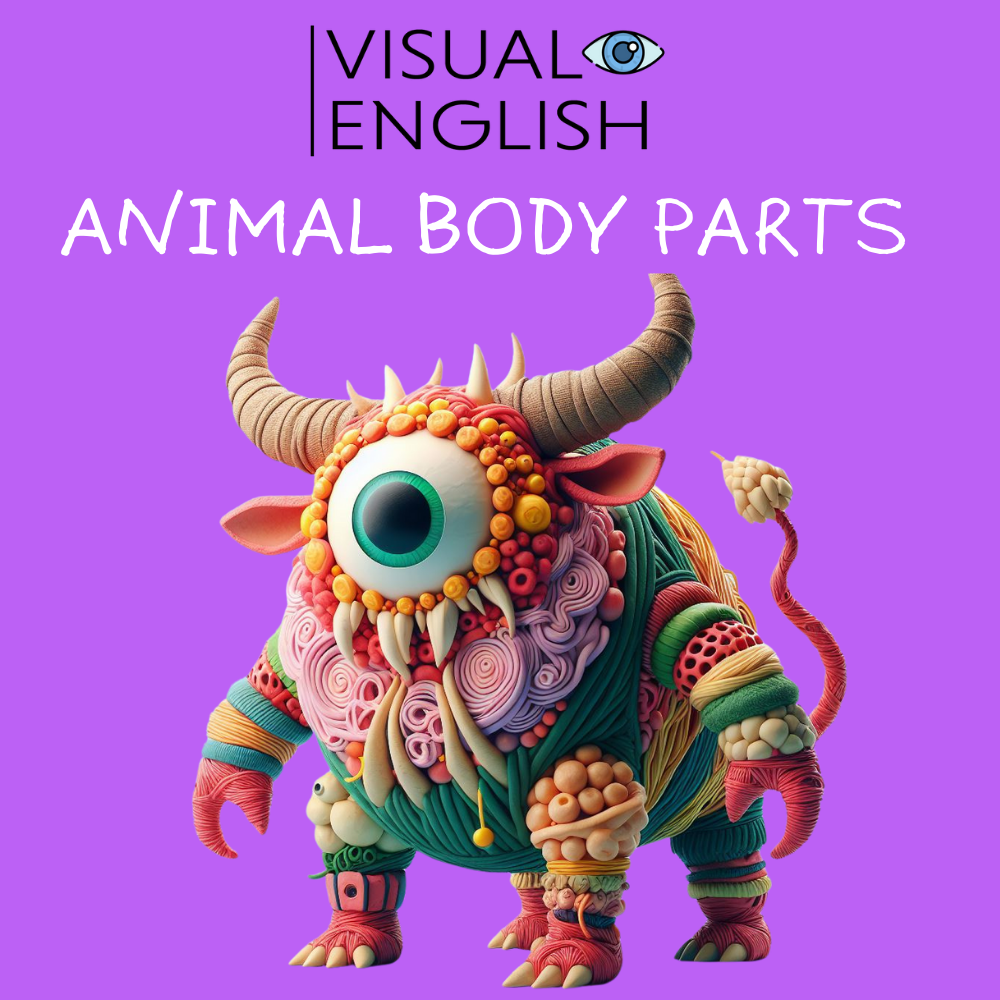
Wild Animals
This wild animals ESL lesson teaches body parts, features and habitats through movement, songs and visual classification tasks. Learners ask 'What does it have?' and 'Where does it live?' before designing a Crazy Animal with mixed features. They describe their creature and conduct a playful animal interview.
7-day trial · Card required · €0 today · Cancel before renewal
Lesson format
2 × 45 minutes
Level
Elementary
Age group
Ages 8–11
Main focus
Speaking first
What students will learn
Lesson flow
Children mime elephants, birds and lions with matching body parts, watch an animal body-parts song pausing to ask 'Does it have wings?', and drill flashcards naming beaks and fins. The second lesson describes animals in pairs ('It has big ears and tusks — Elephant!'), builds a Crazy Animal craft mixing a beak, tail and fins, and roleplays an animal-interview with questions like 'What do you have?'
Target language
- • 'What is it?'
- • 'What does it have?'
- • 'Where does it live?'
- • Animal body-part vocabulary
Key vocabulary
- elephant
- lion
- tiger
- cheetah
- gorilla
- snake
- crocodile
- wolf
- bear
- rhino
Speaking questions students answer
- • What does it have?
- • Does it have wings?
- • Where does it live?
- • Where do monkeys live?
- • Does it have fur?
Recommended teaching contexts
Why this lesson works
The lesson follows a clear progression: Mime animals and their body parts, match animals to their habitats, build a Crazy Animal craft and roleplay an interview. Teachers can open the materials and start immediately, while students move from supported vocabulary practice to purposeful spoken English.