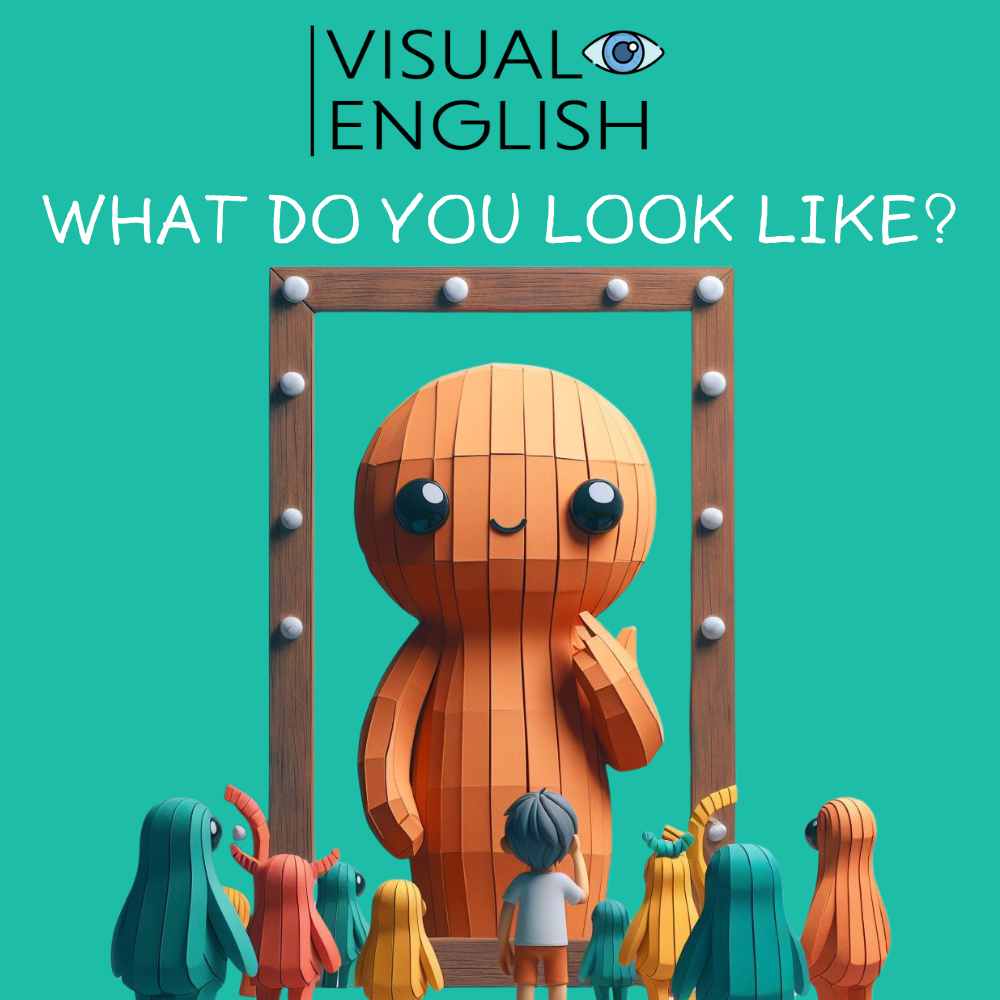
What Do You Look Like?
This describing people ESL lesson develops vocabulary for hair, height, age and other physical features. Students practise using 'is' and 'has', describe classmates and play a speaking-based Guess Who game. They create an Avatar Poster and present a detailed description of a real or imaginary person.
7-day trial · Card required · €0 today · Cancel before renewal
Lesson format
2 × 45 minutes
Level
Elementary
Age group
Ages 8–11
Main focus
Speaking first
What students will learn
Lesson flow
Children look for classmates matching clues ('someone with short hair'), watch a describing-people song pausing to ask 'Does she have curly hair?', and drill flashcards with a chant ('Is he tall? Yes, he is!'). The second lesson plays Class Guess Who describing a classmate for others to identify, makes an Avatar Poster labelling hair, height and age, and roleplays a Guess Who dialogue in pairs.
Target language
- • 'What does she look like?'
- • 'Is he young?' Yes/No
- • 'Do you have glasses?'
- • 'Have/has' descriptions
Key vocabulary
- tall
- short
- fat
- thin
- slim
- curly
- straight
- dark
- fair
- blonde
Speaking questions students answer
- • What does he look like?
- • Does she have curly hair?
- • Is he tall?
- • Is the man middle-aged?
- • Do you have glasses?
Recommended teaching contexts
Why this lesson works
The lesson follows a clear progression: Find classmates matching a description, describe a classmate for others to guess, make an Avatar Poster and play Guess Who. Teachers can open the materials and start immediately, while students move from supported vocabulary practice to purposeful spoken English.