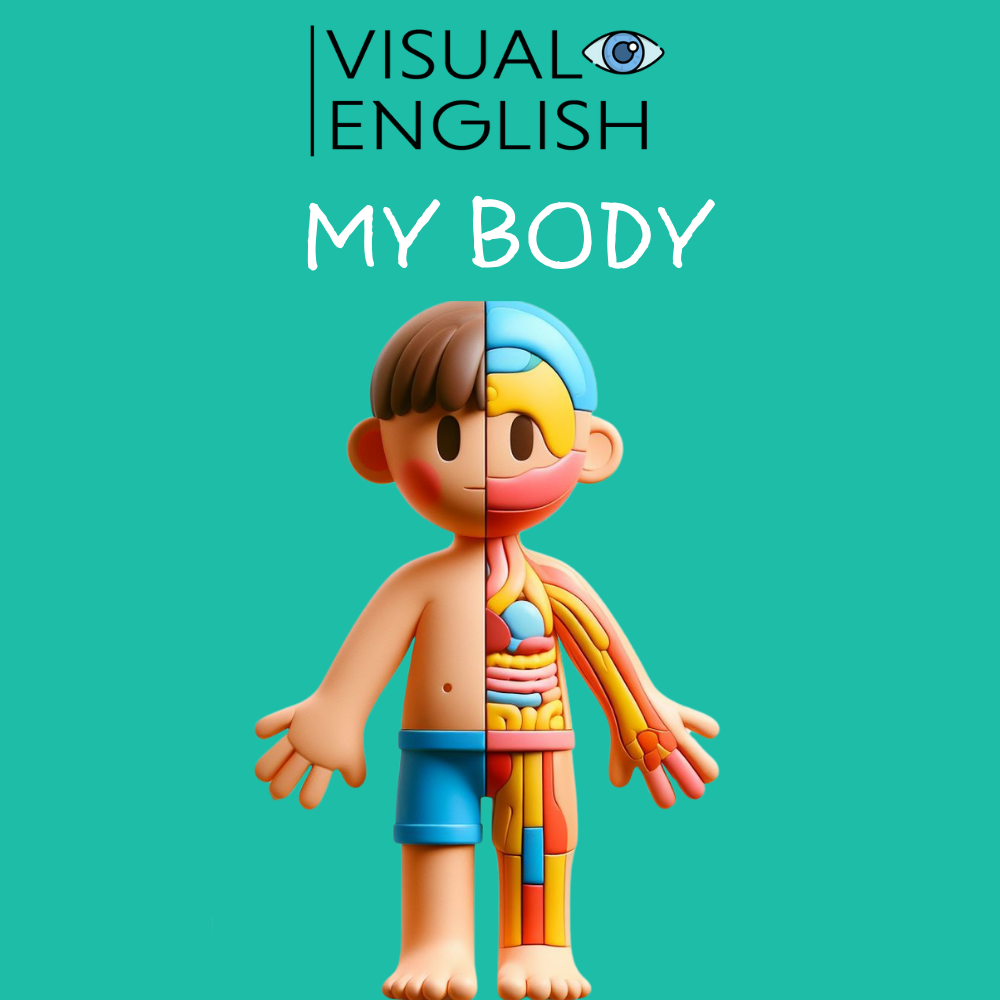
My Body
This body parts ESL lesson uses songs, movement and crafts to reinforce essential vocabulary. Students play Simon Says, follow commands and describe a silly monster using full sentences. They build and label a robot body before completing a robot-movement roleplay.
7-day trial · Card required · €0 today · Cancel before renewal
Lesson format
2 × 45 minutes
Level
Beginner
Age group
Ages 6–9
Main focus
Speaking first
What students will learn
Lesson flow
Children play Simon Says touching named body parts, sing Head, Shoulders, Knees and Toes pausing to ask 'What are these?', and drill flashcards with a say-and-tap race. The second lesson draws a silly monster describing its body ('It has three eyes'), builds a robot-body craft gluing labelled shapes, and finishes with a robot-movement roleplay following commands in a robot voice.
Target language
- • 'Touch your ___!'
- • 'This is my ___'
- • 'What's this?'
- • Body-part vocabulary
Key vocabulary
- head
- arm
- leg
- hand
- foot
- finger
- toe
- elbow
- knee
- shoulder
Speaking questions students answer
- • What's this?
- • Can you touch your knees?
- • What part is he showing?
- • How many eyes does your monster have?
- • Can you touch your neck?
Recommended teaching contexts
Why this lesson works
The lesson follows a clear progression: Follow commands in Simon Says, draw a silly monster and describe its body parts, build a robot body craft and roleplay robot movements. Teachers can open the materials and start immediately, while students move from supported vocabulary practice to purposeful spoken English.