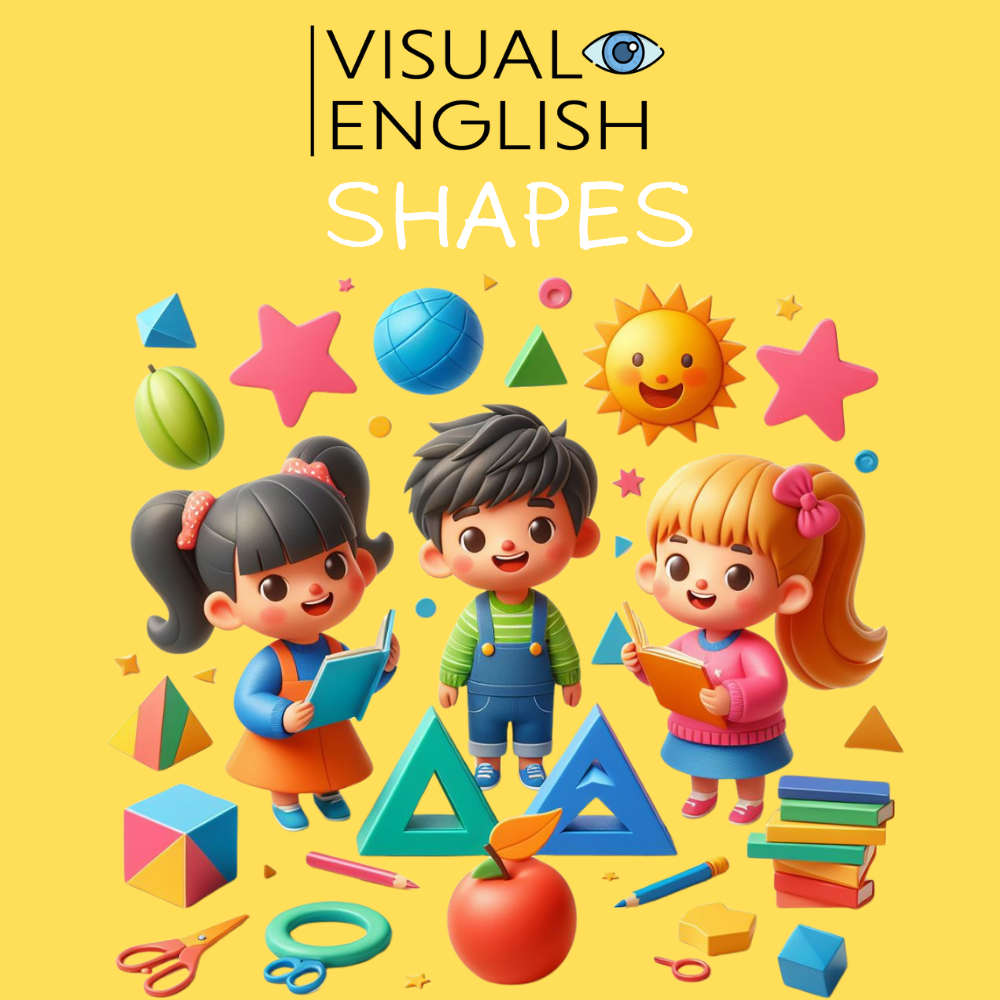
Shapes
This shapes ESL lesson teaches beginners to recognise and name circles, squares, triangles and other basic shapes. Students make shapes with their bodies, sing, search the classroom and ask 'What shape is it?' They build a labelled shape robot and describe its parts in full sentences.
7-day trial · Card required · €0 today · Cancel before renewal
Lesson format
2 × 45 minutes
Level
Beginner
Age group
Ages 6–9
Main focus
Speaking first
What students will learn
Lesson flow
Children freeze into shapes with their bodies, sing shape songs drawing shapes in the air, and go on a classroom shape hunt spotting circles and rectangles in real objects. The second lesson plays a Shape Dash running game touching shapes on the wall, practises pair speaking with cut-out shapes, and builds a shape robot labelling each part ('A triangle head, a square body...').
Target language
- • 'What shape is it?'
- • 'It's a ___'
- • 'I see a ___'
- • Shape vocabulary
Key vocabulary
- circle
- square
- triangle
- rectangle
- star
- oval
- diamond
- pentagon
- shape
- round
Speaking questions students answer
- • What shape is it?
- • What shape is this clock?
- • I see a...?
- • What shape is a heart?
- • Touch a star!
Recommended teaching contexts
Why this lesson works
The lesson follows a clear progression: Freeze into shapes with your body, go on a classroom shape hunt, build a shape robot and describe it. Teachers can open the materials and start immediately, while students move from supported vocabulary practice to purposeful spoken English.