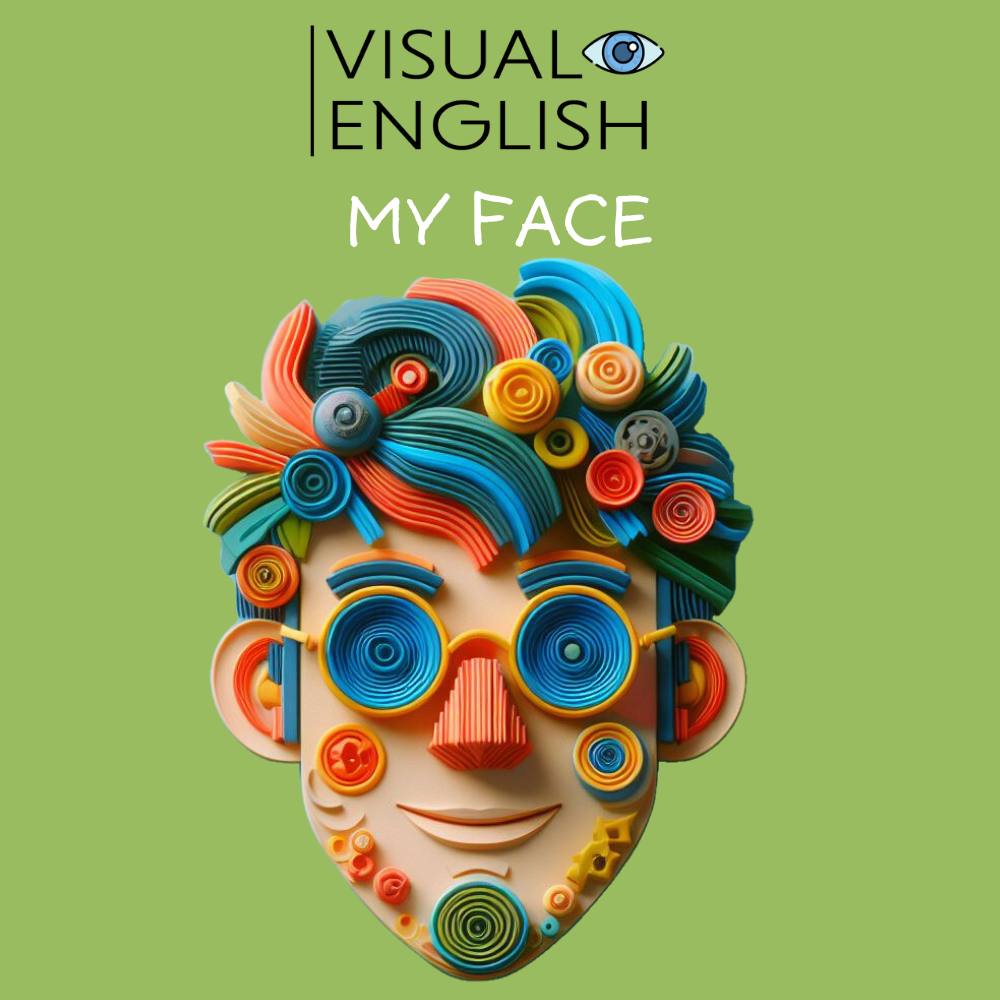
Make A Face
This face parts ESL lesson teaches vocabulary for eyes, ears, nose, mouth and other facial features. Students point, sing, use mirrors and practise 'What's this?' in a partner game. They assemble a monster or robot face, label its features and present their creation to the class.
7-day trial · Card required · €0 today · Cancel before renewal
Lesson format
2 × 45 minutes
Level
Beginner
Age group
Ages 6–9
Main focus
Speaking first
What students will learn
Lesson flow
Children play a Face Slap warm-up touching named parts, sing face songs pointing to eyes, nose and mouth, and use mirrors for a point-and-say partner game. The second lesson reviews the song in pairs, plays a roleplay card game asking 'What's this?', and builds a monster or robot face gluing on cut-out features, finishing with a show-and-tell presentation.
Target language
- • 'This is my ___'
- • 'I have ___'
- • 'What's this?'
- • Face-part vocabulary
Key vocabulary
- eyes
- nose
- mouth
- ears
- hair
- eyebrows
- chin
- forehead
- cheeks
- expression
Speaking questions students answer
- • What's this?
- • How many eyes?
- • What colour is the mouth?
- • Tell me about your face!
- • How many noses does your monster have?
Recommended teaching contexts
Why this lesson works
The lesson follows a clear progression: Touch face parts in a Face Slap game, describe face parts using a mirror, build and present a monster/robot face craft. Teachers can open the materials and start immediately, while students move from supported vocabulary practice to purposeful spoken English.