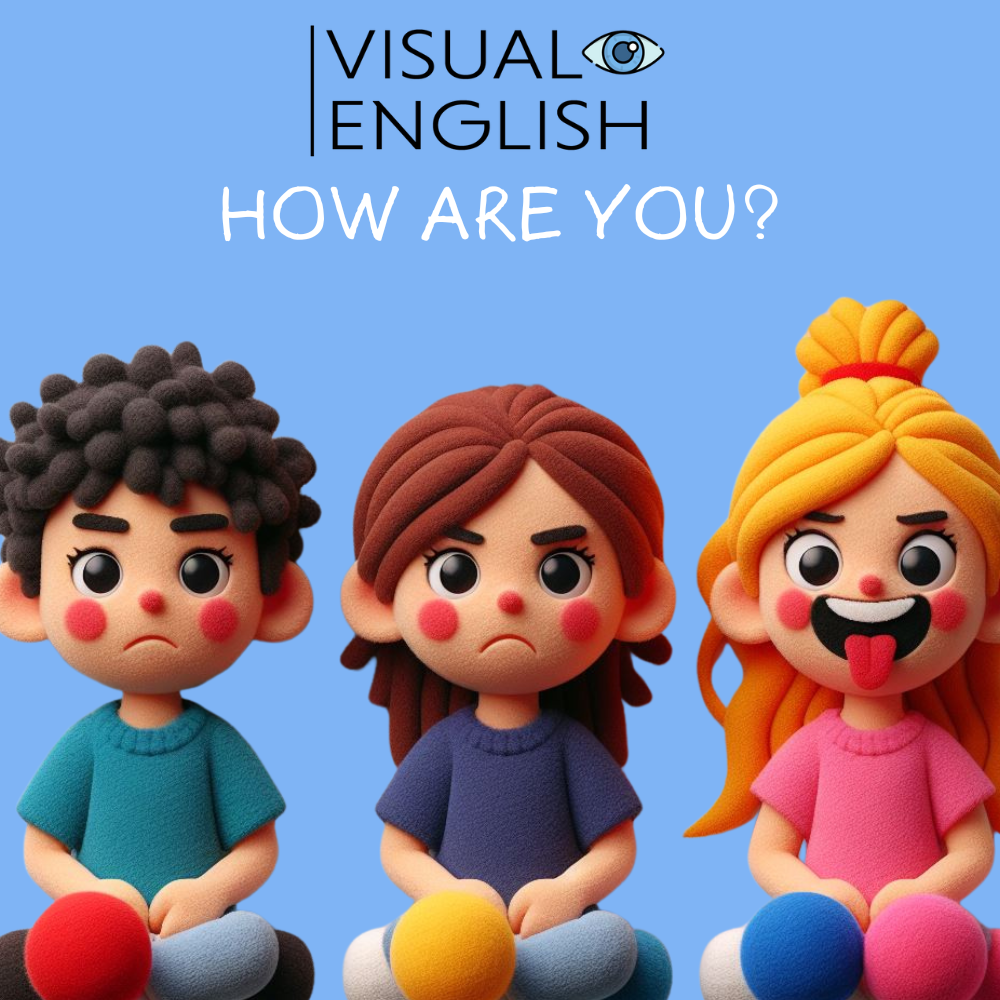
How Are You?
This feelings and emotions ESL lesson teaches beginners to answer 'How are you?' with useful adjectives such as happy, sad, hungry and tired. Students guess facial expressions, sing, mime emotion cards and practise short partner conversations. They create a spinning Feelings Wheel and use it to describe how they feel.
7-day trial · Card required · €0 today · Cancel before renewal
Lesson format
2 × 45 minutes
Level
Beginner
Age group
Ages 6–9
Main focus
Speaking first
What students will learn
Lesson flow
Children guess the teacher's expressions in a Face It warm-up, sing emotion songs acting out happy, sad, hot and cold, and watch a video skit discussing a character's feelings. The second lesson practises pair speaking with emotion cards, plays an emotion charades guessing game, and makes a spinning Feelings Wheel used to answer 'How are you?'
Target language
- • 'How are you?'
- • 'I'm ___'
- • 'Are you ___?' Yes/No
- • Emotion vocabulary
Key vocabulary
- happy
- sad
- tired
- hungry
- thirsty
- excited
- fine
- great
- angry
- scared
Speaking questions students answer
- • How are you?
- • Are you hungry?
- • Is he tired or hungry?
- • What's she saying?
- • Are you hot or cold?
Recommended teaching contexts
Why this lesson works
The lesson follows a clear progression: Guess feelings in the Face It game, roleplay 'Are you hungry?' conversations, make and spin a Feelings Wheel. Teachers can open the materials and start immediately, while students move from supported vocabulary practice to purposeful spoken English.