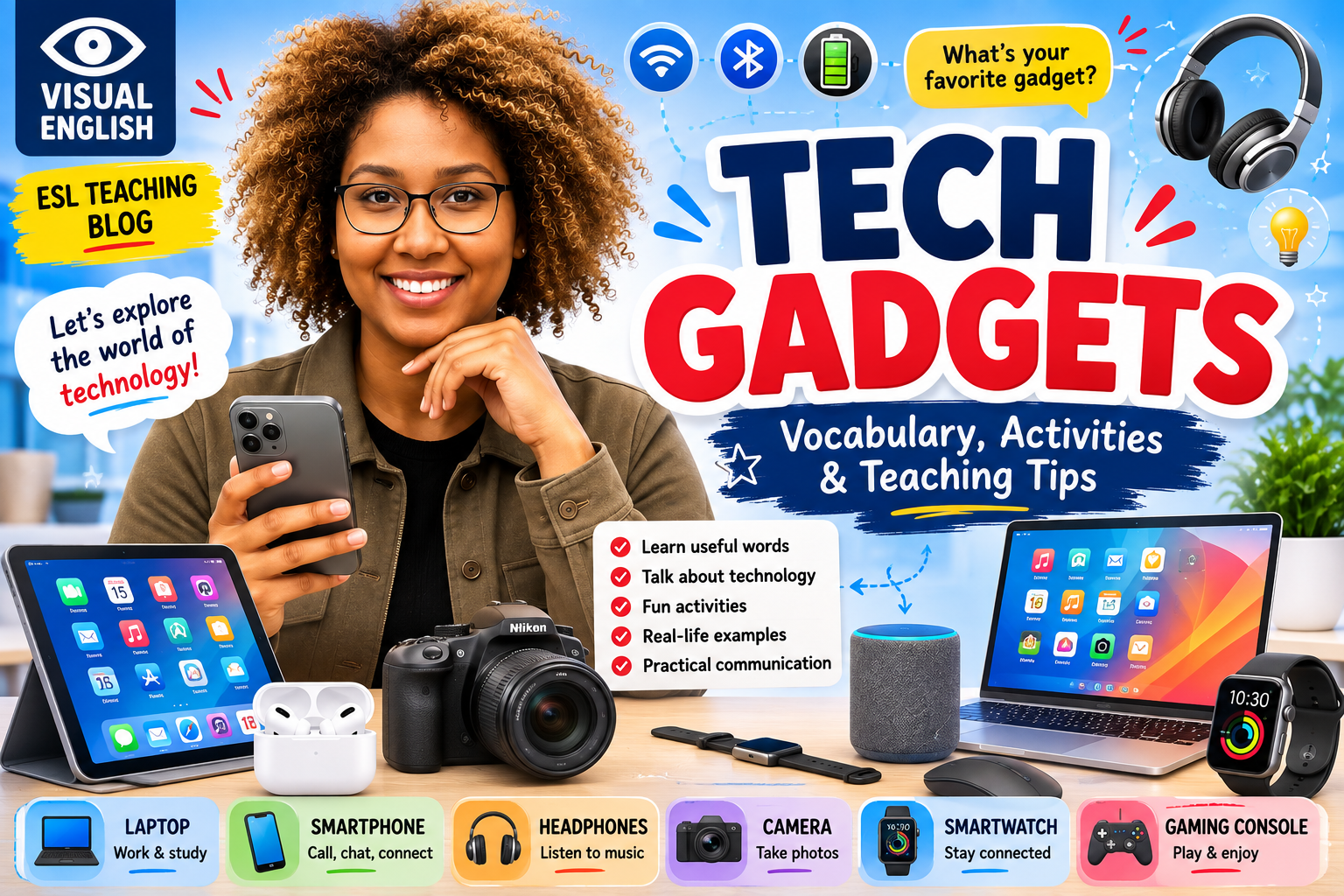
How to Teach Technology and Gadgets Vocabulary in ESL (2026)
Table of contents(7 sections)ShowHide
Technology is one of the few ESL topics where students often already know some of the vocabulary in English before it's formally taught -- brand names, app names, and gaming terms travel across languages fast. That existing familiarity is worth using as a starting point rather than ignoring.
Why Technology Works So Well
Students interact with technology daily, so the vocabulary connects directly to genuine current experience rather than a hypothetical scenario -- and opinions tend to be strong and easy to draw out.
Core Vocabulary
Start with everyday gadgets: phone, computer, tablet, TV, camera. Add device-specific actions (charge, download, click, type) and, for older students, broader tech concepts (internet, app, screen time).
The Grammar That Pairs Naturally
Technology supports present simple habits ("I use my phone every day") and opinions ("I think social media is..."). For older students, it's a strong context for discussing advantages/disadvantages using "should" and comparative structures.
Speaking Activities That Work
1. Gadget guessing game. Describe a gadget's function without naming it; classmates guess. 2. My favourite app/game. Students describe and recommend a favourite digital tool -- genuine, current content.
3. Tech habits survey. Ask classmates how often they use different technology, then report findings. 4. Life without technology. For older/stronger classes, a discussion activity imagining a day without phones or internet.
Common Mistakes to Watch For
- Confusing "use" (verb) with brand/product names used informally as verbs in casual speech
- Overusing "have" instead of more specific verbs ("I have a game" instead of "I play a game")
- Article and countability confusion with abstract tech concepts ("the internet" vs "internet")
Ready-Made Technology Lessons
Visual English covers technology across several books:
- Everyday Gadgets -- Book 4, common devices
- Are You A Gamer? -- Book 5, gaming habits and opinions
- Are You Tech Savvy? -- Book 6, digital habits and skills
See the full set on the Technology topic page.
Conclusion
Technology is a topic that stays naturally current because students bring their own real, up-to-date examples to it. Use that existing engagement, and it becomes one of the easiest topics to get genuine, opinionated speaking from.
Frequently asked questions
Is technology vocabulary appropriate for young learners?
Basic gadget names work well even for younger students; more abstract discussion (screen time, social media) suits older, more advanced classes better.
What's the best grammar entry point?
Present simple habits ("I use...", "I play...") -- genuine and immediately personal.
How do I keep this topic from feeling dated?
Lean on students' own current examples rather than a fixed vocabulary list -- technology vocabulary shifts fast, so following student input keeps it relevant.