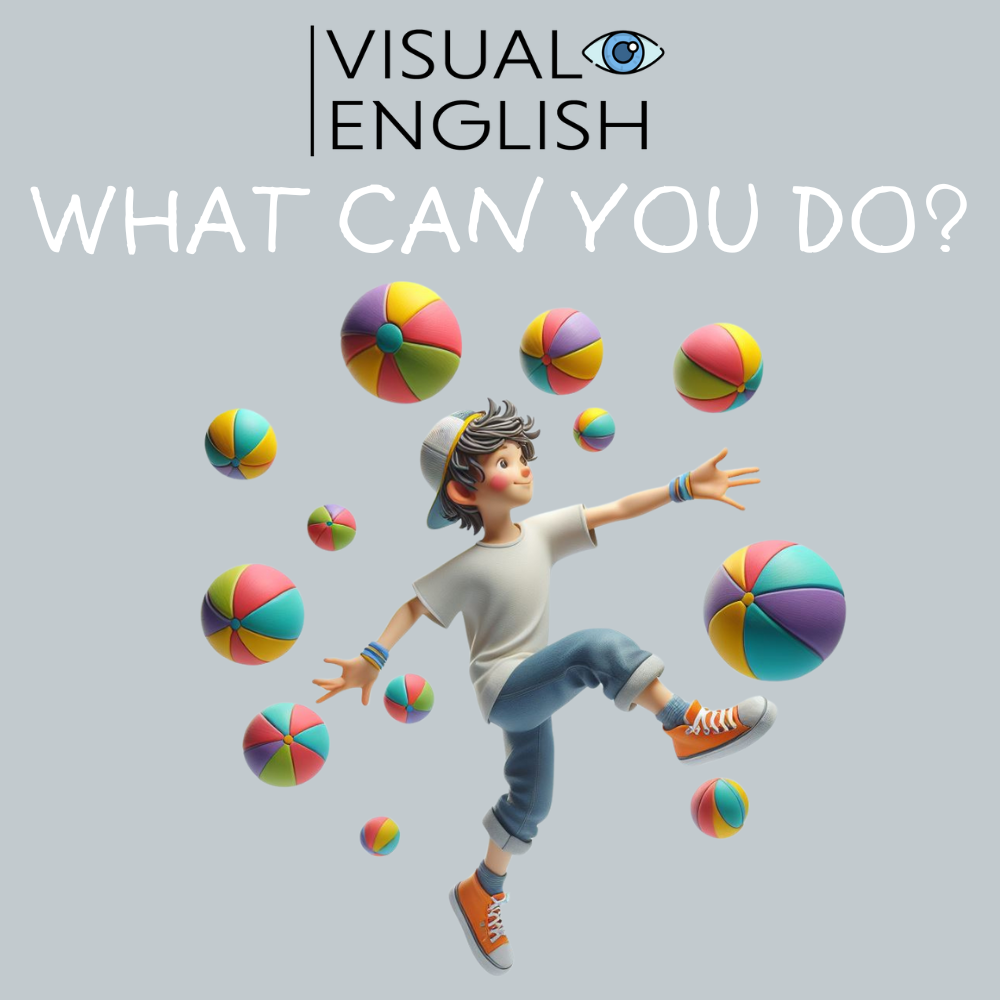
What Can You Do?
This abilities ESL lesson practises the modal can with sports, talents and action verbs. Students complete physical challenges, sing, play Simon Says and interview classmates with questions such as 'Can you draw?' They create a Super Skills poster and perform a mini talent show using full ability sentences.
7-day trial · Card required · €0 today · Cancel before renewal
Lesson format
2 × 45 minutes
Level
Elementary
Age group
Ages 8–11
Main focus
Speaking first
What students will learn
Lesson flow
Students try ability challenges like jumping and touching toes, sing along to a 'What Can You Do?' song asking 'Can he sing? Can she play the guitar?', and play Simon Says with can ('If you can swim, stand up!'). The second lesson mingles asking 'Can you draw?' to find classmates with different abilities, writes a Super Skills poster comparing what they and a friend can do, performs an ability talent show showing off a skill, and plays Ability Bingo marking called verbs.
Target language
- • 'Can you...?' / 'Yes, I can.' / 'No, I can't.'
- • 'What can you do?'
- • Ability verbs (swim, sing, draw, ride a bike)
- • 'My friend can ___. We can ___ together'
Key vocabulary
Everyday Skills
- • draw
- • sing
- • cook
- • dance
- • swim
- • ride
- • play
- • speak
- • build
- • juggle
Describing Ability
- • ability
- • skill
- • talent
Speaking questions students answer
- • Can you swim?
- • Can you ride a bike?
- • What can you do?
- • Can she play the guitar?
- • What can the monkey do?
Interactive activities in this lesson
Cross-curricular connections
- • Physical Education
- • Music
- • Personal Development
Support
- • Provide the sentence frame 'I can ___' / 'I can't ___'
- • Keep ability action-flashcards visible throughout
- • Pair students who need support with a partner for the talent-show roleplay
Challenge
- • Explain how they learned a skill using a full sentence
- • Compare their abilities with a friend's using 'We can ___ together'
- • Present three skills they would like to learn and explain why
Home challenge
Students create a Super Skills list at home with five things they can do and one new skill they would like to learn, then share it at the start of the next lesson.
Recommended teaching contexts
Why this lesson works
The lesson follows a clear progression: Perform ability challenges in a warm-up game, ask 'Can you...?' about a range of abilities, make a Super Skills poster and perform a mini talent show. Teachers can open the materials and start immediately, while students move from supported vocabulary practice to purposeful spoken English.