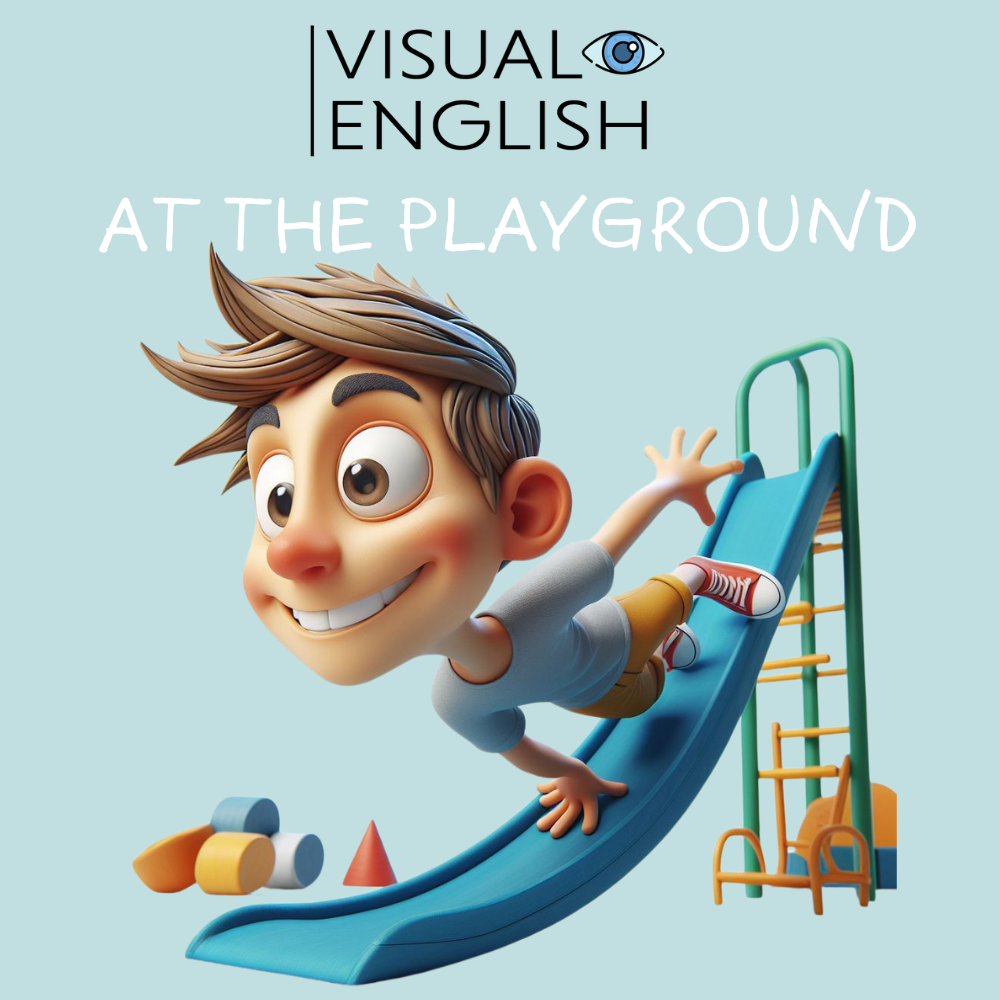
At The Playground
This playground ESL lesson teaches equipment, action verbs and ability language with can and can't. Students mime sliding, climbing and swinging, answer movement challenges and describe what people are doing. They make a playground poster and roleplay inviting friends to join different activities.
7-day trial · Card required · €0 today · Cancel before renewal
Lesson format
2 × 45 minutes
Level
Elementary
Age group
Ages 8–11
Main focus
Speaking first
What students will learn
Lesson flow
Students act out playground actions called by the teacher (slide, climb, swing), learn playground vocabulary from a video pausing on 'What is she doing? She's climbing,' and drill 'Can you jump high? Yes, I can.' The second lesson plays a playground challenge trading ability cards, makes a poster listing what they can and can't do at the playground, roleplays a group scene inviting friends to play, and races in a 'Can You...?' relay calling out full sentences.
Target language
- • 'Can you...?' / 'Yes, I can.' / 'No, I can't.'
- • Playground action verbs
- • 'Let's go to the ___!'
- • Playground equipment vocabulary
Key vocabulary
Playground Equipment
- • slide
- • swing
- • seesaw
- • merry-go-round
- • climbing frame
- • bench
Actions
- • jump
- • run
- • play
Useful Words
- • playground
- • equipment
- • sand
Speaking questions students answer
- • Can you climb?
- • Can you swing?
- • What can you do at the playground?
- • Can she spin fast?
- • Can he hang from the bars?
Interactive activities in this lesson
Cross-curricular connections
- • Physical Education
- • Personal Development
- • Outdoor Learning
Support
- • Provide the sentence frame 'I can ___' / 'I can't ___'
- • Keep playground-equipment picture cards visible throughout
- • Demonstrate each action before asking students to answer
Challenge
- • Describe what a classmate can and can't do using full sentences
- • Compare two pieces of playground equipment
- • Invite a friend to play using a full sentence in the roleplay
Home challenge
Students draw their favourite playground and write three to four sentences describing what they can do there and who they like to play with.
Recommended teaching contexts
Why this lesson works
The lesson follows a clear progression: Act out playground actions in a warm-up game, ask 'Can you climb?' using can/can't, make a playground poster and roleplay a playground visit. Teachers can open the materials and start immediately, while students move from supported vocabulary practice to purposeful spoken English.