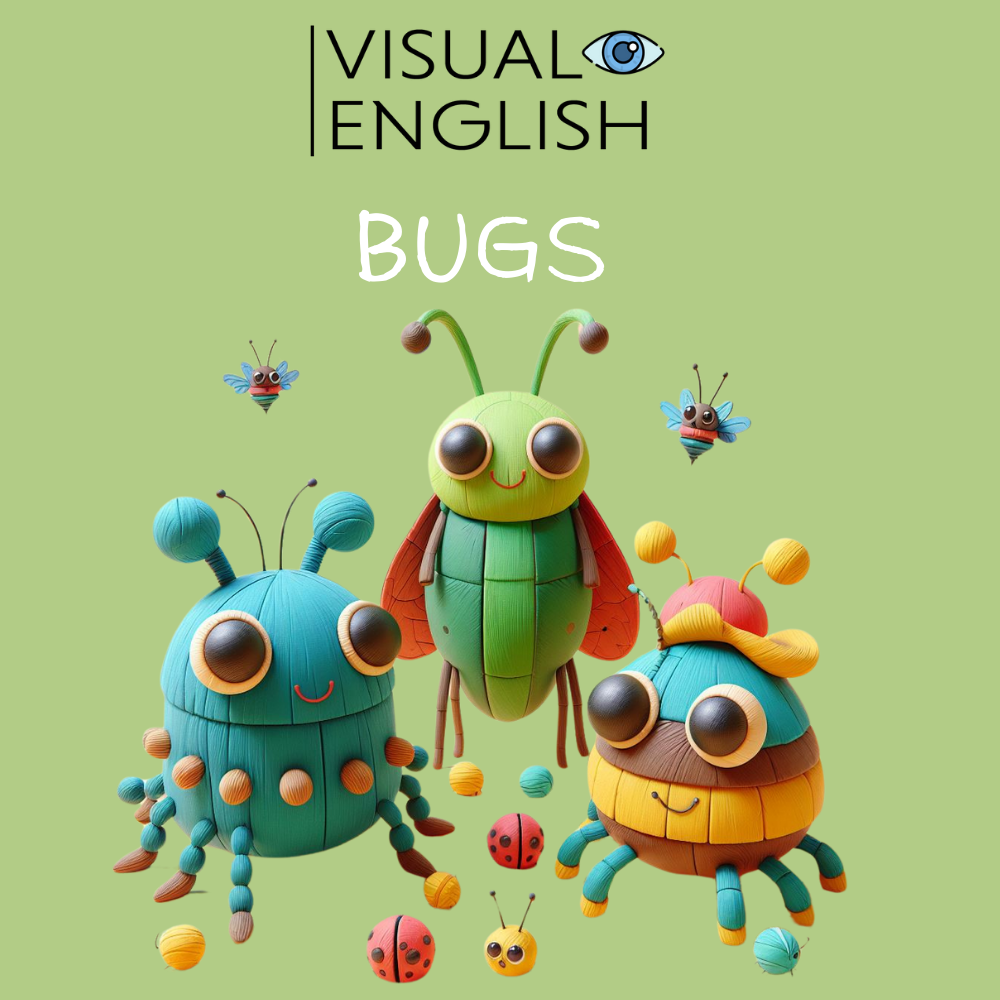
Bugs
This bugs ESL lesson helps learners identify common insects and describe their colours, legs and wings. Students sing, mime and count before asking classmates 'Do you like...?' They create and label an original bug, discuss its features and finish with a classroom Bug Hunt using hidden picture cards.
7-day trial · Card required · €0 today · Cancel before renewal
Lesson format
2 × 45 minutes
Level
Elementary
Age group
Ages 8–11
Main focus
Speaking first
What students will learn
Lesson flow
Children mime bugs (flapping like butterflies, buzzing like bees), sing an insects song pausing to ask 'How many legs?', and chant bug names with counting. The second lesson asks 'Do you like spiders?' in pairs graphing class favourites, makes a labelled bug craft describing legs and colour, and finishes with a Bug Hunt finding and describing hidden bug cards.
Target language
- • 'What is it?'
- • 'How many legs/wings does it have?'
- • 'Do you like ___?'
- • Bug vocabulary
Key vocabulary
- butterfly
- beetle
- spider
- ant
- bee
- grasshopper
- dragonfly
- worm
- ladybird
- cricket
Speaking questions students answer
- • What is it?
- • How many legs does it have?
- • Do you like spiders?
- • Do you like ants?
- • What bugs did you see?
Recommended teaching contexts
Why this lesson works
The lesson follows a clear progression: Mime bugs in a warm-up game, ask 'Do you like...?' with bug cards, make a bug craft and go on a Bug Hunt. Teachers can open the materials and start immediately, while students move from supported vocabulary practice to purposeful spoken English.