How to Teach Weather Vocabulary in ESL Classrooms (2026)
Table of contents(7 sections)ShowHide
Weather is one of the only ESL topics that's genuinely different every single day -- which means, taught right, it never needs to feel repetitive even after months of daily practice.
Why Weather Works So Well
Unlike vocabulary that's taught once and then set aside, weather has a natural, built-in reason to be revisited constantly: it's actually different today than it was yesterday.
Core Vocabulary
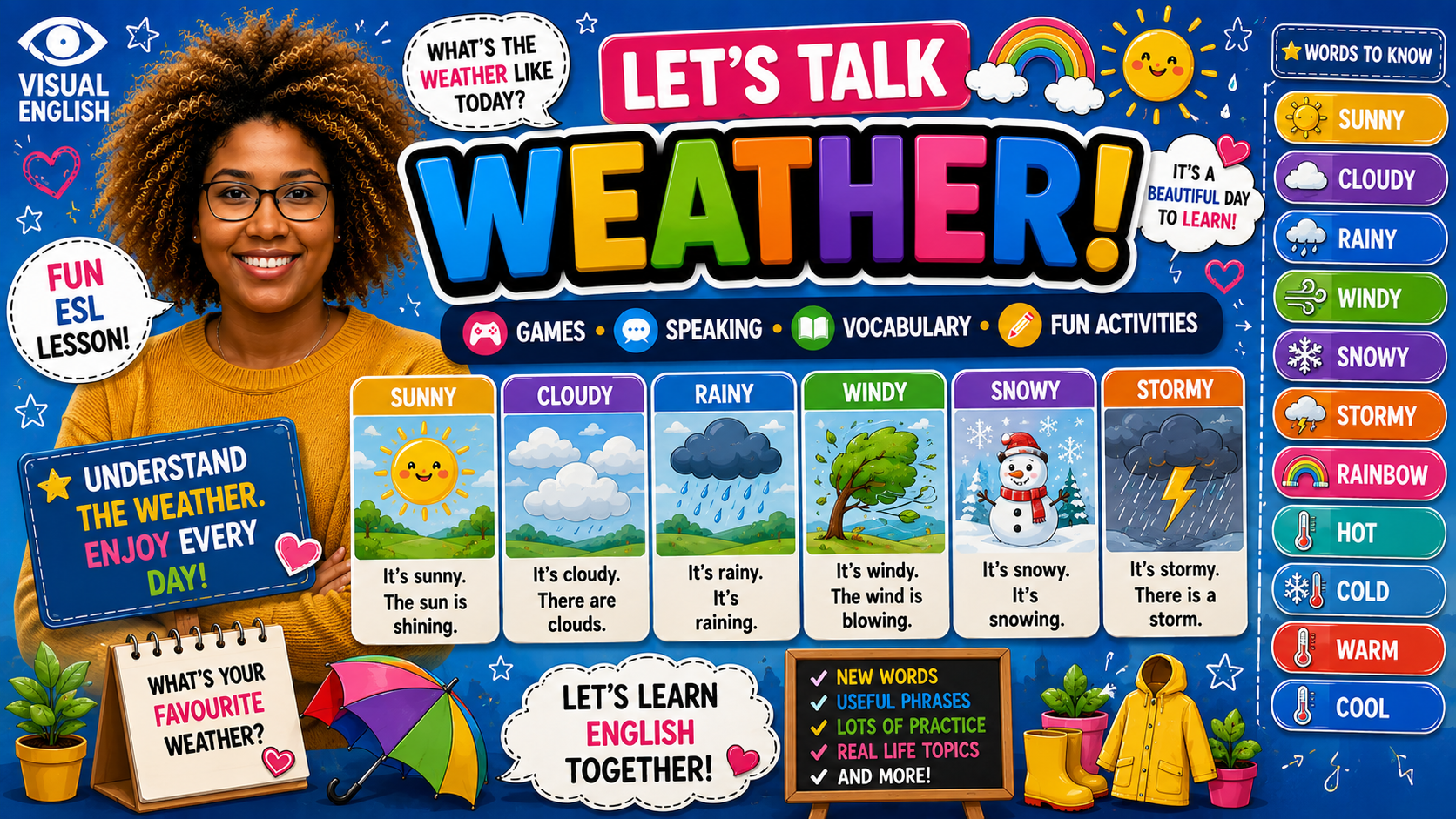
Start with sunny, rainy, cloudy, snowy, windy, hot, cold. These cover the vast majority of everyday weather description needs at a beginner level.
The Grammar That Pairs Naturally
Weather is the classic home for "What's the weather like?" / "It's sunny" -- a genuinely useful structure that also introduces the impersonal "it" subject, a pattern that trips up many learners in other contexts ("It's raining," "It's cold").
Speaking Activities That Work
1. Daily weather report. Open every lesson with a genuine "What's the weather like today?" -- the single best-value routine in this topic. 2. Weather and clothes match. Combine with clothes vocabulary: "It's cold, so I wear a coat."
3. Weather forecast role-play. Students act as a TV weather presenter, describing (real or invented) weather for the week. 4. Seasonal weather sort. Match typical weather to the correct season, reinforcing both topics together.
Common Mistakes to Watch For
- Omitting the impersonal "it" ("Is raining" instead of "It's raining") -- a very frequent error worth direct, repeated correction
- Confusing "hot/cold" with "warm/cool" in more nuanced descriptions
- Mixing up weather nouns and adjectives ("It's rain" instead of "It's raining" or "It's rainy")
Ready-Made Weather Lessons
Visual English weaves weather throughout the curriculum:
- How Is The Weather? -- Book 0B, first weather vocabulary
- How's The Weather? -- Book 0C
- How Is The Weather? -- Book 1, fuller weather description
See the full set on the Weather topic page.
Conclusion
Weather is the topic that keeps giving -- a two-minute daily routine here delivers more spaced repetition than almost any deliberately scheduled review activity. Build the habit early, and it quietly reinforces itself for the rest of the year.
Frequently asked questions
Should weather be a standalone unit or an ongoing routine?
Both -- teach it as a unit initially, then fold a quick daily check-in into every subsequent lesson for genuine, low-effort spaced repetition.
What's the most important grammar point in this topic?
The impersonal "it" subject ("It's sunny," "It's raining") -- getting this pattern solid here helps with other impersonal "it" structures later.
How do I keep the daily routine from feeling like filler?
Keep it brief (30-60 seconds) but genuine -- ask a different student each day, and occasionally extend into "What do you want to do in this weather?"