How to Teach Shopping Vocabulary in ESL Classrooms (2026)
Table of contents(7 sections)ShowHide
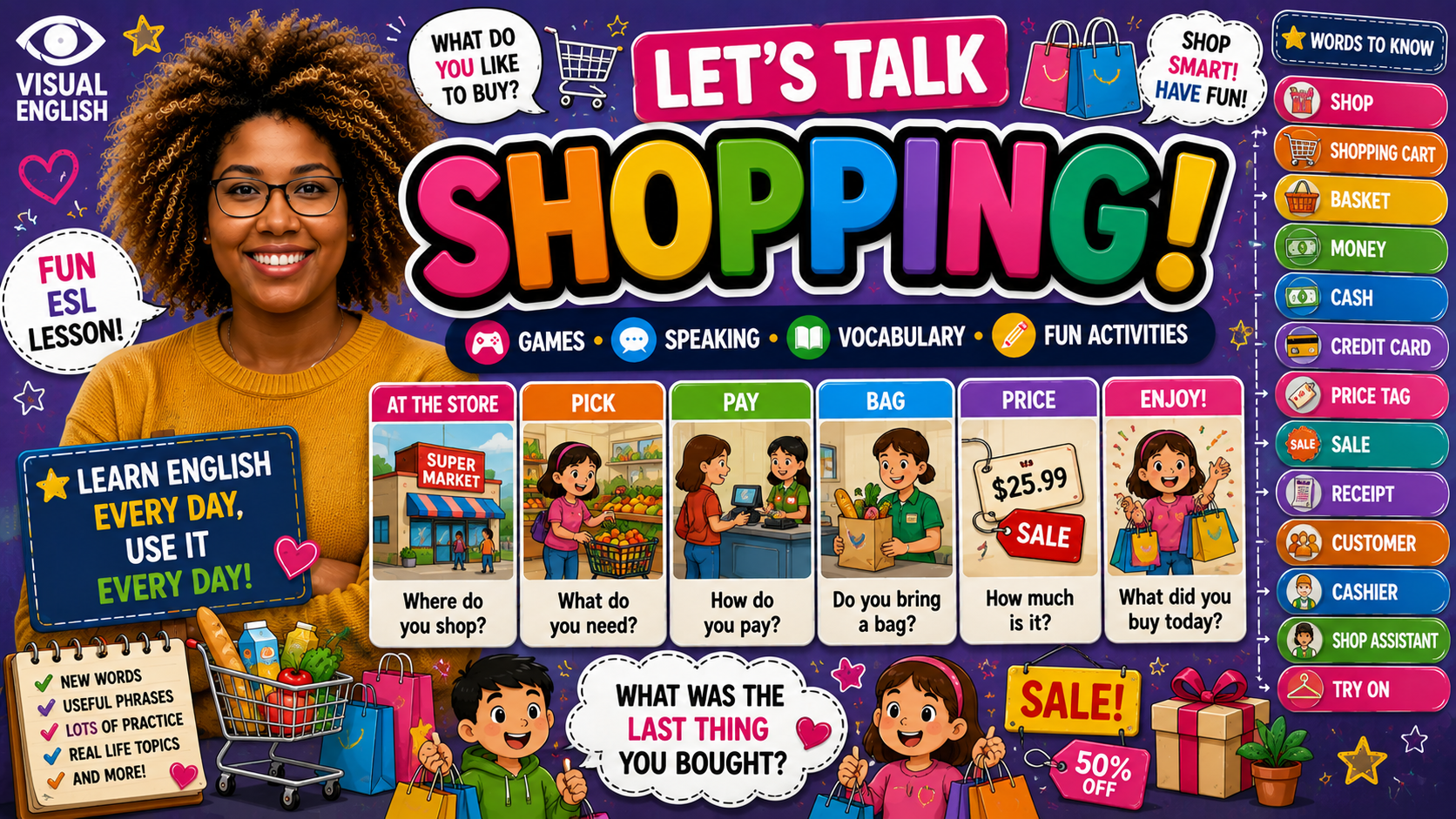
Shopping is one of the most immediately transferable topics in ESL -- the language taught in this unit is language a student might actually use on a trip abroad within weeks of learning it. That real-world payoff is worth foregrounding explicitly.
Why Shopping Works So Well
Unlike more abstract topics, shopping has a clear, simple transactional structure (ask price, respond, pay) that maps directly onto a real-life situation students can picture immediately.
Core Vocabulary
Start with buy, sell, price, cheap, expensive, money. Add specific shop types and items once the transactional core is solid, along with basic currency vocabulary appropriate to the students' context.
The Grammar That Pairs Naturally
Shopping is the natural home for "How much is it?" / "It's [price]" and simple transactional exchanges ("Can I have...?", "Here you are," "Thank you"). It also supports comparatives well ("This is cheaper than that").
Speaking Activities That Work
1. Classroom shop role-play. Set up a simple pretend shop with priced items; students take turns buying and selling. 2. How much is it? guessing game. Show real or pictured items; students guess and ask prices.
3. Shopping list. Students create a simple shopping list and "buy" items from a partner acting as shopkeeper. 4. Cheap or expensive? sorting. Sort items into categories and justify with comparative language.
Common Mistakes to Watch For
- Confusing "How much" (price/quantity of uncountables) with "How many" (countable items)
- Overusing "buy" when "pay for" is more natural in context ("I buy 10 dollars for it" instead of "I pay 10 dollars for it")
- Currency and number pronunciation errors when stating prices aloud
Ready-Made Shopping Lessons
Visual English covers shopping and money across the curriculum:
- Let's Go Shopping -- Book 2, shopping phrases and prices
- How Much Is It? -- Book 3, price dialogues
- At The Supermarket -- Book 5, grocery shopping vocabulary
- Money -- Book 7, British currency in detail
See the full set on the Shopping topic page.
Conclusion
Shopping is about as close to immediately useful English as a classroom topic gets. Build role-plays around real transactional structure, and students leave with language they can genuinely use, not just recognise.
Frequently asked questions
Should real or play money be used in role-plays?
Play money or simple paper tokens work well and avoid the complications of handling real currency in class.
What's the best grammar entry point?
"How much is it?" / "It's..." -- it's the core transactional exchange the whole topic builds around.
How do I extend this for older students?
Move into comparing prices, discussing value for money, and more complex transactional language like returns or complaints.