How to Teach Numbers in ESL Classrooms (2026)
Table of contents(7 sections)ShowHide
Numbers are quietly one of the most-used vocabulary sets in the entire curriculum -- they resurface in ages, birthdays, prices, phone numbers, and dates for years after they're first taught. Getting the foundation solid early pays off across the whole course.
Why Numbers Works So Well
Unlike topic-specific vocabulary, numbers are used constantly and across every other unit -- which means students get natural spaced repetition for free, as long as the initial teaching is solid.
Core Vocabulary
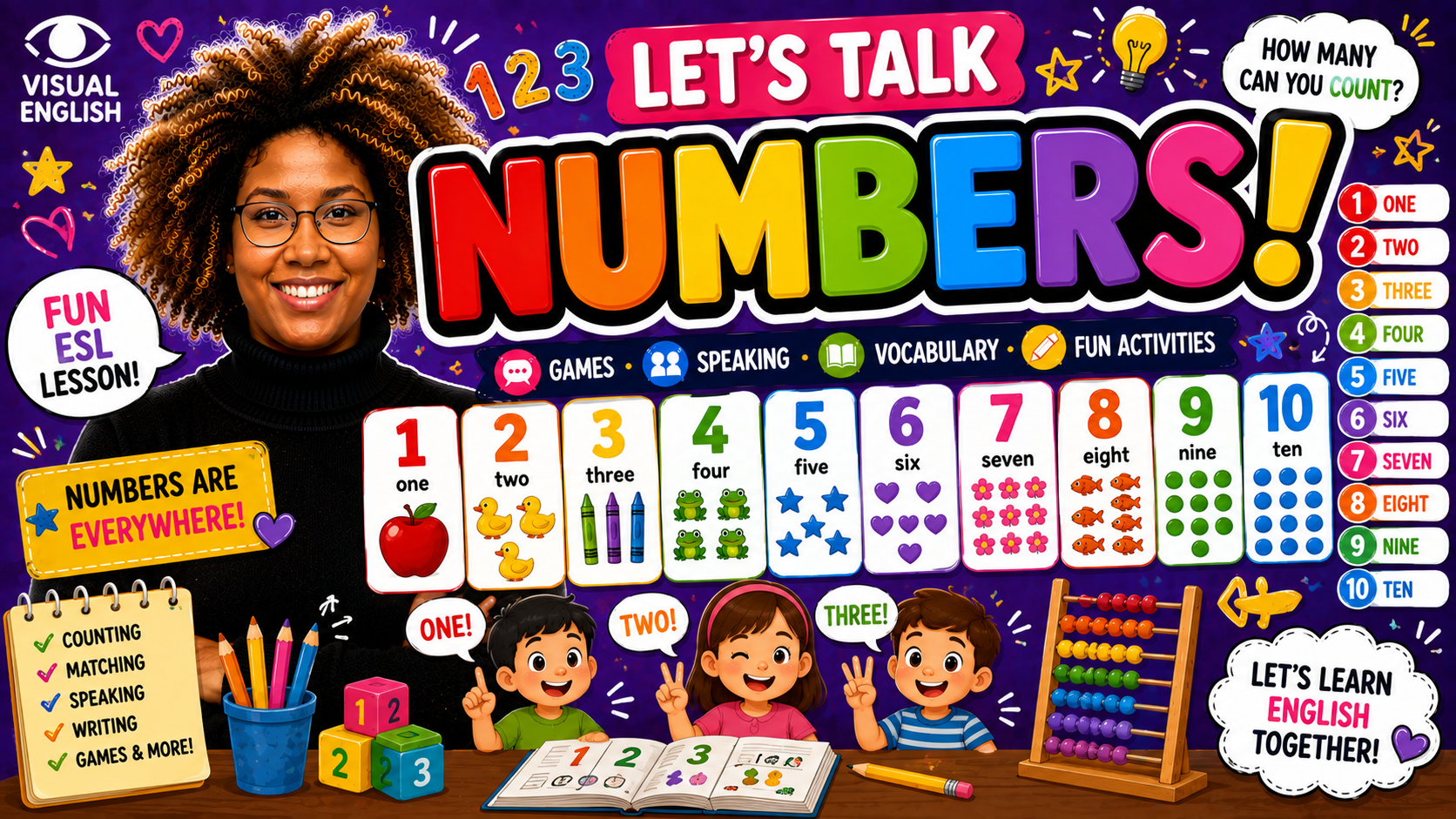
Start with 1-10, taught through counting rhythm and repetition rather than rote memorisation alone. Extend to 11-20 once single digits are automatic, then to tens (20, 30, 40...) for older students.
The Grammar That Pairs Naturally
Numbers combine with "How old are you?" / "I'm [number] years old," "How many...?" for counting objects, and later with ordinal numbers for dates ("the first," "the second").
Speaking Activities That Work
1. Counting rhymes and songs. Rhythmic repetition (like "5 Little Monkeys" or "One Potato") cements numbers faster than flashcards alone for young learners. 2. How many...? counting game. Count real classroom objects aloud -- pencils, students, chairs.
3. Number bingo. A reliable, low-prep way to drill number recognition and listening. 4. Phone number practice. For older students, practising saying phone numbers aloud is genuinely useful, real-world number practice.
Common Mistakes to Watch For
- Confusing similar-sounding numbers (thirteen/thirty, fourteen/forty) -- a very frequent and persistent pronunciation issue worth dedicated drilling
- Cardinal/ordinal confusion once dates are introduced ("two" vs "second")
- Skipping straight to large numbers before single digits are fully automatic
Ready-Made Numbers Lessons
Visual English builds numbers in early and reinforces them throughout:
- One Potato -- Book 0A, first counting rhyme
- 5 Little Monkeys -- Book 0A, counting through song
- How Old Are You? -- Book 1, numbers and age
- Numbers 1–20 -- Book 2, extended range
See the full set on the Numbers topic page.
Conclusion
Numbers are the vocabulary set students will use the most, for the longest. A little extra care in the first lesson -- especially around tricky pronunciation pairs -- pays dividends across the entire course.
Frequently asked questions
How many numbers should a first lesson introduce?
1-5 or 1-10, depending on age -- resist rushing to higher numbers before the first set is automatic.
What's the best way to teach the thirteen/thirty type confusion?
Direct contrast drilling -- say pairs side by side repeatedly, and exaggerate stress differences (thir-TEEN vs THIR-ty) until students hear the difference reliably.
Where do numbers show up again later in the curriculum?
Everywhere -- ages, birthdays, prices, phone numbers, dates. It's worth treating numbers as a running thread rather than a single unit.