How to Teach Health and Illness Vocabulary in ESL (2026)
Table of contents(7 sections)ShowHide
Health vocabulary is some of the most genuinely useful English a student will ever learn -- describing symptoms, understanding basic medical advice, and expressing how they feel when something's wrong. It's also a topic that rewards clear, structured teaching, since the vocabulary is easy to confuse without repetition.
Why Health Works So Well
Unlike some ESL topics, health vocabulary has obvious real-world stakes -- students intuitively understand why it matters, which supports motivation even at lower levels.
Core Vocabulary
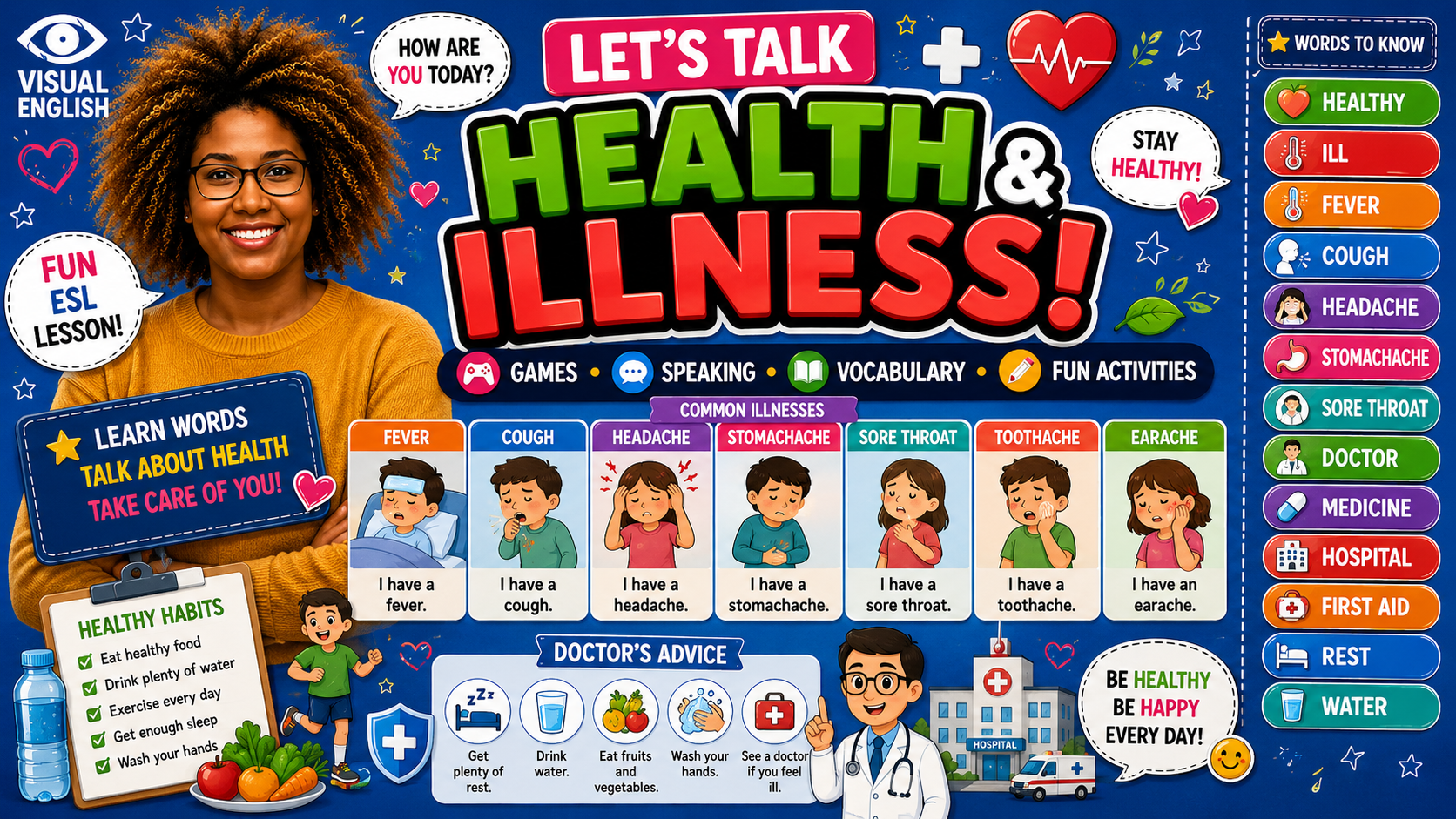
Start with simple states: sick, tired, hungry, thirsty. Move into specific symptoms (headache, stomach ache, fever, cough) once students can already say "I feel..." comfortably.
The Grammar That Pairs Naturally
Health is the best context for giving advice with should/shouldn't: "You should drink water," "You shouldn't eat sugar." It also introduces "What's the matter?" / "I have a headache" as a natural question-answer pair.
Speaking Activities That Work
1. Doctor role-play. One student is the doctor, the other describes symptoms and receives simple advice. 2. Match the remedy. Match a symptom (headache) to sensible advice (rest, drink water) -- reinforces should/shouldn't naturally.
3. How do you feel today? A quick daily check-in that doubles as emotions/health revision. 4. Healthy or unhealthy? Sort foods or habits into healthy/unhealthy categories and justify with "because."
Common Mistakes to Watch For
- Confusing "sick" (ill) with "sick of" (fed up with) -- a common source of confusion once students meet both meanings
- Overusing "have" incorrectly with symptoms ("I have hurt" instead of "I have a headache" or "My head hurts")
- Mixing up should/shouldn't polarity when giving advice under pressure -- worth extra drilling since the stakes (real advice) make errors more noticeable
Ready-Made Health Lessons
Visual English covers health across several levels:
- What Is The Matter? -- Book 2, symptoms and doctor vocabulary
- Get Well Soon -- Book 3, illness and recovery language
- Healthy Lifestyle -- Book 7, wellness habits and advice for older students
See the full set on the Health topic page.
Conclusion
Health vocabulary combines real-world usefulness with clean, teachable grammar (should/shouldn't). Keep the advice-giving structure central, and students walk away with English they'll genuinely use.
Frequently asked questions
Is this topic appropriate for young learners?
Yes, at a basic level ("I feel sick," "I have a headache") -- it's practical, real-world vocabulary that even young students benefit from knowing.
How do I keep role-plays from feeling repetitive?
Rotate the symptom and the advice each round, and let students invent their own combinations once the pattern is familiar.
What's the natural next step after basic symptoms?
Moving into lifestyle and prevention language ("You should exercise," "You shouldn't skip breakfast") for older, more advanced students.