How to Teach Greetings in ESL Classrooms (2026)
Table of contents(7 sections)ShowHide
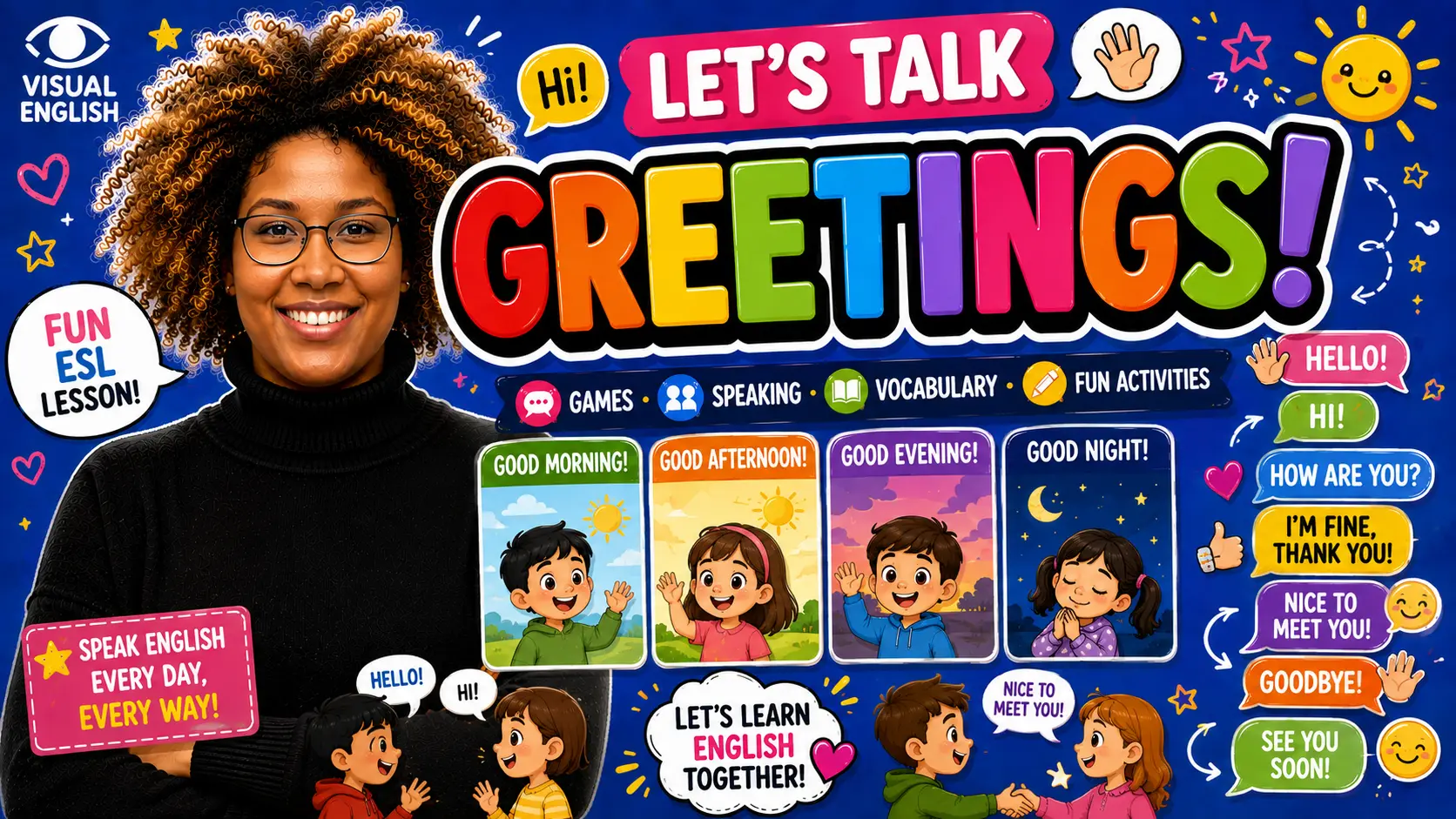
Greetings are usually the first English a student ever produces -- "Hello," "Good morning," "How are you?" That first-lesson status means how you teach them matters more than it might seem: get the routine right early, and it becomes the backbone of every class that follows.
Why Greetings Works So Well
Greetings are used at the start of every single lesson, which means they get more natural repetition than almost any other vocabulary -- students don't need a special activity to practise them, just a consistent routine.
Core Vocabulary
Start with hello, goodbye, good morning, good afternoon, and "How are you?" / "I'm fine, thank you." Add "What's your name?" / "My name is..." and "Nice to meet you" as soon as students are ready to interact with each other, not just the teacher.
The Grammar That Pairs Naturally
Greetings introduce question-and-answer structure from day one: "How are you?" / "I'm fine." They're also the natural place to introduce time-of-day awareness (morning/afternoon/evening), which reinforces itself daily.
Speaking Activities That Work
1. Daily greeting circle. Start every single lesson the same way -- greet each student by name and have them respond. Repetition across weeks is what makes this topic stick.
2. Greeting chain. Students greet each other in a moving line or circle, practising with multiple partners in a few minutes. 3. Time-of-day match. Show a clock or picture of a time of day; students respond with the correct greeting.
4. Role-play meeting someone new. Two students meet for the "first time": greet, ask names, say goodbye -- a complete mini-conversation.
Common Mistakes to Watch For
- Using "Good morning" at the wrong time of day out of habit -- worth reinforcing the time-of-day link explicitly
- Answering "How are you?" with just "fine" instead of a full sentence -- an easy early habit to build correctly
- Confusing "Nice to meet you" (first time) with "Nice to see you" (someone you already know)
Ready-Made Greetings Lessons
Greetings appear at the very start of the Visual English curriculum:
- Let's Say Hello -- Book 1, the very first unit
- Good Morning -- Book 0C, time-of-day greetings
- How Are You? -- Book 1, feelings and social response
See the full set on the Greetings topic page.
Conclusion
Greetings aren't just a first lesson -- they're a daily habit that, done consistently, becomes the most-practised language in your whole course. Build the routine early and keep it running every single lesson.
Frequently asked questions
Should greetings only be taught in the first lesson?
No -- treat them as an ongoing routine, not a one-time unit. The daily repetition is what builds real fluency here.
How do I keep greetings from feeling boring after week one?
Vary who initiates (teacher, then students greeting each other) and add small extensions like "How are you today?" with a real, changing answer.
What comes after basic greetings?
Introductions ("What's your name?") and simple social phrases ("See you tomorrow," "Have a nice day") extend naturally from the same routine.