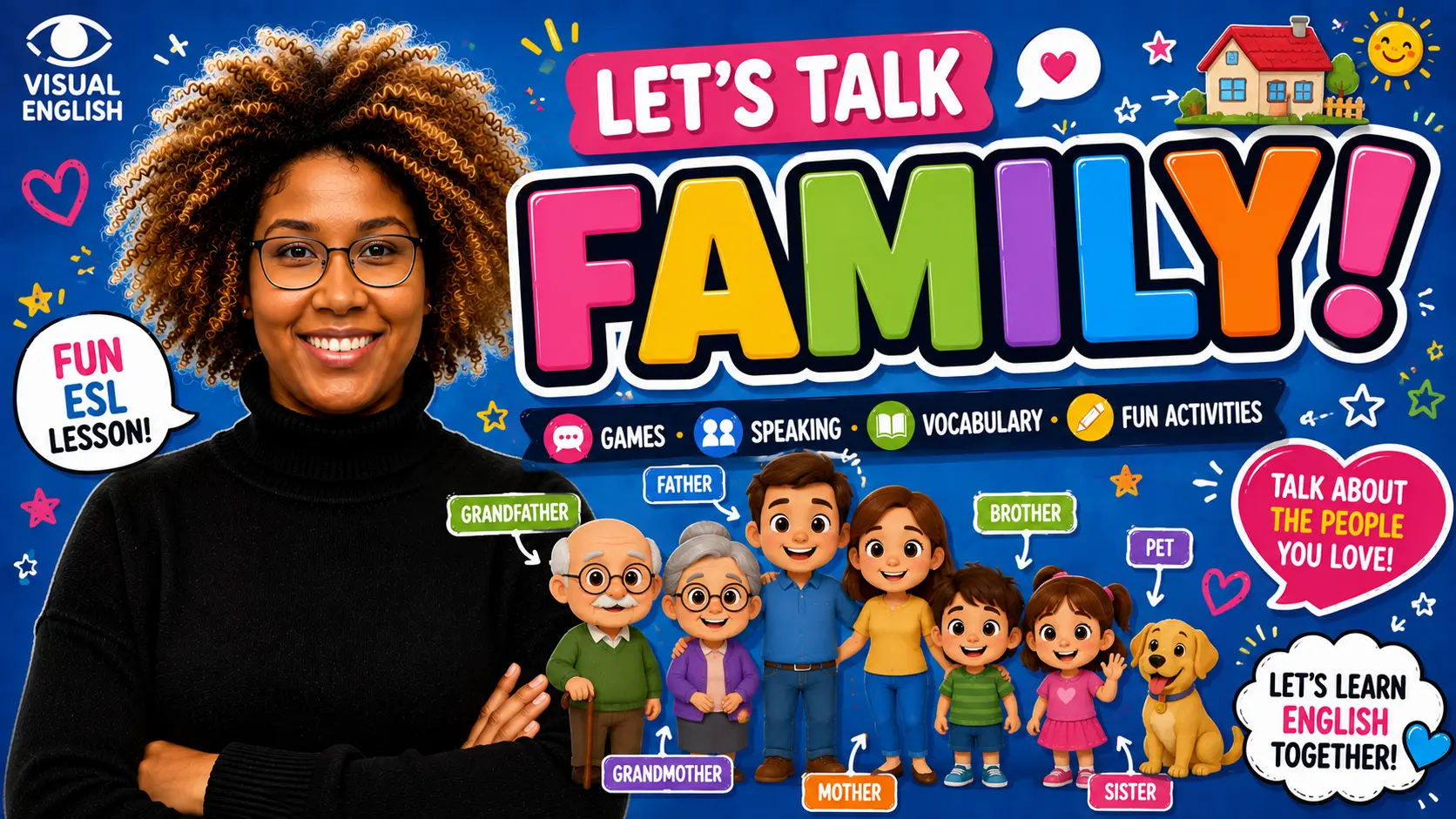
How to Teach Family Vocabulary in ESL Classrooms (2026)
Table of contents(7 sections)ShowHide
Family is about as personal as ESL topics get -- every student has one, in some form, and most are eager to talk about it. That built-in motivation makes it one of the most naturally engaging topics in the curriculum, as long as it's handled with a bit of care around different family structures.
Why Family Works So Well
Students don't need to imagine a scenario -- they already have real people to describe. This produces more authentic, detailed speech than topics requiring invented context.
Core Vocabulary
Start with the immediate family: mum, dad, brother, sister, baby. Add extended family (grandma, grandpa, aunt, uncle, cousin) once the basics are solid -- these often require more repetition since they're used less frequently outside the classroom.
The Grammar That Pairs Naturally
Family is the best context in the entire curriculum for teaching possessives: "my mum," "his brother," "her grandma." It also introduces "Who is this?" / "This is my..." -- simple, useful, and immediately personal.
Speaking Activities That Work
1. Family tree. Students draw and label their own family tree, then present it in simple sentences. 2. Guess the relation. Show a family photo (real or illustrated); students guess relationships using question forms.
3. Whose is it? Practise possessives with classroom objects before applying the same structure to family members. 4. Finger family song. Works especially well for the youngest learners -- ties vocabulary to rhythm and repetition.
Common Mistakes to Watch For
- Confusing possessive pronouns (his/her) -- a very common and persistent error across many L1 backgrounds
- Overusing "have" instead of "has" with third-person family members ("My sister have a dog")
- Sensitivity note: avoid assuming a standard family structure (two parents, siblings) when designing activities -- "Who lives in your home?" is a more inclusive prompt than "Tell me about your mum and dad."
Ready-Made Family Lessons
Visual English covers family across multiple levels:
- My Family -- Book 1, core family vocabulary
- I Love You! -- Book 0B, affection and close family
- My Family -- Book 4, describing family with adjectives
See the full set on the Family topic page.
Conclusion
Family is personal, universal, and grammar-rich -- few topics combine authenticity and structure this well. Keep prompts open and inclusive, and it becomes one of the most rewarding units to teach.
Frequently asked questions
How do I handle non-traditional family structures sensitively?
Use open prompts ("Who lives with you?", "Who is in your family?") rather than assumptions, and let students describe their own reality in their own words.
What's the best grammar entry point?
Possessives ("my," "his," "her") -- family is the topic where they feel most natural and get the most repetition.
How do I extend this topic for older students?
Move into describing personality and relationships ("My brother is funny," "I get along well with my sister") rather than just naming relatives.