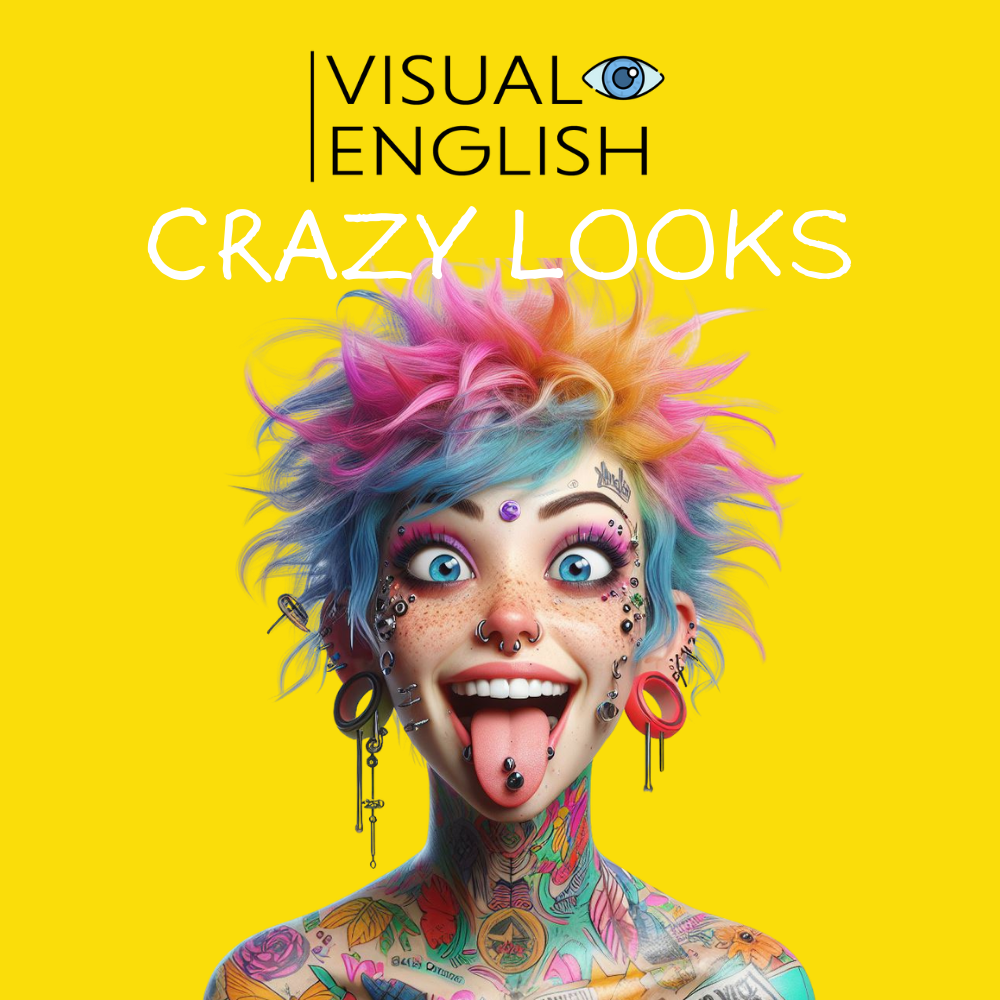
Crazy Looks
This describing appearance ESL lesson combines hair, facial features, clothes and personal identity. Students use have or has and present continuous forms to describe classmates and characters from different countries. They complete an identity card and roleplay meeting a new student while exchanging appearance and background details.
7-day trial · Card required · €0 today · Cancel before renewal
Lesson format
2 × 45 minutes
Level
Intermediate
Age group
Ages 12–14
Main focus
Speaking first
What students will learn
Lesson flow
Students spot a missing feature on a cartoon character, learn hair/face/clothes vocabulary describing classmates ('She has freckles and a ponytail'), and drill 'What does he look like? He's tall. He's wearing jeans.' The second lesson plays a flag-guessing game linking nationality to style ('He's from Nigeria. He wears traditional shirts.'), fills in an identity card with name, age, country and style, and roleplays meeting a new student describing appearance.
Target language
- • Have/has for appearance
- • Present continuous: is wearing
- • 'What do you look like?' / 'Where are you from?'
- • Appearance and identity vocabulary
Key vocabulary
- tattoo
- piercing
- hairstyle
- dye
- fashion
- expression
- identity
- style
- appearance
- unique
Speaking questions students answer
- • What do you look like?
- • What are you wearing today?
- • Where are you from?
- • What's your style?
- • Who has short hair and wears a hoodie?
Recommended teaching contexts
Why this lesson works
The lesson follows a clear progression: Spot a missing feature in a What's Missing? warm-up, describe classmates using have/has and is wearing, make an identity card and roleplay meeting a new student. Teachers can open the materials and start immediately, while students move from supported vocabulary practice to purposeful spoken English.