Why Children Learn English for Years But Still Cannot Speak
Table of contents(10 sections)ShowHide
Introduction
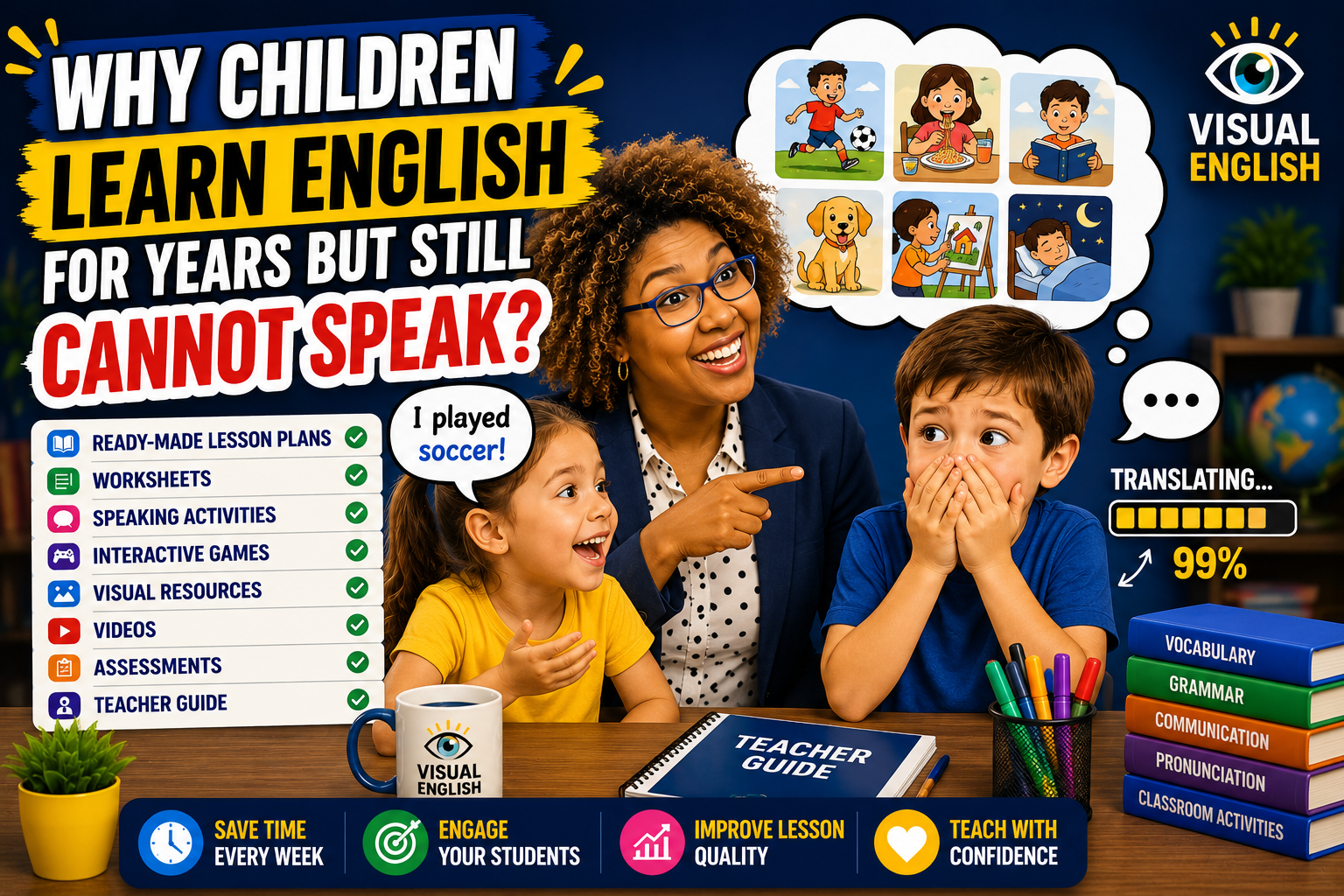
Imagine two children sitting in an English classroom. The teacher asks: "What did you do at the weekend?" One child immediately answers: "I played football with my friends." The other child knows the vocabulary, understands the question, and has studied English for years. Yet nothing comes out. The child thinks. Translates. Searches for the correct grammar. Worries about making a mistake. And stays silent.
This situation happens every day in ESL classrooms around the world. The question is: why do so many children learn English for years but still struggle to speak confidently?
They Know English. So Why Can't They Speak?
The problem is usually not vocabulary. The problem is usually not intelligence. The problem is often the difference between learning English and using English.
Many students spend years:
- Memorizing vocabulary lists
- Completing worksheets
- Learning grammar rules
- Preparing for tests
- Translating sentences
These activities help students recognize English. They do not automatically help students communicate.
The Difference I Saw Between My Own Children and Many ESL Students
One of the biggest reasons I started questioning traditional language teaching was watching my own children grow up speaking three languages: Polish, English, and French. From a very young age, they were surrounded by conversation. They listened. They responded. They asked questions. They made mistakes. Most importantly, they used language every day.
What fascinated me was how naturally they switched between languages. When someone spoke Polish, they answered in Polish. When someone spoke English, they answered in English. When someone spoke French, they answered in French. There was no visible translation process. They simply understood and responded.
At the same time, I was teaching students who had spent years studying English. Many knew more grammar terminology than my children. Many scored highly on tests. Yet when I asked simple questions such as:
- What can you see?
- What did you do today?
- What is happening in this picture?
Many students hesitated. Some translated every word in their heads. Others worried about making mistakes.
The contrast was impossible to ignore. My children were using language as a tool for communication. Many students were studying English as an academic subject.
The Translation Trap
Many learners unknowingly follow this process:
English Question → Native Language → Meaning → Native Language Answer → English Answer
This takes time. Real conversations move quickly. Fluent speakers do not translate every sentence. They connect English directly to meaning. The longer students depend on translation, the harder spontaneous speaking becomes.
Why Pictures Change Everything
One day I noticed something interesting. When I showed students a picture instead of a worksheet, participation increased immediately. Students had something concrete to discuss. Instead of translating, they focused on what they could see.
A simple picture can generate dozens of questions:
- What is it?
- What colour is it?
- Where is it?
- What is happening?
- What will happen next?
- What do you think?
Suddenly students stop worrying about grammar and start communicating.
One Picture. Hundreds of Conversations.
Imagine showing students a picture of a jungle. Immediately you can ask: Vocabulary: jungle, river, trees, animals Observation Questions:
- What can you see?
- Are there many trees?
- Is the river big or small?
Critical Thinking Questions:
- What animals might live there?
- Would you like to visit?
- Is it dangerous?
Storytelling Questions:
- Who lives in the jungle?
- What happened before this picture?
- What will happen next?
One image can create an entire speaking lesson.
Children Learn to Speak by Speaking
Think about how children learn their first language. Nobody gives a two-year-old grammar worksheets. Nobody asks them to memorize irregular verbs.
Children learn through:
- Listening
- Watching
- Responding
- Repetition
- Real communication
Language develops naturally through use. The same principle applies to learning English. Students become better speakers by speaking.
The Visual English Approach
Visual English was created to solve this exact problem. Too many students were learning English without learning how to communicate. Instead of focusing primarily on translation and memorization, Visual English uses:
- Visual prompts
- Conversation questions
- Speaking activities
- Interactive games
- Teacher guides
- Videos
- Worksheets designed around communication
Today the platform includes:
- 10 books
- 178 ready-made units
- 20,000+ custom visuals
- Teacher resources
- Interactive games
- Classroom activities
Every resource is designed with one goal: get students speaking.
What Teachers Can Do Today
If you want students to speak more English:
- ✅ Ask more questions
- ✅ Use more pictures
- ✅ Reduce translation
- ✅ Encourage mistakes
- ✅ Focus on communication before perfection
The goal is not perfect grammar. The goal is meaningful communication.
Conclusion
Children do not struggle to speak English because they are lazy. They struggle because many classrooms spend more time teaching English as a subject than using English as a language. Vocabulary matters. Grammar matters. But communication must come first.
When students spend less time translating and more time responding, describing, predicting, and discussing, something powerful happens: English stops being something they study. English becomes something they use.
Frequently asked questions
Why can students memorize English words but not speak them?
They are usually taught through translation, lists, and worksheets rather than real communication. Without regular speaking practice tied to meaning, words stay passive and never become usable language.
How do pictures help students start speaking English?
Pictures link English directly to meaning, bypassing translation. One image generates dozens of natural questions and answers, giving every student multiple speaking turns in a single lesson.
What is the Visual English approach?
Every lesson starts with a visual prompt paired with ready-made questions, answers, and speaking activities, so teachers can focus on conversation rather than preparation.
At what age can children start learning English visually?
From around age 3. Visual learning matches how children acquire their first language, so it works for very young learners as well as older students who lack speaking confidence.
How long before students start speaking more confidently?
Most teachers report visible progress within a few weeks when lessons are image-led and conversation-based, because students practice speaking in every single class.