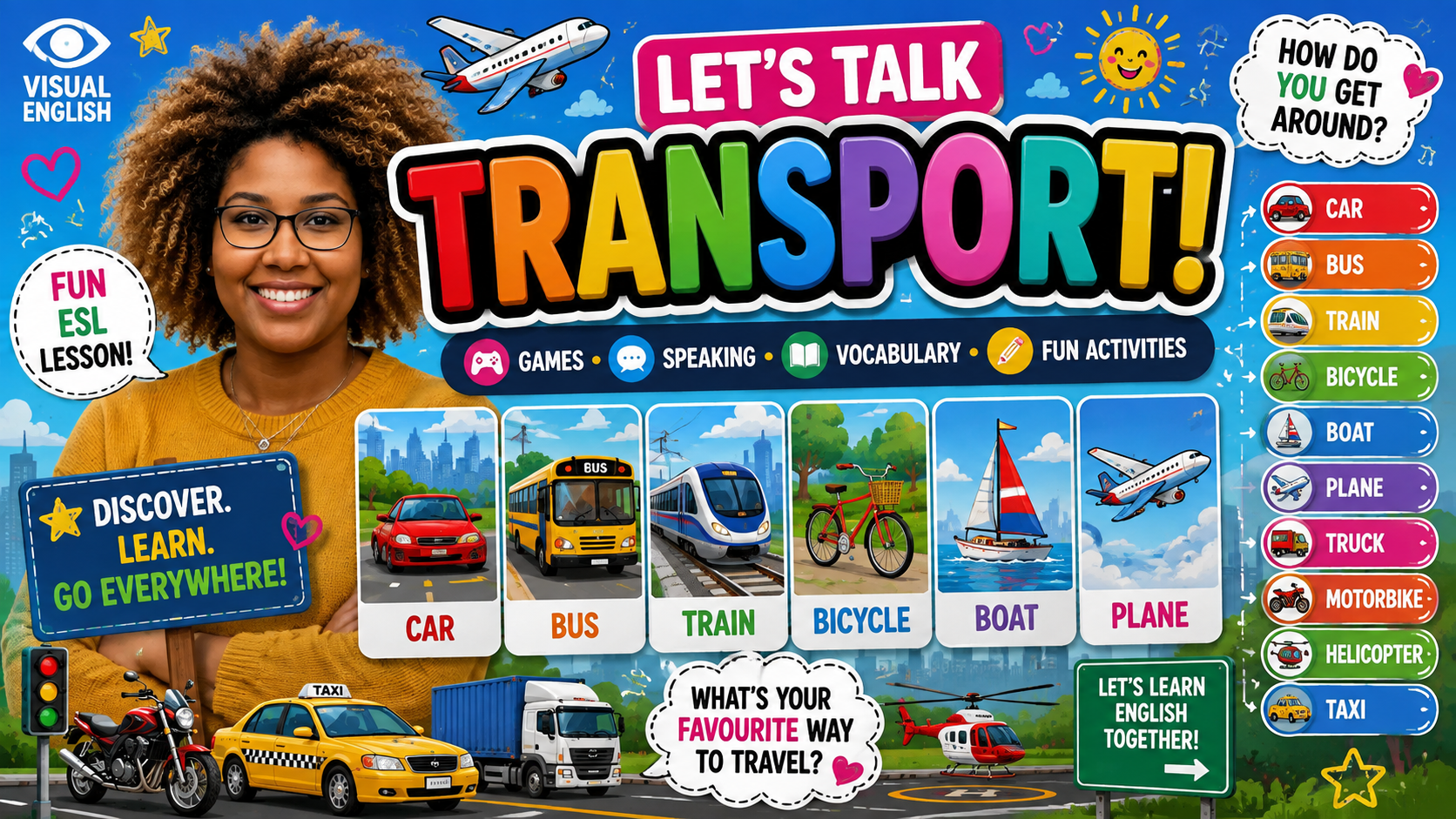
How to Teach Transport Vocabulary in ESL Classrooms (2026)
Table of contents(7 sections)ShowHide
Every student gets to school somehow -- by car, bus, bike, or on foot -- which makes transport one of the most naturally personal, checkable topics in the curriculum. There's always a real, current answer to "How do you go to school?"
Why Transport Works So Well
Transport vocabulary describes a daily, lived experience rather than an abstract scenario, so students can answer genuinely and in detail from the very first question.
Core Vocabulary
Start with common vehicles: car, bus, bike, train, plane, boat. Add transport-related verbs (drive, ride, fly, walk) once vehicle names are solid.
The Grammar That Pairs Naturally
Transport is the natural home for "How do you go to...?" / "I go by..." and "How did you get here?" for past tense practice. It also supports comparisons well ("The train is faster than the bus").
Speaking Activities That Work
1. How do you get to school? survey. A genuine, personal survey activity with real classroom data.
2. Vehicle sounds guessing game. Make or play vehicle sounds; students guess and name the vehicle. 3. Fastest way there. Compare different transport options for a journey, using comparative language.
4. Build a vehicle. A craft-based activity (drawing or building) paired with description practice.
Common Mistakes to Watch For
- Preposition confusion with transport ("by bus" and "by car" but "on foot," not "by foot")
- Mixing up "drive" (car, active) and "ride" (bike, passive on/in a vehicle)
- Overusing "go" without the mode of transport specified, missing the "by + vehicle" structure entirely
Ready-Made Transport Lessons
Visual English covers transport across multiple books:
- Traffic Lights -- Book 0A, first transport and safety vocabulary
- Driving My Car -- Book 0B, vehicle vocabulary
- How Do You Go To School? -- Book 2, transport habits with 'by'
- How Did You Get Here? -- Book 5, past tense transport
See the full set on the Transport topic page.
Conclusion
Transport is functional, personal, and immediately practical -- students already have a real answer before you even ask the question. Anchor lessons in genuine daily habits, and the language sticks because it's already true.
Frequently asked questions
What's the best grammar entry point?
"How do you go to school?" / "I go by..." -- personal, real, and structurally simple.
How do I fix the "by foot" error?
Direct contrast: teach "on foot" as a fixed exception alongside the "by + vehicle" pattern from the start, rather than correcting it after the error forms.
How do I extend this for older students?
Move into comparing transport options, discussing public transport systems, or environmental impact of different vehicles.