How to Teach Sports Vocabulary in ESL Classrooms (2026)
Table of contents(7 sections)ShowHide
Sports vocabulary tends to bring a different kind of energy into the classroom -- students who are quiet in other topics often light up here, especially if the class has real football fans, swimmers, or dancers in it. That built-in enthusiasm is worth channelling into structured speaking practice.
Why Sports Works So Well
Most students already have opinions and real experience with at least one sport, giving genuine content to work with rather than invented scenarios. It also naturally supports physical, high-energy classroom activities.
Core Vocabulary
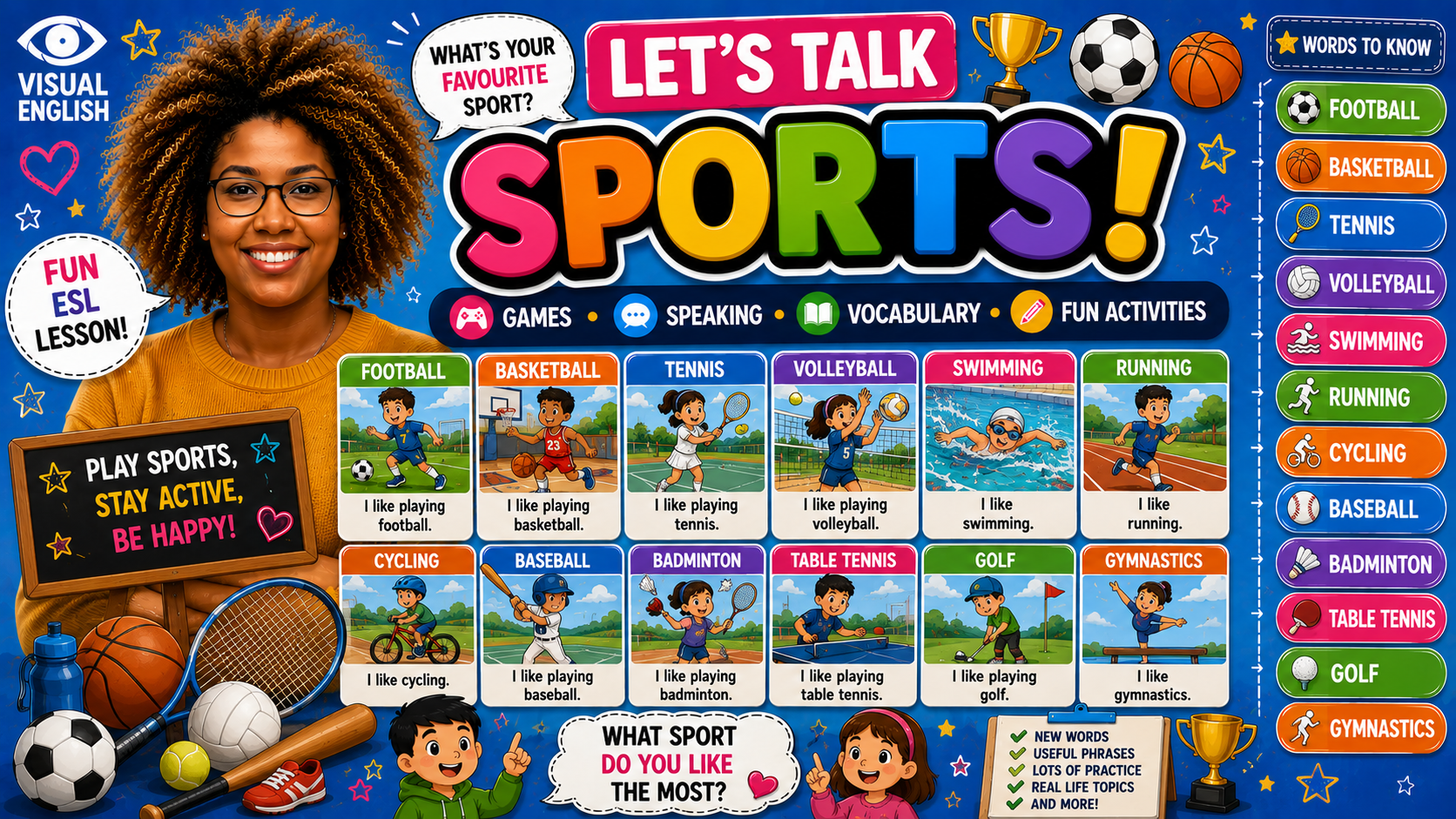
Start with common sports: football, basketball, swimming, running, tennis. Add equipment vocabulary (ball, racket, goal) and action verbs (kick, throw, catch, jump) once sport names are solid.
The Grammar That Pairs Naturally
Sports is the best context in the curriculum for can/can't ability language: "I can swim," "I can't play tennis." It also supports present simple for habits ("I play football on Saturdays") and preferences ("I like basketball more than football").
Speaking Activities That Work
1. Can you...? survey. Students ask classmates what sports they can and can't do, then report back.
2. Mime the sport. Act out a sport's typical action; classmates guess and name it. 3. Sports equipment match. Match equipment to the correct sport, then describe using full sentences.
4. Favourite sport debate. A structured opinion exercise comparing and defending favourite sports.
Common Mistakes to Watch For
- Preposition confusion with "play" vs "do" vs "go" (play football, do gymnastics, go swimming) -- one of the most persistent collocation errors in this topic
- Overusing "can" for general enjoyment instead of ability ("I can like football" instead of "I like football")
- Third-person -s omission with sports habits ("She play tennis" instead of "She plays tennis")
Ready-Made Sports Lessons
Visual English covers sports across multiple levels:
- Can You Fly? -- Book 1, can/can't with actions
- Sports -- Book 2, sports names and preferences
- Sports And Equipment -- Book 3, equipment vocabulary
- Extreme Sports -- Book 6, adventure sports for older students
See the full set on the Sports topic page.
Conclusion
Sports vocabulary combines real enthusiasm with clean, teachable grammar in can/can't. Let genuine student interest drive the conversation, and this becomes one of the highest-energy topics in your rotation.
Frequently asked questions
What's the best grammar entry point?
Can/can't -- it's simple, personal, and directly tied to real ability, which students enjoy demonstrating.
How do I fix the play/do/go collocation confusion?
Group sports by their correct verb explicitly when first teaching them (ball sports = play, individual/martial = do, -ing activities = go) rather than teaching sports names alone.
How do I extend this topic for older students?
Move into discussing famous athletes, extreme or unusual sports, and health benefits of exercise.