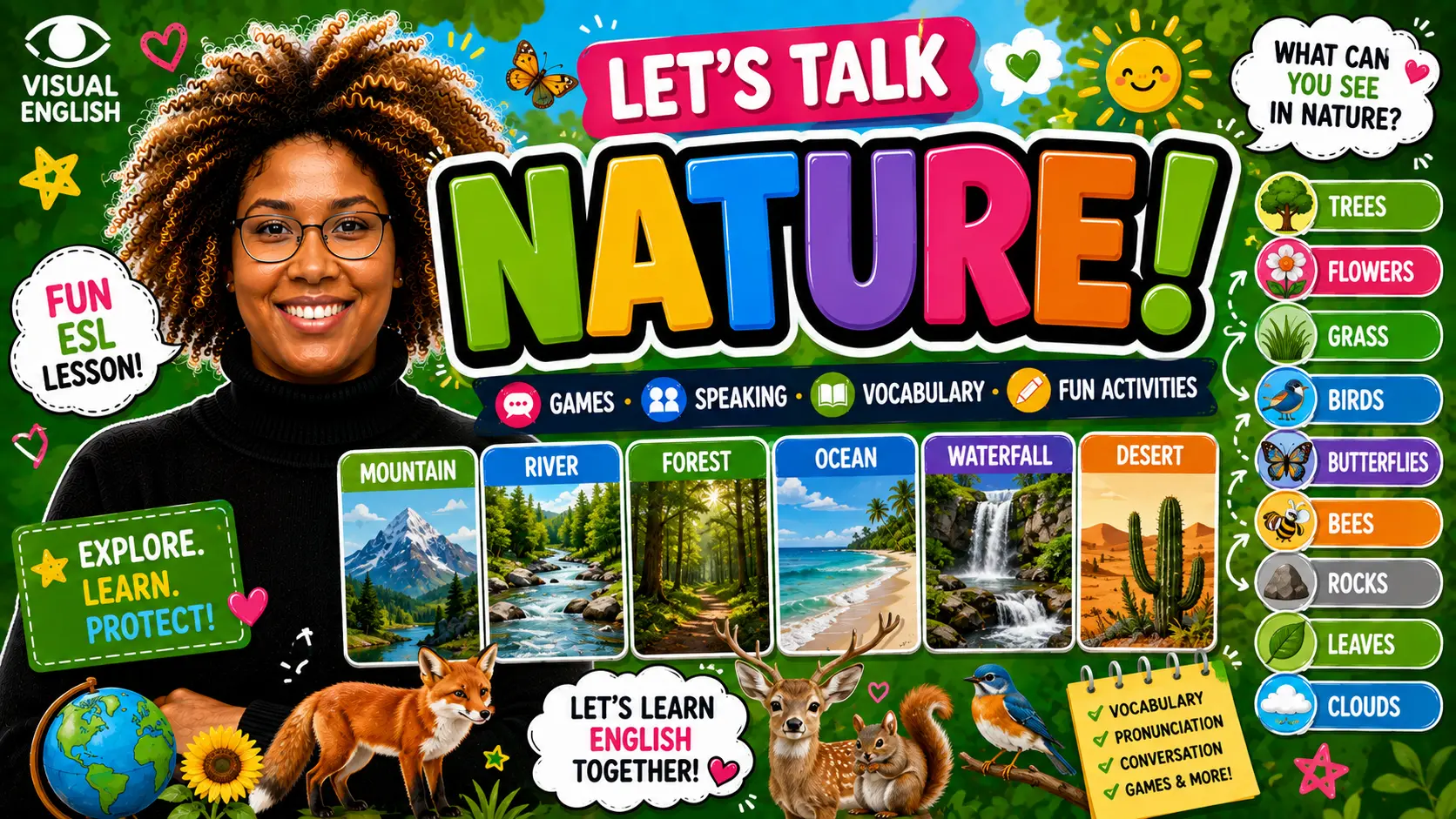
How to Teach Nature and Seasons Vocabulary in ESL (2026)
Table of contents(7 sections)ShowHide
Nature is a topic students don't need to imagine -- they can look out the window and see it. That constant, real-world reinforcement makes seasonal and nature vocabulary unusually durable once taught, since students keep encountering it outside the classroom.
Why Nature Works So Well
Weather and seasons change constantly and visibly, giving a natural, always-current reason to revisit the vocabulary throughout the year rather than teaching it once and moving on.
Core Vocabulary
Start with the four seasons (spring, summer, autumn, winter) and basic weather (sunny, rainy, cloudy, snowy, windy). Add nature elements (tree, leaf, flower, mountain, river) once seasonal basics are solid.
The Grammar That Pairs Naturally
Nature pairs naturally with "What's the weather like?" / "It's sunny" and preference structures ("I like summer because...", "My favourite season is..."). It's also a good context for comparatives once students are ready ("Winter is colder than autumn").
Speaking Activities That Work
1. Daily weather report. Start lessons with a quick "What's the weather like today?" -- constant, real, low-prep practice. 2. Season sort. Sort activities or clothing by which season they belong to, justifying with simple sentences.
3. Favourite season debate. Students state and defend their favourite season -- a gentle, structured opinion exercise. 4. Nature walk vocabulary. If possible, a short walk outside (or photos of the school grounds) to name real nature vocabulary in context.
Common Mistakes to Watch For
- Confusing "weather" (uncountable) with "a weather" -- a very common article error
- Mixing up "hot/cold" (temperature) with "warm/cool" in more nuanced descriptions
- Season name confusion in some regions where "autumn" and "fall" are both encountered -- worth clarifying both exist
Ready-Made Nature Lessons
Visual English weaves nature and seasons throughout the curriculum:
- Autumn -- Book 0A, first seasonal vocabulary
- Seasons Of The Year -- Book 1, all four seasons
- Mother Nature -- Book 4, seasons and weather preferences
See the full set on the Nature topic page.
Conclusion
Nature is one of the few topics that refreshes itself automatically -- the weather outside changes, so the practice never goes stale. Build a recurring routine around it, and it becomes some of the most naturally repeated vocabulary in your course.
Frequently asked questions
Should nature vocabulary be taught once or revisited?
Definitely revisited -- tying it to the actual current season and weather each time keeps it fresh and relevant throughout the year.
What's the best grammar entry point?
"What's the weather like?" / "It's..." -- simple, endlessly reusable, and genuinely current every single lesson.
How do I extend this for older students?
Move into climate and environment topics, or comparatives for comparing seasons and weather conditions.