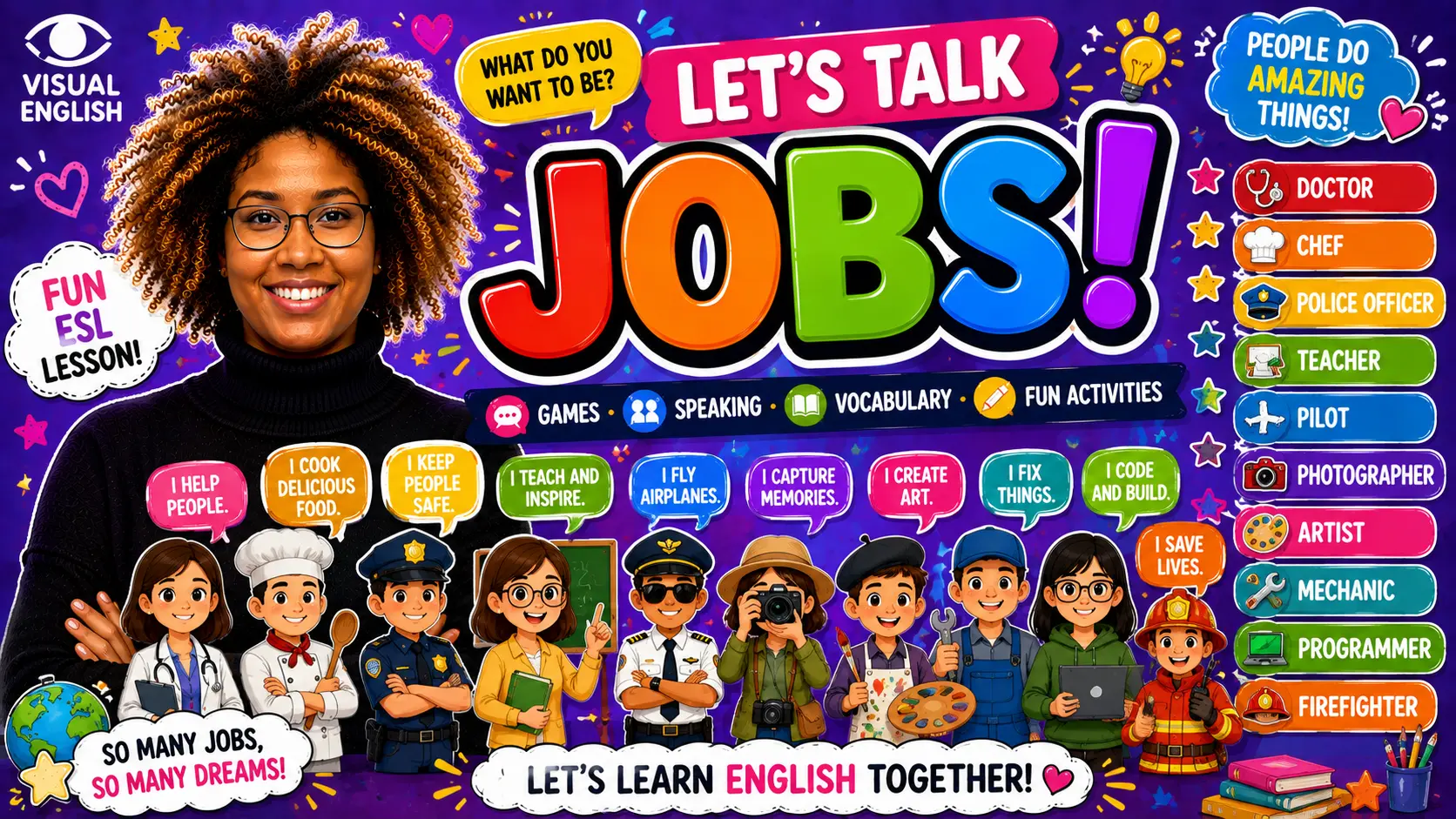
How to Teach Jobs and Professions Vocabulary in ESL (2026)
Table of contents(7 sections)ShowHide
Ask a young learner what they want to be when they grow up, and you rarely get silence. Jobs vocabulary taps directly into imagination and ambition, which makes it one of the more naturally motivating topics in the curriculum -- for younger and older students alike.
Why Jobs Works So Well
Unlike some topics that describe the world around a student, jobs vocabulary describes a possible future self. That personal, aspirational angle keeps engagement high even with repeated practice.
Core Vocabulary
Start with familiar, visible jobs: teacher, doctor, police officer, firefighter, chef. Add more once basics are solid, and group by workplace where useful (hospital jobs, school jobs) to reinforce vocabulary in clusters.
The Grammar That Pairs Naturally
Jobs is the classic context for "What do you want to be?" / "I want to be a..." It also supports "What does he/she do?" for describing others' jobs, and simple present for daily duties ("A teacher teaches students").
Speaking Activities That Work
1. Guess the job. One student mimes a job's typical action; others guess and name it. 2. Job interview role-play. For older students, a simple mock interview practises both questions and job vocabulary together.
3. What does a ___ do? Match jobs to their typical actions or workplaces. 4. Dream job poster. Students design and present a simple poster about the job they want, using "I want to be..." and "because..."
Common Mistakes to Watch For
- Confusing "work" (verb/general activity) with "job" (specific role) -- "My work is teacher" instead of "My job is teacher" or "I work as a teacher"
- Article errors with job names ("I want to be doctor" instead of "a doctor")
- Mixing up "what does he do" (job) with "what is he doing" (current activity) -- a persistent confusion worth addressing directly
Ready-Made Jobs Lessons
Visual English covers jobs across multiple books:
- When I Grow Up -- Book 0C, first job vocabulary
- What Do You Want To Be? -- Book 2, aspirations and job names
- Jobs -- Book 6, professions and 'what does he/she do?'
- My Dream Job -- Book 7, career planning for older students
See the full set on the Jobs topic page.
Conclusion
Jobs vocabulary connects English directly to a student's sense of the future, which is powerful motivation. Keep it grounded in "want to be" and real aspirations, and the conversation tends to run itself.
Frequently asked questions
What if a student says they don't know what they want to be?
Offer a lighter prompt -- "What job do you think is interesting?" or "What job would you like to try for one day?" removes the pressure of a permanent decision.
What's the best grammar entry point?
"I want to be a..." -- it's simple, personal, and immediately usable from a low level.
How do I extend this topic for older students?
Move into job interview language, workplace vocabulary, and discussing what makes a job good or difficult.