How to Teach Rooms and House Vocabulary in ESL (2026)
Table of contents(7 sections)ShowHide
Few places are more familiar to a student than their own home -- which makes house and rooms vocabulary one of the easiest topics to make personal and detailed, rather than abstract.
Why Home Works So Well
Students can describe their actual bedroom, kitchen, or living room from memory, with real furniture and real details. That authenticity produces longer, more specific sentences than a generic picture prompt usually gets.
Core Vocabulary
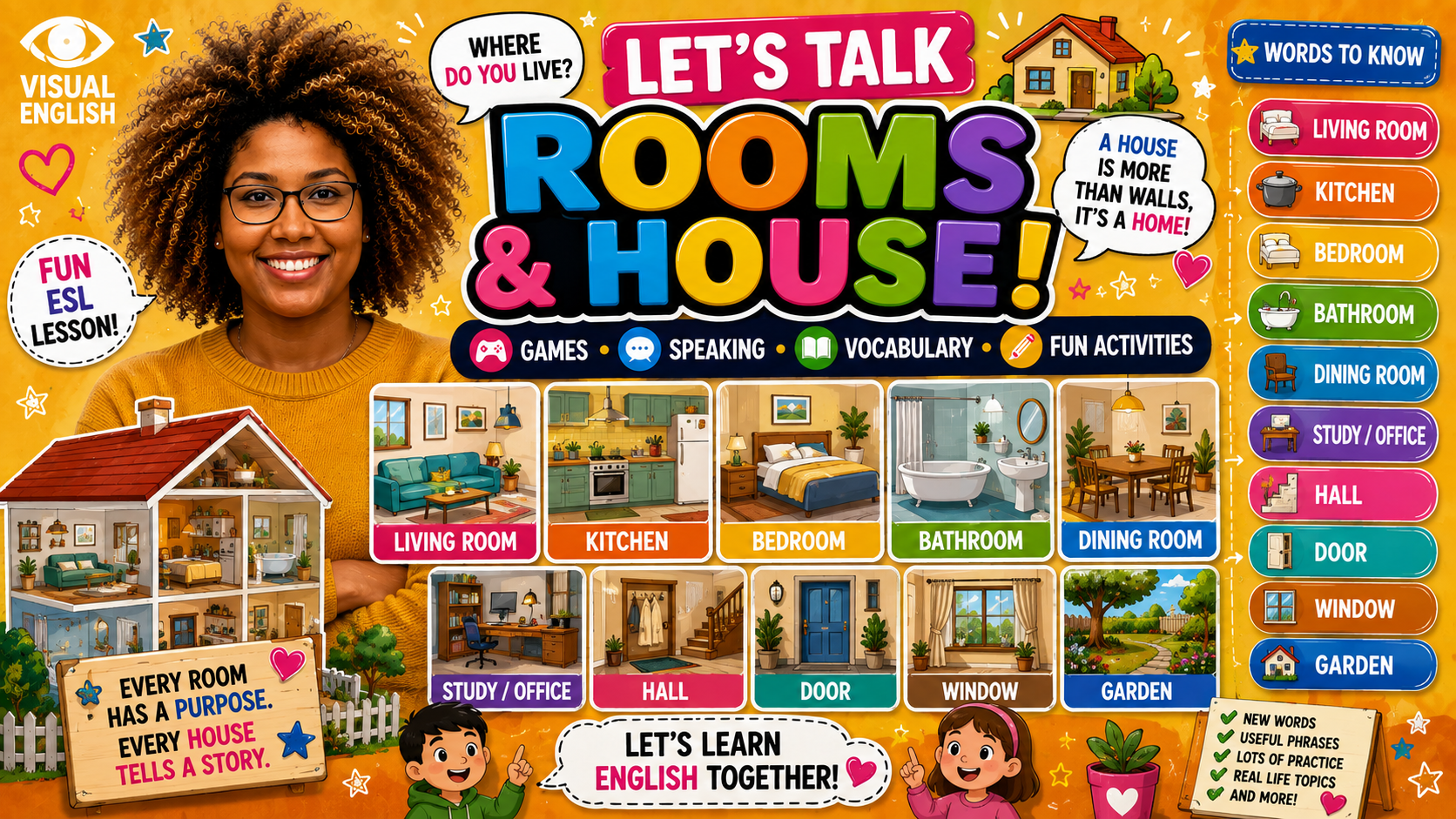
Start with room names: bedroom, kitchen, bathroom, living room. Add furniture (bed, sofa, table, chair) once room names are solid, then combine the two ("There's a bed in my bedroom").
The Grammar That Pairs Naturally
Home vocabulary is the classic context for there is / there are: "There's a sofa in the living room," "There are two beds in my bedroom." It also supports prepositions of place well ("The lamp is next to the bed").
Speaking Activities That Work
1. Draw your house. Students draw a simple floor plan and label rooms, then describe it aloud. 2. What's in your bedroom? A personal, detailed description activity using there is/are.
3. Dream house. For a more creative extension, have students describe an imaginary dream house rather than their real one. 4. Find the difference. Two similar house pictures with small differences; students describe and compare using there is/are and prepositions.
Common Mistakes to Watch For
- Confusing "there is" and "there are" agreement with plural nouns
- Mixing up "house" (the building) and "home" (the concept/feeling) -- worth a light distinction at higher levels
- Preposition errors when describing furniture placement ("on" vs "in" vs "next to")
Ready-Made House Lessons
Visual English covers house and rooms vocabulary at multiple levels:
- Rooms In The House -- Book 0C, room names for beginners
- Home Sweet Home -- Book 1, rooms and furniture
- Things In My House -- Book 2, household items
See the full set on the Home topic page.
Conclusion
Home vocabulary turns something entirely familiar into rich, structured speaking practice. Anchor it in there is/are, let students describe real or dream spaces, and the detail tends to come naturally.
Frequently asked questions
Is it okay to ask students to describe their real home?
Generally yes, and it tends to produce more authentic language -- but always offer an imaginary "dream house" alternative for students who may prefer not to share personal home details.
What's the best grammar entry point?
There is / there are -- it's the structural backbone of describing any space and comes up constantly in this topic.
How do I extend this for older students?
Move into comparing types of homes (apartment vs house, city vs countryside) and household routines and chores.