ESL Materials That Reduce Your Prep Time by Hours
Table of contents(10 sections)ShowHide
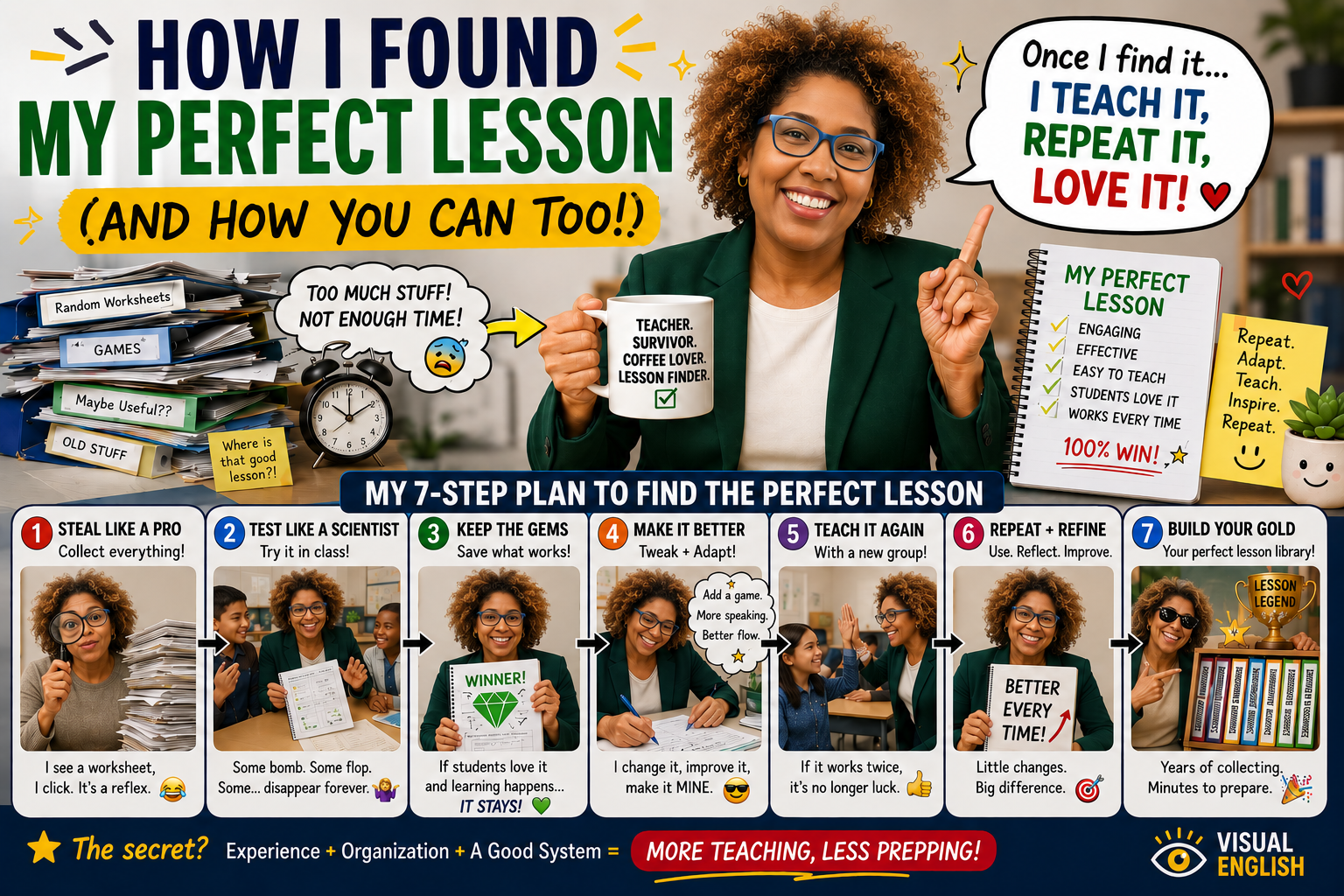
Teachers want to spend their energy listening to students, asking better questions and helping them speak. Yet lesson preparation can take up the evening: finding a topic, making slides, choosing a video, writing questions, locating a game and preparing follow-up work. The time-saving question is not “How can I prepare less carefully?” It is “Which preparation tasks can I stop repeating?”
What Makes ESL Materials Time-Saving?
Useful materials arrive with the decisions teachers otherwise have to make themselves:
- A clear lesson objective
- A sensible vocabulary and language focus
- Visual support and speaking prompts
- Teacher instructions
- Practice and review
- A printable or homework option
The teacher still adapts the lesson for the class. The repetitive assembly work has already been done.
Why Scattered Resources Take So Long
Teachers may have a good worksheet in Downloads, a video in a YouTube playlist and a game in a bookmark folder. Each item is useful, but none tells you how it fits with the others. That creates extra decisions:
- What should students learn first?
- Which activity is suitable for their level?
- How will I move from vocabulary to speaking?
- What can early finishers do?
- What should students practise after class?
A complete lesson framework answers most of these questions before class begins.
How Visual English Helps
Visual English organises teaching into 10 structured books and 178 units. Each unit gives teachers a reliable starting point with materials designed to work together. Depending on the unit, teachers can open:
- Visual lesson slides with images and speaking prompts
- Target vocabulary and question-and-answer practice
- Teacher guides and lesson ideas
- Interactive games and Vocabulary Hub practice
- Unit videos
- Printable materials
- Class and homework tools
Instead of building a lesson from unrelated tabs, teachers open the unit, preview the sequence and choose what suits their students.
A Faster Preparation Workflow
For a familiar class, a teacher can:
- Open the correct book and unit.
- Read the objective and teacher guide.
- Preview the visuals and select the key questions.
- Choose one game, video or Vocabulary Hub activity.
- Add a printable or homework task if needed.
This is still professional planning. The teacher is spending time on judgement and adaptation rather than designing the same slide deck and searching for the same type of game every week.
Visuals Reduce Explanation Time
An image can show meaning immediately. A teacher can point, ask “What is it?”, model the answer and move into a conversation. Students get more opportunities to notice, answer, describe and ask questions.
This is particularly helpful for young learners, beginners and online classes, where long explanations can quickly reduce attention.
Adapt the Ready-Made Lesson to Real Students
Ready-made does not mean one-size-fits-all. Teachers can:
- Skip vocabulary students already know.
- Simplify questions for a beginner.
- Add a personal example or local context.
- Extend a strong class with a role-play.
- Reuse the same visuals for revision.
The unit provides the structure; the teacher provides the relationship and professional judgement.
Keep Additions Connected to the Unit
If a teacher finds a useful external video, game or worksheet, it can be submitted from the unit’s Teacher Resources panel. The link stays connected to the relevant book and unit and is reviewed by an administrator before becoming a shared resource. This is more reliable than saving another link in a general bookmark folder because the context is preserved.
A Simple Time-Saving Test
For your next lesson, note how long you spend on:
- Searching
- Creating or formatting
- Deciding what comes next
- Adapting activities
After using a structured unit, compare the totals. The goal is not to remove preparation. It is to move preparation away from repetitive production and towards decisions that improve learning.
What Teachers Can Do With the Extra Time
Even 30 minutes saved across ten lessons returns five hours. That time can go towards student feedback, parent communication, professional development, marketing a private teaching business or simply a proper evening off. Explore the Visual English lesson topics →
See plans and access options →
Conclusion
The most useful ESL materials do more than provide attractive activities. They give teachers a clear sequence, connected resources and enough flexibility to respond to the class in front of them. Visual English brings slides, visuals, speaking practice, teacher guides, games, videos, vocabulary activities, printables and homework tools into one structured curriculum. That leaves teachers more time for the part of teaching that cannot be automated: noticing students, encouraging them and helping them communicate.
Frequently asked questions
What ESL materials save the most preparation time?
Complete lesson frameworks with clear objectives, teacher instructions, visual prompts, practice, review and follow-up options save the most repetitive work.
How does Visual English reduce preparation?
It connects slides, speaking prompts, guides, games, videos, Vocabulary Hub practice, printables and homework tools inside 10 books and 178 units.
Does ready-made mean every class is the same?
No. Teachers choose questions, skip familiar material, adjust difficulty and add personal examples while using the unit as a reliable structure.
Can I add an external resource to a Visual English unit?
Yes. Teachers can submit a link from the unit’s Teacher Resources panel. It is reviewed by an administrator before becoming a shared resource.
How can I measure whether I am saving time?
Track searching, formatting, sequencing and adaptation separately for one lesson, then compare the totals after using a structured unit.