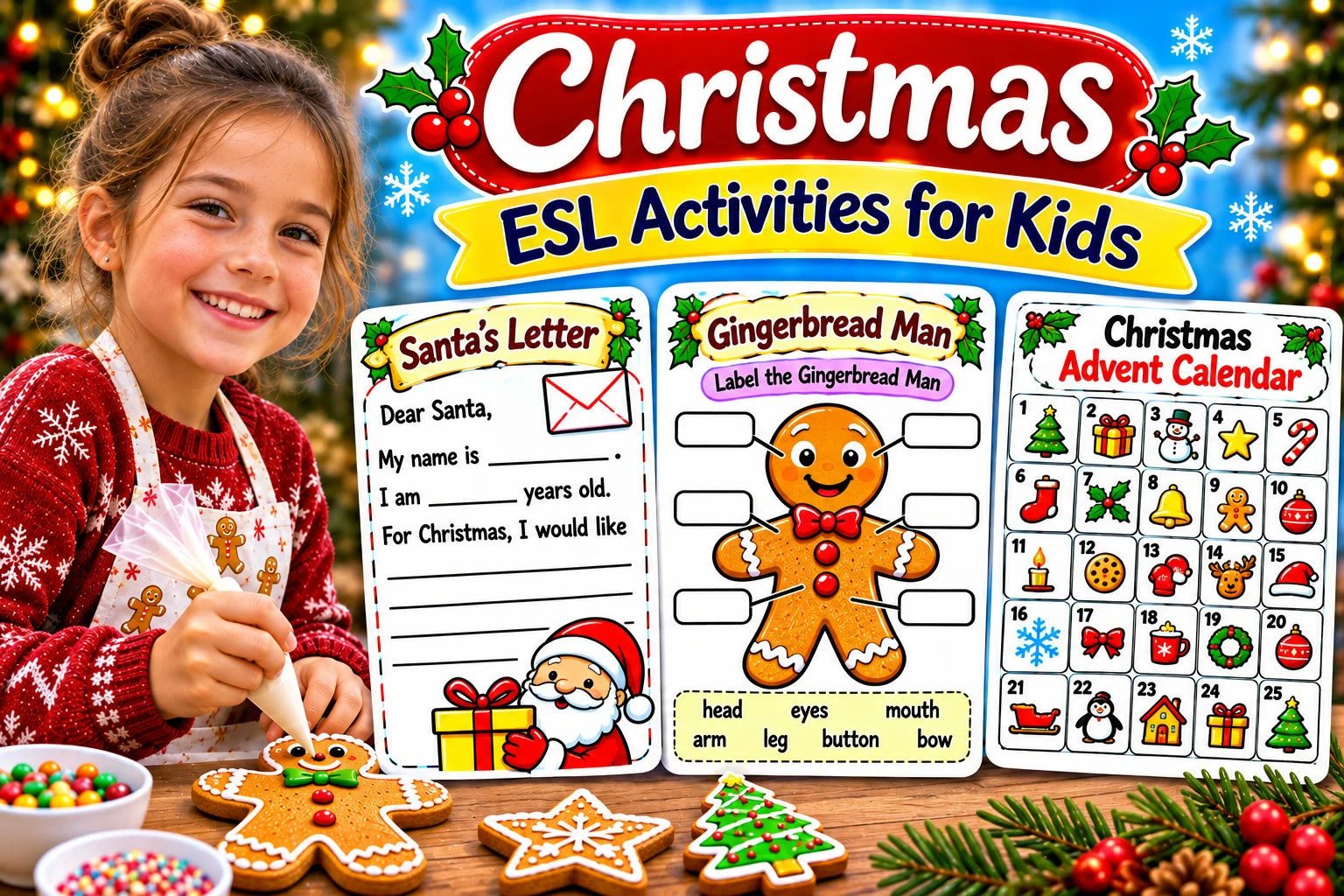
Christmas ESL Activities for Kids: Free Worksheets, Stories & Games
Table of contents(6 sections)ShowHide
Christmas lessons are always a little different. Children are excited, the holidays are getting closer, and keeping everyone focused on English isn't always easy. And then there's the preparation. Finding a good Christmas worksheet, a story, a video and a few games can take longer than the lesson itself!
So I've put together some of my favourite Christmas activities, including a letter to Santa, The Gingerbread Man story, visual speaking lessons for very young learners and a more challenging Advent Calendar for older children. I've included free printable worksheets, videos, interactive games and even an idea for decorating real gingerbread cookies. You can choose one activity or spread them across several lessons in December.
1. Dear Santa! A Christmas Letter Writing Activity
Best for: Young learners, ages 5 to 11 Skills: Speaking, writing and expressing wishes
Dear Santa Letter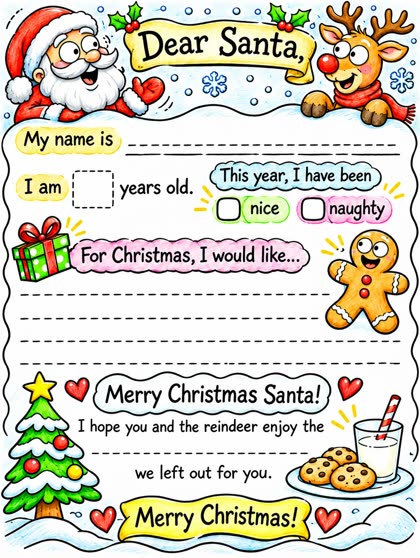 Click to download PDF
Writing a letter to Santa is one of those activities children genuinely enjoy. It's also a lovely way to practise simple English sentences. Our colourful Dear Santa worksheet helps children introduce themselves, talk about their behaviour and write what they'd like for Christmas.
It's particularly nice to use before St Nicholas Day on 6 December, although it works just as well later in December.
Start with a conversation
Before giving students the worksheet, I ask a few questions:
- Do you write letters to Santa?
- What would you like for Christmas?
- Have you been nice this year?
- What does Santa like to eat?
- What would you leave for Santa and his reindeer?
Then we practise the sentences they'll need: My name is Emma. I'm eight years old. This year, I've been nice! For Christmas, I would like a bicycle. P.S. I have left you some cookies and milk. Once children have practised saying their ideas, they can write their letters.
A little extra idea: Santa's postbox
If you have time, make a little postbox from a cardboard box. Students can decorate their envelopes, put their letters inside and post them when they've finished. You could also let them read their letters aloud before posting them.
Free PDF: Dear Santa Letter – click the worksheet preview to download.
2. The Gingerbread Man: Story, Worksheets & Games
Best for: Young learners, ages 5 to 10 Skills: Listening, speaking, sequencing and creativity The Gingerbread Man is one of my favourite stories for young English learners. It's funny, easy to follow and full of repetition. Even children who don't understand every word can follow what's happening through the pictures and actions.
And once they've heard the story, there are plenty of activities you can do with it.
Watch The Gingerbread Man Story
The Gingerbread Man: Full Animated Story I usually start with the story. Before playing the video, introduce a few words such as run, catch, woman, man, cow, horse and fox. Then teach children the famous line:
"Run, run, as fast as you can! You can't catch me, I'm the Gingerbread Man!"
Encourage them to join in whenever they hear it. After watching, ask:
- Who is the Gingerbread Man?
- Can he run fast?
- Who tries to catch him?
- Does anyone catch him?
- Who does he meet at the end?
- What happens to him?
You can also pause the video and ask students what they think will happen next.
Activity 1: Who Did the Gingerbread Man Run From?
Gingerbread Man Cut and Paste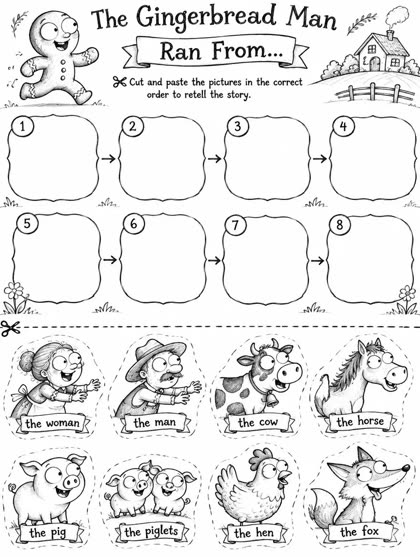 Click to download PDF
This is a simple cut-and-paste activity. Students cut out eight illustrated characters: the woman, the man, the cow, the horse, the pig, the piglets, the hen and the fox. They then paste them into the numbered spaces in the order used in the worksheet's version of the story.
Once they've finished, use the pictures to retell the story. Teacher: Who did the Gingerbread Man run from first? Student: The woman! Teacher: Who did he run from next? Student: The man! For older students, encourage them to use first, next, then and finally. Different versions of The Gingerbread Man sometimes include different characters, so check the video against the worksheet before class.
Free PDF: The Gingerbread Man Ran From...
Activity 2: Label the Gingerbread Man
Label the Gingerbread Man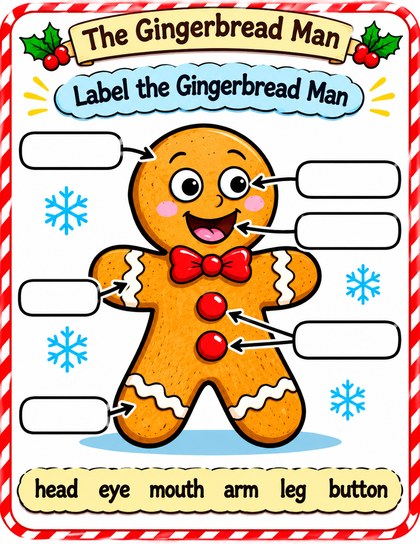 Click to download PDF
This activity is great for revising body parts. Students look at the Gingerbread Man and label his head, eyes, mouth, arms, legs and buttons. Before they start, ask:
- How many eyes has he got?
- Has he got two arms?
- Where is his mouth?
- How many buttons can you see?
- Has he got a big smile?
You can also give instructions such as "Point to his head" or "Show me your arms." Free PDF: Label the Gingerbread Man
Activity 3: Create Your Own Gingerbread Man
Create Your Own Gingerbread Man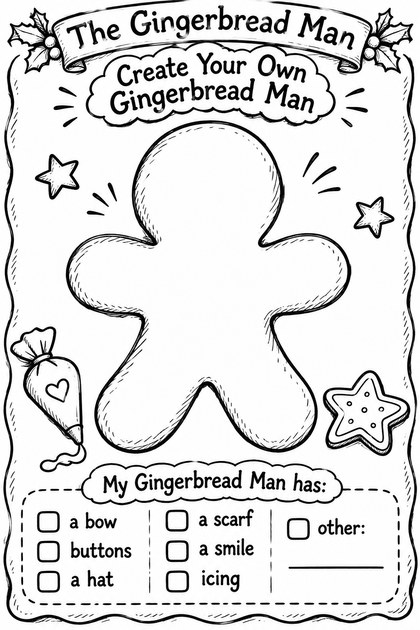 Click to download PDF
Now let students create their own Gingerbread Man. Give them the blank outline and let them add icing, buttons, funny eyes, hats or whatever else they can imagine. But don't stop at colouring!
Ask them to describe what they've created. "This is my Gingerbread Man. He's got big blue eyes, three red buttons and a green hat. He's very happy!"
Younger children can practise colours and body parts. Older students can write a few sentences or introduce their Gingerbread Man to the class. Free PDF: Create Your Own Gingerbread Man
Activity 4: Decorate Real Gingerbread Cookies!
And if you have a little extra time, why not decorate real gingerbread cookies? You can bake them with your students if you have access to a kitchen, but buying ready-made gingerbread cookies is much easier. All you need is coloured icing, sprinkles, small edible decorations and a few paper plates.
Children can decorate their cookies while practising English. Give them instructions:
- Take one gingerbread cookie.
- Make two eyes.
- Draw a big smile.
- Add three red buttons.
- Put some icing on his arms.
Encourage them to ask for what they need: "Can I have the blue icing, please?" "I'd like some sprinkles, please." When they've finished, let them introduce their creations. "This is Mr Gingerbread. He's got green eyes, four buttons and a big smile!"
Take a picture before they eat them! Just remember to check food allergies and dietary requirements beforehand, and supervise any baking.
Interactive Gingerbread Games
If you have a computer or interactive whiteboard, you can finish the lesson with a game.
- Starfall Gingerbread: use this gingerbread-themed activity to practise colours, shapes and body parts. Encourage students to describe what they're making.
- Design Your Own Gingerbread House: let students decorate a gingerbread house and describe it. Ask questions such as "What colour is your house?", "How many windows has it got?" and "Where is the door?"
- Gingerbread Factory: use this game to practise instructions, action verbs and sequencing language.
Teacher tip: Test the games before class, especially older browser games that may not work on every device.
3. Visual English Christmas Lessons for Very Young Learners
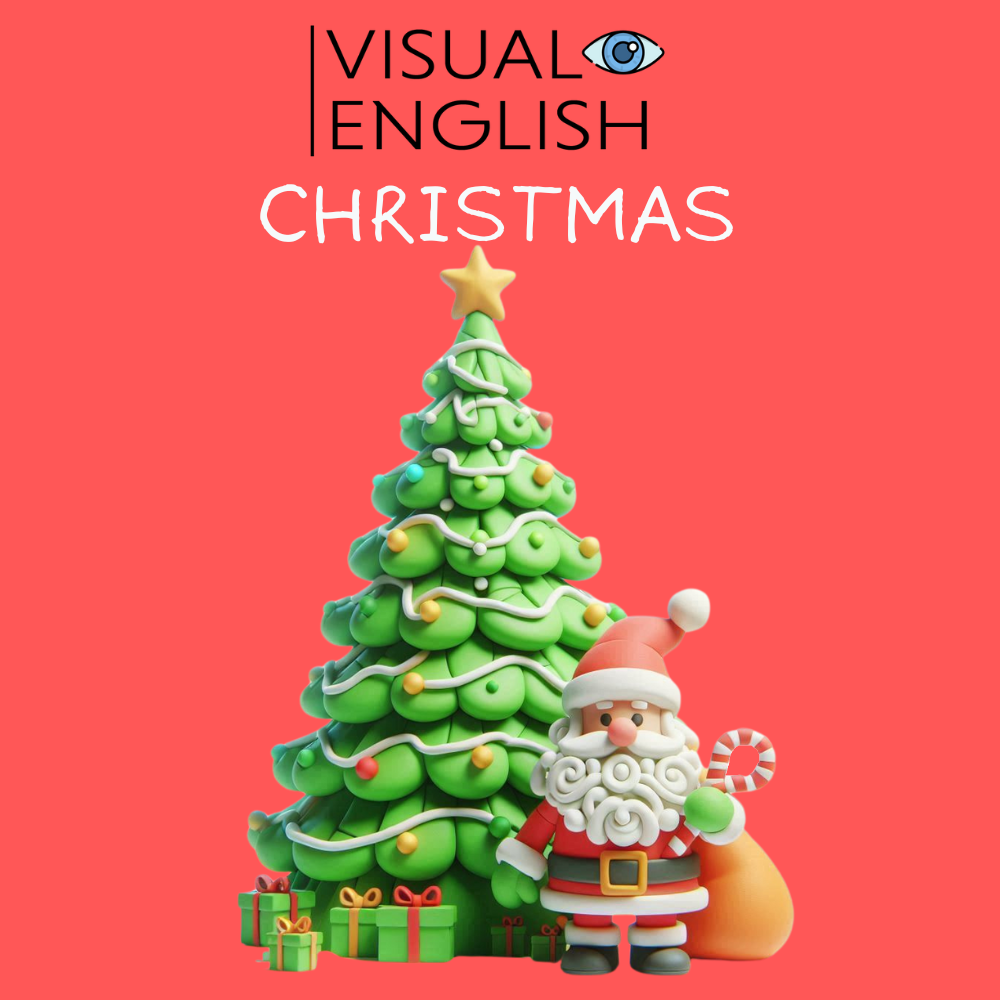
Best for: Preschoolers and children just starting English Skills: Listening, speaking, vocabulary and answering simple questions For very young learners, I prefer to keep Christmas lessons simple, visual and focused on speaking. At this age, children don't need long vocabulary lists or complicated worksheets. They need pictures, repetition and plenty of opportunities to hear and use English.
That's exactly how I teach with Visual English. On the platform, you'll find Merry Christmas lessons in Books 0A, 0B and 0C, designed for children who are just beginning to learn English. I start by showing a picture and asking simple questions:
- What's this?
- Is it Santa?
- What colour is his hat?
- Can you see a present?
- Is the Christmas tree big or small?
- How many presents can you see?
Children can answer with a single word at first, and gradually move on to short sentences. "It's Santa." "His hat is red." "I can see three presents." You can also turn the pictures into little games. Ask children to point to something, find a particular object or guess what's coming next.
The idea is to get them speaking naturally, without making the lesson feel like a test. And because the lessons are already prepared, you can spend less time looking for materials and more time interacting with your students.
Explore more holiday lessons on Visual English
4. Christmas Advent Calendar: 25 Pictures, 25 Words
Best for: Older children, ages 9 to 14 (A1–A2) Skills: Christmas vocabulary, reading, matching and speaking
Christmas Advent Calendar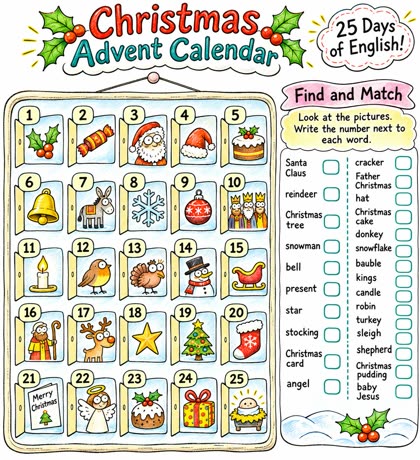 Click to download PDF
This Advent Calendar is a little more challenging than the usual Christmas colouring activities, making it a good choice for older children. It includes 25 Christmas illustrations, but not all the vocabulary is immediately obvious. Alongside familiar words such as Christmas tree, present and snowman, students will come across words like holly, shepherd, Christmas cracker and Christmas pudding.
How I use it
I usually start by showing students the calendar without the word list and asking how many pictures they can name. Then they match the 25 words to the illustrations by writing the correct numbers. Once they've finished, we go through the answers together and talk about some of the less familiar Christmas traditions.
You can ask:
- What's the difference between a Christmas cake and a Christmas pudding?
- What is a Christmas cracker?
- What do people traditionally put in Christmas stockings?
- Do you have any special Christmas traditions in your family?
- How is Christmas celebrated in different countries?
It's a nice way to introduce a little British Christmas culture while practising English. For students who need an extra challenge, ask them to choose five words and write a sentence using each one. You can complete the activity in one lesson or use the pictures throughout December for short speaking activities.
Free PDF: Christmas Advent Calendar
5. Free Christmas Worksheets to Download
I've put all five worksheets together so you can choose what works best for your students. Click on any worksheet preview to download the PDF. No registration needed.
Dear Santa LetterClick to download PDF
Gingerbread Man Cut and PasteClick to download PDF
Label the Gingerbread ManClick to download PDF
Create Your Own Gingerbread ManClick to download PDF
Christmas Advent CalendarClick to download PDF
- Dear Santa Letter: Christmas wishes and simple writing.
- Gingerbread Man Cut and Paste: Story sequencing.
- Label the Gingerbread Man: Body parts and descriptions.
- Create Your Own Gingerbread Man: Drawing, colouring and speaking.
- Christmas Advent Calendar: Vocabulary matching for older children.
You don't need to use everything in one lesson. Choose what works for your students, print the worksheets and you're ready to go.
Merry Christmas and Happy Teaching!
Christmas lessons don't need to be complicated. A few pictures, a good story, some simple questions and a fun activity can keep children speaking English without making the lesson feel like work. With younger children, I usually spend more time talking about the pictures before moving on to worksheets. With older students, I ask for longer answers, descriptions and a little more independent work.
That's the approach I use with Visual English too. Start with pictures, get students talking, and then use worksheets, videos and games to practise the language. I hope these Christmas activities save you some preparation time and give you a few ideas to try with your students.
If you'd like more ready-to-teach lessons, explore the Visual English Holidays collection. Merry Christmas and happy teaching! Izabela, Visual English