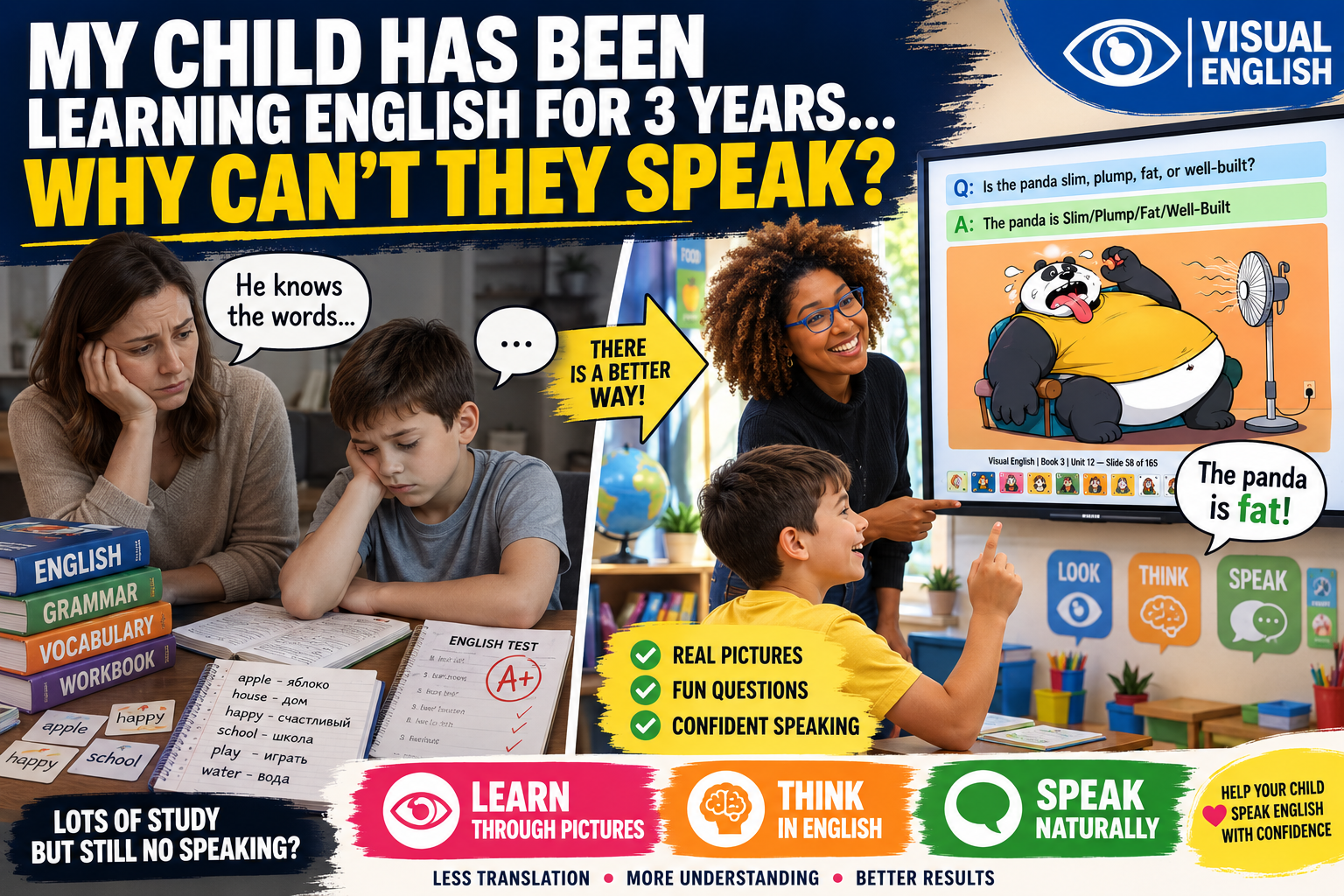
My Child Has Been Learning English for 3 Years. Why Can't They Have a Basic Conversation?
Table of contents(11 sections)ShowHide
Why This Is One of the Most Common Questions Parents Ask
"My child has been learning English for three years, but they still can't answer simple questions." If this sounds familiar, you're not alone. Every year, thousands of parents wonder why their children can complete grammar exercises, pass vocabulary tests, and finish English homework, yet struggle to have even a short conversation. Many children know hundreds of English words. Some know thousands.
But when someone asks: "What's your favourite hobby?" — they hesitate. When asked: "Tell me about your weekend." — they don't know what to say. So what is happening? The answer is simpler than many people think. Children often spend years learning about English instead of learning to use English.
Learning English Isn't the Same as Speaking English
Imagine learning to play the piano by only reading music theory. Or learning to swim by reading books about swimming. Eventually, you need to practise.
Language works exactly the same way. Children develop speaking skills by speaking — not by translating, not by memorising vocabulary, not by completing hundreds of grammar exercises. Speaking is a skill, and every skill improves through practice.
Why Children Memorise but Don't Communicate
Many traditional English lessons follow a familiar pattern:
- Learn ten new words
- Copy them into a notebook
- Translate them
- Complete grammar exercises
- Take a vocabulary test
Students often achieve high marks. Yet when asked to use the language naturally, they freeze. Why? Because recognising vocabulary is different from producing language. Knowing that "bakery" means a shop that sells bread does not automatically help a child answer: "Where do you buy bread?"
Communication requires much more than memorisation.
The Hidden Problem With Translation
Many children develop a habit of thinking like this: English → Native language → Meaning → English answer This process takes time. It also reduces confidence. Fluent speakers usually do something different. They connect English directly to meaning. For example, when they see a picture of a beach, they immediately think: beach, sea, sand, summer, holiday.
No translation is needed. This direct connection makes speaking much faster and more natural.
Why Vocabulary Lists Aren't Enough
Vocabulary lists have their place. But children rarely remember isolated words for long. Instead, they remember experiences.
Imagine showing a child the word "kayak." Now imagine showing them a colourful picture of two children kayaking on a beautiful lake while asking:
- Have you ever been kayaking?
- Would you like to try it?
- Is it easy or difficult?
- Who would you go with?
Suddenly the word becomes part of a conversation. That conversation becomes a memory. And memories last much longer than word lists.
Children Learn by Seeing, Listening, and Speaking
Think about how children learn their first language. Parents don't hand them vocabulary lists. Instead they show objects, point, ask questions, repeat, encourage answers, and celebrate communication.
Children naturally connect words with images, situations, emotions, and experiences. The same approach works remarkably well when learning English. Pictures create understanding. Questions create thinking. Thinking creates speaking.
What Should a Child Be Able to Do After Three Years?
Every child learns at a different pace, but after three years of regular English lessons, many children should be able to:
- Introduce themselves confidently
- Describe people and places
- Talk about hobbies
- Ask and answer simple questions
- Describe pictures
- Talk about daily routines
- Explain likes and dislikes
- Tell simple stories
- Discuss future plans using basic language
If a child can only recognise vocabulary but cannot communicate, the teaching approach may need to include more speaking practice.
Signs Your Child Is Making Real Progress
Parents often focus on test scores. However, real progress looks different. Ask yourself:
- Can my child answer simple questions without translating?
- Can they describe a picture?
- Can they tell me about their day in English?
- Can they ask questions confidently?
- Can they explain their opinions?
These are signs that communication skills are developing.
How Parents Can Help at Home
You don't need to be fluent in English to support your child. Simple activities make a big difference. Look at pictures together and ask: What can you see? What is happening? What colour is it? What do you think will happen next?
Read simple books together. Watch short videos in English. Play visual guessing games.
Most importantly, encourage your child to speak rather than worrying about making mistakes. Confidence grows through use.
How Visual English Develops Confident Speakers
Visual English was created around one simple belief: children learn English best when they use English. Instead of relying on long vocabulary lists and constant translation, Visual English introduces language through images, questions, conversations, stories, and real-life situations. The platform includes:
- 10 structured books
- 178 ready-made units
- 20,000+ custom visuals
- Interactive speaking activities
- Teacher guides
- Videos
- Printable worksheets
- Games designed to encourage conversation
Every lesson begins with an image. Every image creates questions. Every question creates communication.
Instead of asking children to memorise words, Visual English encourages them to think, respond, describe, compare, predict, and express opinions from the very first lesson. This helps children develop not only vocabulary but also confidence.
Conclusion
If your child has been learning English for several years but still struggles to hold a simple conversation, don't lose hope. In many cases, the problem is not ability — it is opportunity. Children need opportunities to speak, describe, ask questions, make mistakes, and communicate in meaningful situations.
Grammar matters. Vocabulary matters. But communication should always be the goal.
When children connect English directly to pictures, experiences, and conversations instead of translation, they begin to think in English rather than translate into English. That is where real fluency begins. Discover how Visual English helps children build confidence through pictures, questions, conversation, and 178 ready-made speaking-focused lessons designed to make English something children use, not simply study.
Frequently asked questions
Why can my child read English but not speak it?
Reading and speaking use different skills. Children who learn mainly through translation and vocabulary lists recognise words on the page but haven't practised producing language out loud. Regular speaking practice with pictures and questions closes that gap.
How long does it take a child to start speaking English?
With consistent speaking-focused lessons, children typically produce short answers within a few months and hold simple conversations within a year. Progress depends on how often they actually speak — not how many words they memorise.
Should my child stop translating in their head?
Yes, gradually. Translation slows speech and reduces confidence. Picture-based learning helps children connect English directly to meaning, so they think in English instead of translating into it.
What can I do at home if I don't speak English well?
Look at pictures together and encourage your child to describe what they see. Watch short English videos, play visual guessing games, and praise communication rather than correctness. Your encouragement matters more than your accent.