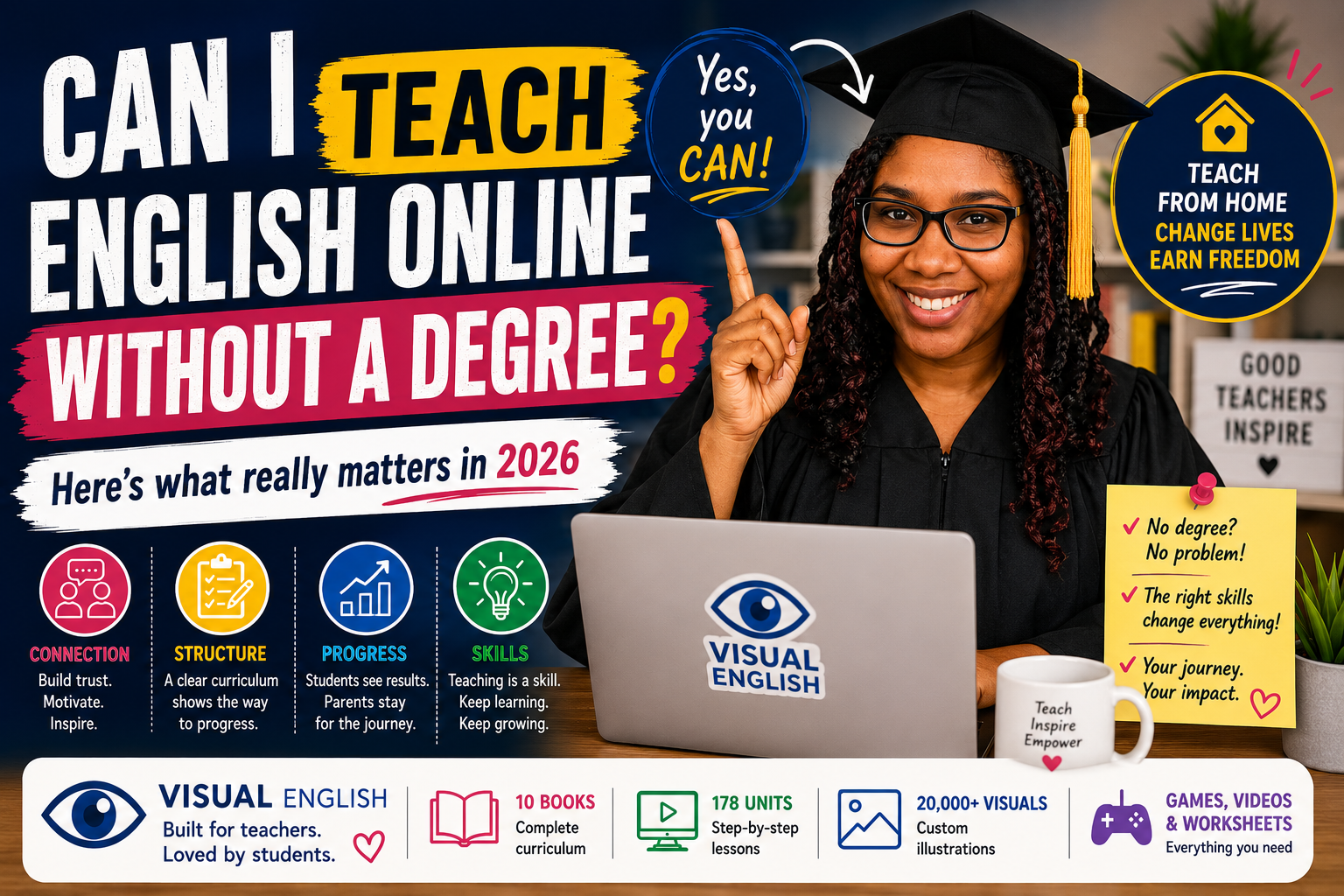
Can I Teach English Online Without a Degree? (2026)
Table of contents(10 sections)ShowHide
One of the most common questions aspiring teachers ask is: "Can I teach English online without a degree?" The answer is: yes, absolutely. Many online tutoring platforms, private language schools, and independent teachers successfully teach English without a university teaching degree. However, there is something important to understand. Not having a degree doesn't mean teaching is easy. Teaching English professionally requires far more than simply speaking the language. Students don't pay for your English — they pay for your ability to help them learn.
Is a University Degree Still Important?
Twenty years ago, a university degree was often one of the biggest advantages a teacher could have. Today, education has changed dramatically. Students have access to artificial intelligence, YouTube, online courses, interactive learning apps, educational games, and thousands of free resources.
Parents are no longer choosing teachers simply because they have a diploma. They're looking for teachers who can produce results — someone who can explain clearly, motivate learners, build confidence, make lessons enjoyable, and help students communicate naturally. A university degree is still valuable, but today it is only one piece of the puzzle.
TEFL, TESOL and CELTA: Are They Worth It?
If you're serious about teaching English, professional certifications are an excellent investment. Some of the most recognised qualifications include:
- TEFL (Teaching English as a Foreign Language)
- TESOL (Teaching English to Speakers of Other Languages)
- CELTA (Certificate in English Language Teaching to Adults)
These programmes teach essential skills such as lesson planning, classroom management, teaching grammar, teaching vocabulary, error correction, student-centred learning, and speaking activities. For many new teachers, these courses provide confidence and practical teaching techniques that can be used immediately. However, a certificate alone doesn't make someone a great teacher.
Many Companies Train Teachers From Scratch
One interesting fact about today's online teaching industry is that many companies are willing to train motivated teachers. Some online schools hire teachers with little or no classroom experience and provide structured onboarding programmes before they begin teaching. Other companies have developed their own teaching methods and internal training systems to ensure every teacher delivers lessons consistently.
This is very similar to the approach used by successful education companies around the world. They understand that great teachers are developed over time. Training provides the foundation. Experience builds confidence.
Speaking English Doesn't Make You a Teacher
Perhaps the biggest misconception in education is this: "I speak English, so I can teach English." Unfortunately, it doesn't work that way. Think about it like this — not everyone who can swim can become a lifeguard. Swimming is one skill; being responsible for people's safety is another. The same applies to teaching.
Speaking English is only one part of the profession. Great teachers know how to explain difficult ideas simply, ask effective questions, encourage shy learners, correct mistakes positively, keep students engaged, adapt lessons for different abilities, build confidence, and inspire learners to keep trying. Teaching is a professional skill, and like every profession, it requires practice.
Teaching Is About Building Human Connection
Technology can teach vocabulary. AI can explain grammar. Videos can demonstrate pronunciation. But none of these can replace the relationship between a teacher and a student.
The best teachers create trust. Students feel comfortable making mistakes, they ask questions, they laugh, they gain confidence. Parents notice this immediately, and children return every week because they enjoy learning with their teacher. Teaching isn't just about delivering information — it's about building relationships that encourage learning.
Experience Still Matters
Every teacher starts with very little classroom experience and learns through trial and error. Some lessons go excellently; others teach valuable lessons. Every student helps a teacher improve.
Today's teachers have an enormous advantage: YouTube teaching channels, AI lesson planning tools, online workshops, teacher communities, webinars, professional teaching platforms, and ready-made lesson plans. Learning how to become a better teacher has never been easier, and the most successful teachers continue learning throughout their careers.
Why a Structured Curriculum Is Essential
One of the biggest mistakes many new teachers make is teaching random topics every week — animals one lesson, food the next, then weather, then transport. Although every lesson may be enjoyable, students often struggle to see long-term progress, and parents notice this too. They don't simply want entertaining lessons; they want to know their child is following a clear learning pathway.
A strong curriculum provides a yearly teaching plan, logical lesson progression, regular vocabulary revision, gradual grammar development, speaking activities that increase in difficulty, clear learning objectives, and measurable progress. This consistency builds confidence: students understand where they are, parents see continuous improvement, and teachers know exactly what comes next. Visual English was designed around this philosophy. Instead of offering random lesson ideas, it provides a complete curriculum organised into 10 structured books and 178 ready-made units. Every lesson builds naturally on previous knowledge, so teachers never have to ask what to teach next, which grammar topic comes after this, whether they've already taught these words, or how to prepare students for the next level — everything has already been carefully planned. This allows teachers to focus on what matters most: helping students communicate confidently. Consistency creates progress, progress builds trust, trust creates long-term students, and long-term students create a successful teaching business.
How AI Has Changed Online Teaching
Artificial intelligence has completely changed education. Teachers can now generate worksheets, create quizzes, improve lesson plans, produce classroom activities, translate vocabulary, generate discussion questions, and create presentations. AI saves enormous amounts of preparation time.
But AI cannot replace teachers. Technology provides information; teachers provide inspiration. AI creates content; teachers create confidence. The future of education isn't teachers versus AI — it's teachers who know how to use AI effectively.
How Visual English Helps New Teachers Succeed
Starting as an online English teacher can feel overwhelming. Questions quickly appear: What should I teach first? How do I keep students engaged? What comes after today's lesson? How do I make lessons look professional?
Visual English answers these questions by providing a complete teaching system. Teachers receive:
- 178 ready-made lesson units
- 10 structured books
- 20,000+ custom illustrations
- Teacher Guides
- Interactive speaking activities
- Games
- Videos
- Printable worksheets
- AI-powered teaching tools
Lessons work perfectly online using Zoom, Google Meet, Microsoft Teams, interactive whiteboards, tablets, and laptops. Because every lesson follows the same professional structure, teachers deliver consistent, engaging lessons while spending far less time preparing. Whether you're teaching your very first student or running your own language school, Visual English provides the curriculum, consistency, and confidence needed to teach professionally.
Conclusion
Can you teach English online without a degree? Yes. Can you become an outstanding English teacher without a degree? Absolutely.
Success doesn't come from holding a diploma. It comes from continually developing your teaching skills, building genuine relationships with students, following a structured curriculum, and delivering lessons that students genuinely enjoy. Professional certifications such as TEFL, TESOL, and CELTA can provide an excellent foundation. Experience builds confidence. A clear curriculum builds consistency. Professional teaching materials save time. When all these elements work together, teachers create lessons that students remember and parents value — that's exactly what Visual English was designed to support.
Frequently asked questions
Can I teach English online without a university degree?
Yes. Many online teaching opportunities do not require a university degree, especially if you teach independently or work with platforms that focus on tutoring.
Are TEFL, TESOL, or CELTA worth getting?
Yes. These certifications provide practical teaching skills and are recognised by many employers. They are an excellent investment for teachers who want to improve their confidence and employability.
Can I teach English if I'm not a native speaker?
Absolutely. Many successful English teachers are non-native speakers. Strong teaching skills, clear communication, and effective lesson planning are often more important than being a native speaker.
What is more important: qualifications or experience?
Both matter, but experience, continuous professional development, and the ability to build strong relationships with students often have the greatest impact on long-term success.
Why is a structured curriculum important?
A structured curriculum ensures that every lesson builds on previous knowledge. It provides consistency, helps students make measurable progress, and gives parents confidence that their children are following a clear learning journey rather than a series of unrelated lessons.
How does Visual English help new teachers?
Visual English provides a complete curriculum with 10 structured books, 178 ready-made units, Teacher Guides, interactive speaking activities, games, videos, worksheets, and over 20,000 custom illustrations, allowing teachers to deliver professional, engaging lessons from day one while spending far less time on lesson preparation.